Bergen's Fish Market (Fisketorget): A Historic Guide
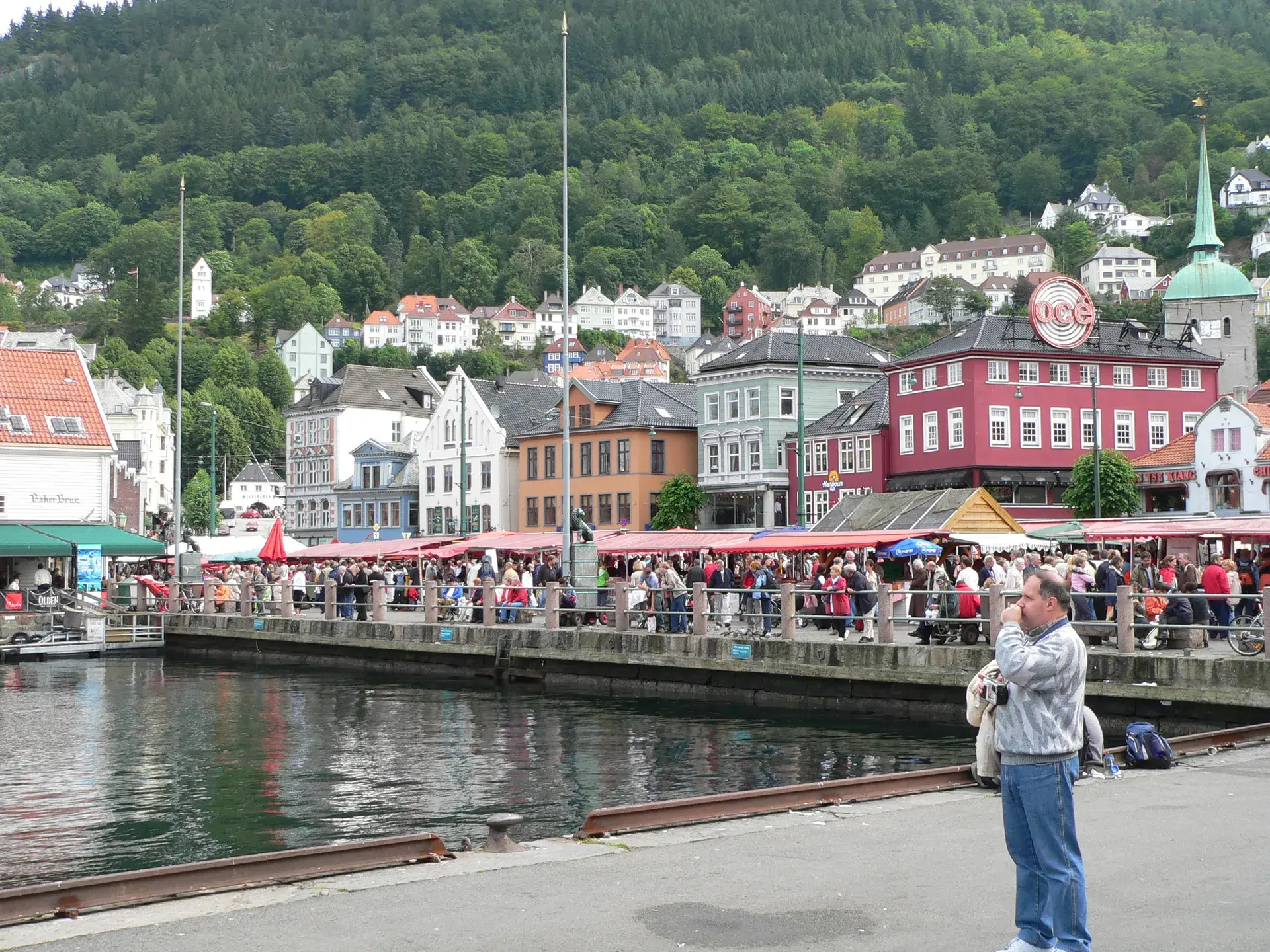
Bergen's Fish Market, known locally as Fisketorget, is a vibrant and historic point of interest located on the city's Vågen harbor. With origins stretching back to the Middle Ages, it has evolved from a simple quayside trading post to a modern destination with both seasonal outdoor stalls and a permanent indoor food hall.
A Medieval Trading Hub
Fisketorget was established in the 13th century, becoming a vital center for commerce on Norway's west coast. It served as the primary meeting point for fishermen, farmers, and city merchants. Historically, fishermen would sail directly into the harbor and sell their fresh catch from their boats along the quay. This long-standing tradition cemented the market's role as a key economic and social hub in Bergen's urban development.
The Hanseatic League and Beyond
From the 14th to the mid-16th century, Bergen's status as a major center for the Hanseatic League profoundly influenced trade at Fisketorget. The market was a crucial nexus in the commercial alliance's network, facilitating the exchange of North Atlantic seafood and local produce. Centuries later, during the 19th century, the famed composer Edvard Grieg was known to be a frequent visitor to the bustling market.
Fisketorget Today
Today, Fisketorget continues to be a lively marketplace offering a wide variety of seafood, local produce, crafts, and delicacies. During the summer, an outdoor market runs along the Torget quayside. In 2012, the market expanded with the opening of Mathallen, a modern indoor market hall that houses permanent stalls and restaurants, allowing for year-round operation.
While the outdoor market is a popular attraction, some locals consider it to have higher prices, often preferring the indoor Mathallen for better value. Local favorites include purchasing fresh fjord shrimp (reker) to eat by the harbor or ordering a 'fiskeburger' from one of the indoor stalls.
Award-Winning Architecture and Hidden History
The modern Mathallen building, designed by Eder Biesel Arkitekter, is an architectural point of interest in itself. Its facade incorporates Bergen's traditional color palette of ocher, white, and dark red wood, connecting the new structure to the city's visual identity. For its design, the building received the World Architecture News 'Colour in Architecture Award' in 2013.
A subtle but significant detail is embedded in the pavement of the modern market. Wooden lines explicitly mark the historic, curved edge of the original pier. This feature indicates how sailing ships from earlier centuries used to dock, physically connecting the present-day market to its deep maritime past.
FAQ
When was the Bergen Fish Market established?
The Fish Market (Fisketorget) in Bergen dates back to the 13th century, when it was established as a central trading hub for fishermen, farmers, and merchants on Norway's west coast.
What is the difference between the indoor and outdoor fish market?
The outdoor market operates along the quayside at Torget during the summer months. The indoor market, known as Mathallen, opened in 2012 and provides permanent stalls and restaurants that are open all year.
Is the Bergen Fish Market just for tourists?
While it is a popular tourist attraction, locals also use the market. They often prefer the indoor Mathallen for better value on seafood, purchasing items like fresh fjord shrimp (reker) and fiskeburgers.
What is the significance of the wooden lines in the pavement at Mathallen?
The wooden lines in the pavement of the modern Mathallen building mark the historic, curved edge of the original pier, showing where sailing ships from earlier centuries used to dock.