Church of the Society of Jesus, Cusco: A Baroque Rival
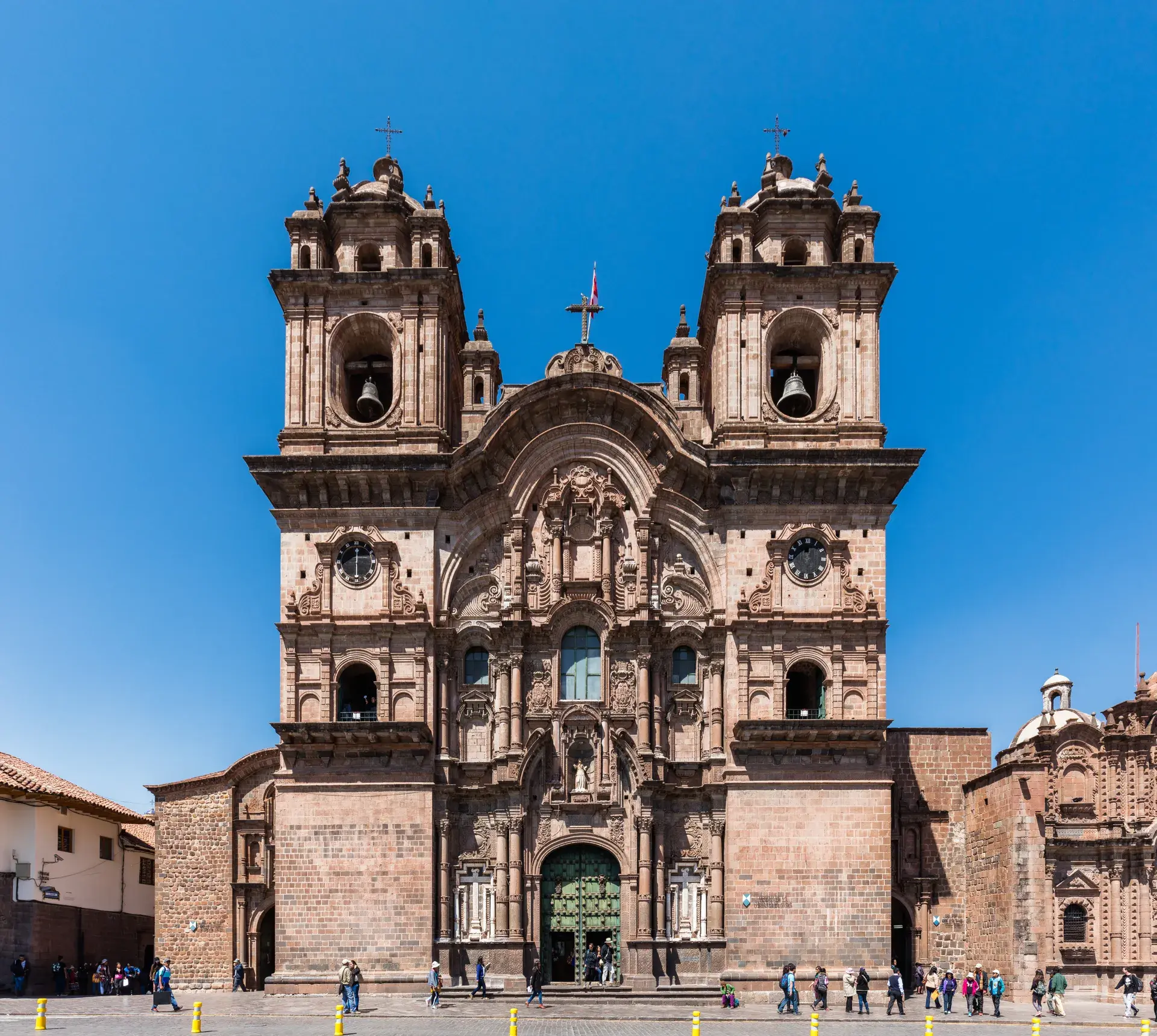
Gracing Cusco's historic Plaza de Armas, the Church of the Society of Jesus, or La Compañía de Jesús, stands as a magnificent stone masterpiece and a prominent example of Spanish/Peruvian Baroque architecture.
A History of Rivalry and Reconstruction
The Jesuits arrived in Cusco in 1571 and began the church's initial construction in 1576. However, a devastating earthquake in 1650 severely damaged the structure, necessitating a complete reconstruction. The new church, which stands today, was largely built between 1651 and 1673, officially opening in 1668.
This period was marked by an intense rivalry with the adjacent Cusco Cathedral. The Jesuits designed their church to be grander, prompting complaints from the local bishop to the Pope. While the Pope ultimately sided with the Cathedral, ruling that the Jesuit church should not overshadow it, the decree arrived after the ambitious structure was largely complete. The Jesuits proceeded, creating a monumental edifice in open defiance.
Architectural Grandeur
The church's design is a powerful expression of the Baroque style. The architectural plan for the rebuilt church is attributed to the Flemish Jesuit Jean-Baptiste Gilles, with Diego Martínez de Oviedo directing the intricate work on the facade. The exterior is constructed from Andesite stone and pink basalt.
The interior is famous for its 'golden glow,' a result of the extensive use of gold leaf. The main altarpiece is a breathtaking example, measuring 21 meters high and 12 meters wide. Crafted from cedar around 1670, it was gilded by Cristóbal Clemente and also features works by Diego Martínez de Oviedo.
From Inca Palace to Jesuit Church
The church was strategically built over the foundations of the Amaru Cancha, or 'house of the Great Serpent,' which was the palace of the Inca ruler Huayna Capac. This act symbolized the imposition of Spanish Christian spaces over indigenous ones. The site was granted to the Jesuits by Viceroy Francisco de Toledo.
A painting within the church famously depicts the marriage of Martín García Oñas de Loyola, the nephew of the Jesuit order's founder, to the Inca princess Beatriz Clara Coya, illustrating the blending of Spanish and Inca cultures.
The Church Today
La Compañía de Jesús remains an active Catholic place of worship and a major tourist attraction. It is a key site on the 'Andean Baroque Circuit.' The church houses a rich collection of colonial art from the Cusco School. One of its side chapels, the Chapel of San Ignacio, now serves as the headquarters for the Society of Artisans of Cusco.
FAQ
What is the Church of the Society of Jesus built on?
The church stands on the foundations of Amaru Cancha, the former palace of the Inca ruler Huayna Capac.
When was the current Church of the Society of Jesus built?
The current church was largely rebuilt between 1651 and 1673 after the original structure was destroyed by an earthquake in 1650.
What is the architectural style of La Compañía de Jesús?
It is a prominent example of the Spanish or Peruvian Baroque architectural style, which influenced many other churches in the Southern Andes.
Can visitors take photos inside the church?
Photography is generally restricted inside the main church.