Chapel of the Holy Trinity: Lublin's Frescoed Castle Gem
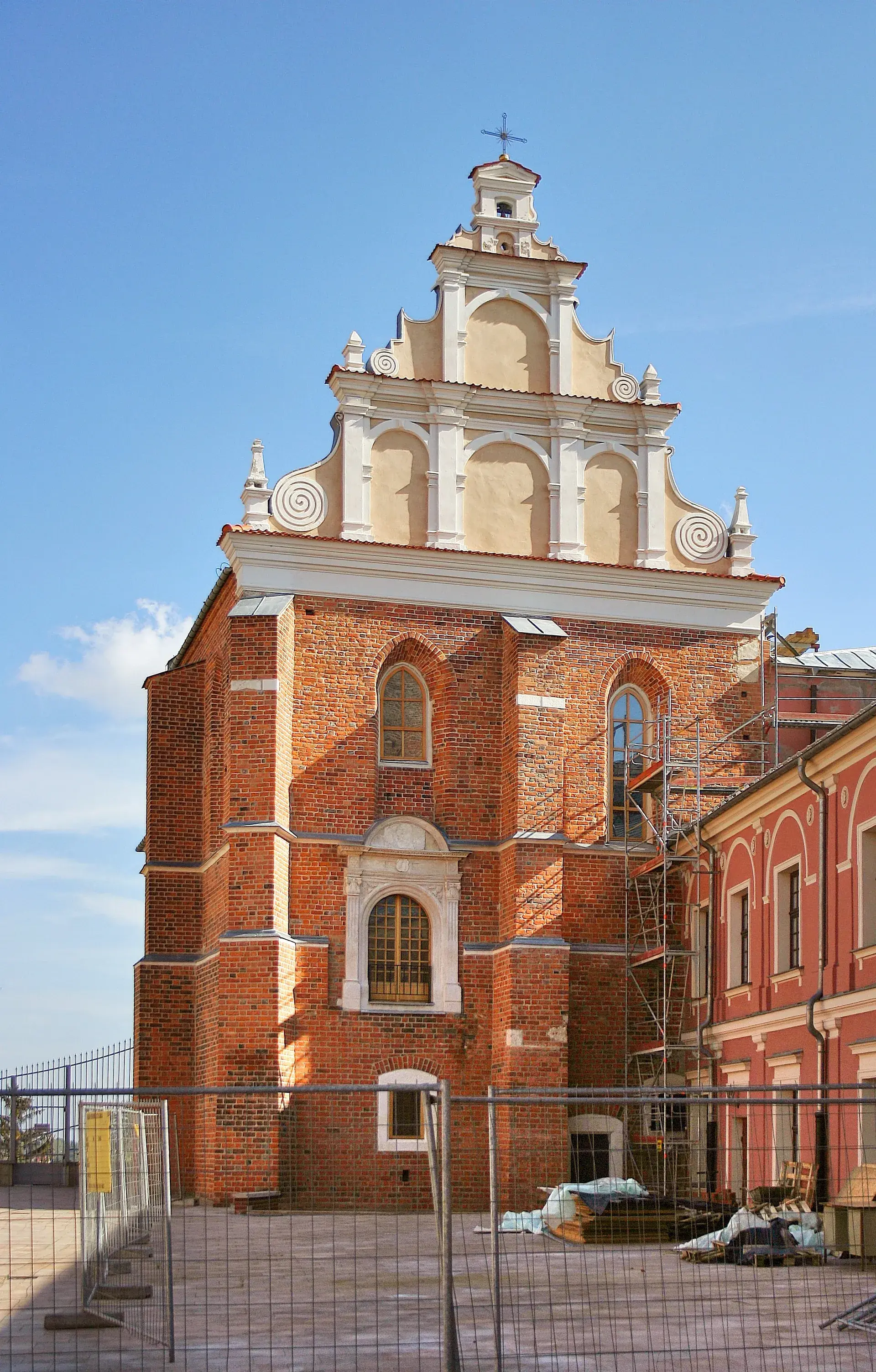
The Chapel of the Holy Trinity is a space where two worlds collide: a Western Gothic Catholic chapel entirely wrapped in brilliant Eastern Orthodox frescoes. Located in the inner courtyard of Lublin Castle, the chapel represents a profound merging of European cultures. As a designated Historic Monument of Poland holding the European Heritage Label, this structure is one of only two medieval buildings to survive the destruction of the original castle.
A Masterpiece of Merged Cultures
Constructed by Casimir the Great in the second half of the 14th century, the two-story Gothic brick chapel features a central octagonal pillar supporting a stellar vault. The exterior was later capped with a Lublin Renaissance gable and attic in the early 17th century.
Between 1407 and 1418, King Władysław II Jagiełło expanded the chapel. Reflecting the King's Eastern roots, he commissioned a workshop of Ruthenian masters, led by Master Andrey, to cover the interior with Byzantine-Ruthenian polychrome frescoes. Completed on August 10, 1418, the artwork creates a striking visual contrast: a dome-centric Eastern Orthodox iconographic layout adapted perfectly to a non-domed, rib-vaulted Western structure.
Rich earth pigments, gold highlights, deep ochres, and cinnabar reds are rendered in tempera across the lime plaster. Cyrillic inscriptions, liturgical bands, rows of haloed saints, archangels, and Christ Pantocrator line the curves of the vaulted ceilings. The central pillar functions architecturally and spiritually as a "pillar of heaven," anchoring the earthly space below to the heavenly hierarchy painted above.
Hidden History and Royal Secrets
The chapel's artwork includes two rare contemporary portraits of King Władysław II Jagiełło. One depicts the King kneeling in prayer before the Virgin Mary, while the other portrays him as a crowned knight on horseback holding a shield marked with his royal heraldic symbol, the Double Cross.
The walls also bear over 200 historical graffiti inscriptions scratched into the plaster between the 16th and 20th centuries. The most notable inscription dates to 1569, etched by nobleman Piotr Jeżewski during the parliamentary sessions of the Sejm in Lublin. It declares, "The union with the Duchy of Lithuania has been made," commemorating the historic Union of Lublin that formed the Polish-Lithuanian Commonwealth.
From Prison to Preserved Monument
During the Russian partition of Poland in the 1820s, the castle was converted into a tsarist prison complex. The sensitive medieval murals were coated in thick lime plaster and whitewash, disappearing from public view for decades.
The frescoes remained hidden until 1899 when local painter Józef Smoliński noticed paint beneath peeling whitewash on a staircase wall. This discovery sparked extensive conservation efforts throughout the 20th century, with major restorations finally concluding in 1997. Today, the chapel operates as a primary exhibition space within the National Museum in Lublin, requiring strict microclimate controls and ticketed entry to protect its ancient pigments.
FAQ
Where is the Chapel of the Holy Trinity located?
The chapel is located in the inner courtyard of Lublin Castle on Castle Hill in Lublin, Poland.
Who painted the frescoes in the Chapel of the Holy Trinity?
The Byzantine-Ruthenian frescoes were painted by a workshop of Ruthenian masters led by Master Andrey, commissioned by King Władysław II Jagiełło, and completed in 1418.
Why were the chapel's frescoes covered in whitewash?
During the 1820s Russian partition of Poland, Lublin Castle was converted into a tsarist prison complex, and the chapel walls were coated with thick lime plaster and whitewash.
Can visitors go inside the Chapel of the Holy Trinity?
Yes, the chapel operates as an exhibition space within the National Museum in Lublin. It is accessible via ticketed entry and maintains strict microclimate controls to preserve the medieval paint.