Trinitarian Tower & Archdiocesan Museum in Lublin
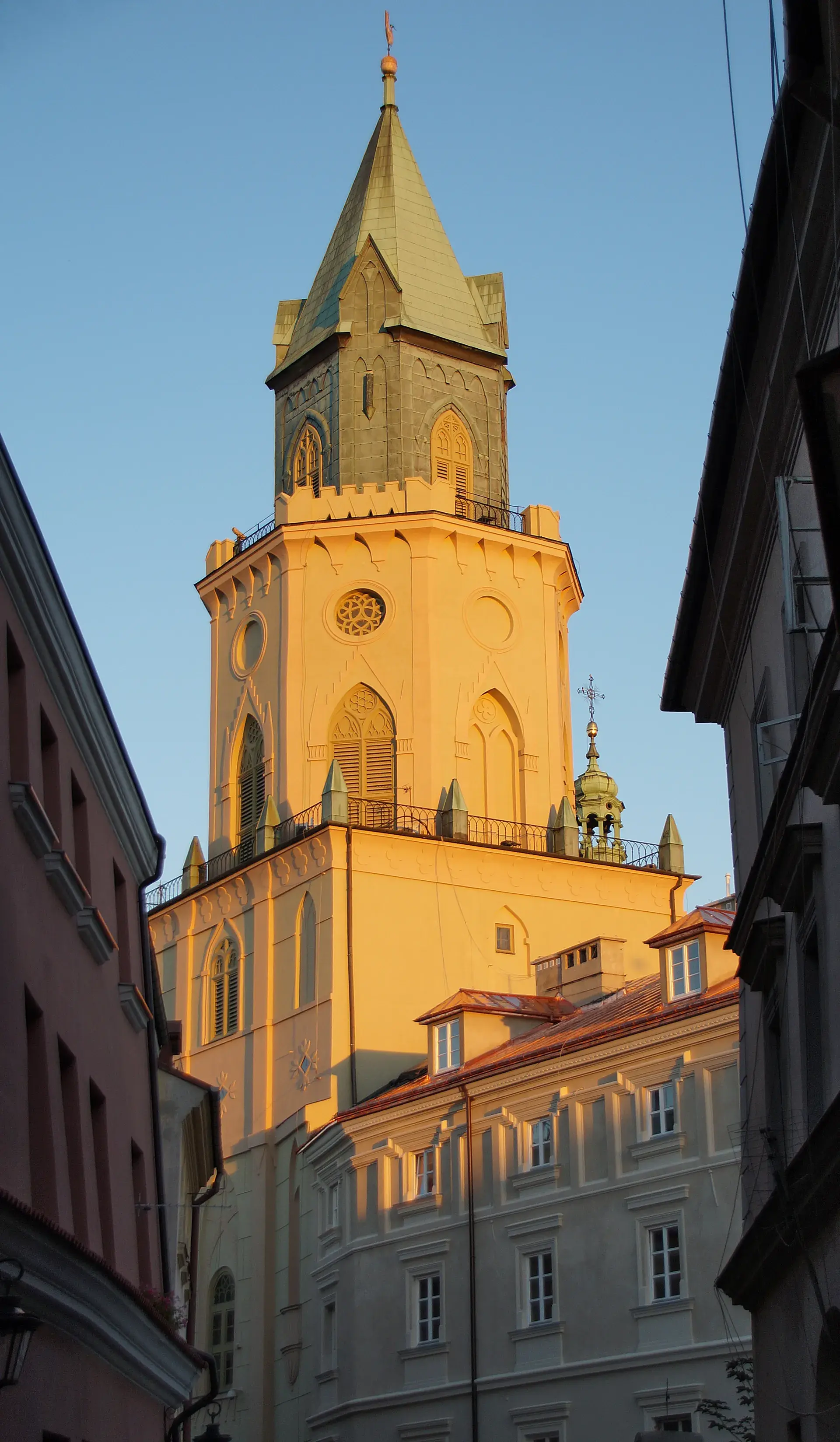
The soaring neo-Gothic Trinitarian Tower features a commanding architectural facade that frames the entrance to the Old Town. Standing at the threshold between two eras, Lublin's highest historical lookout began its life as a humble medieval gate, marking the transition point between the dense medieval street grid and the open neoclassical expanse of Cathedral Square.
From Medieval Gate to Neo-Gothic Belfry
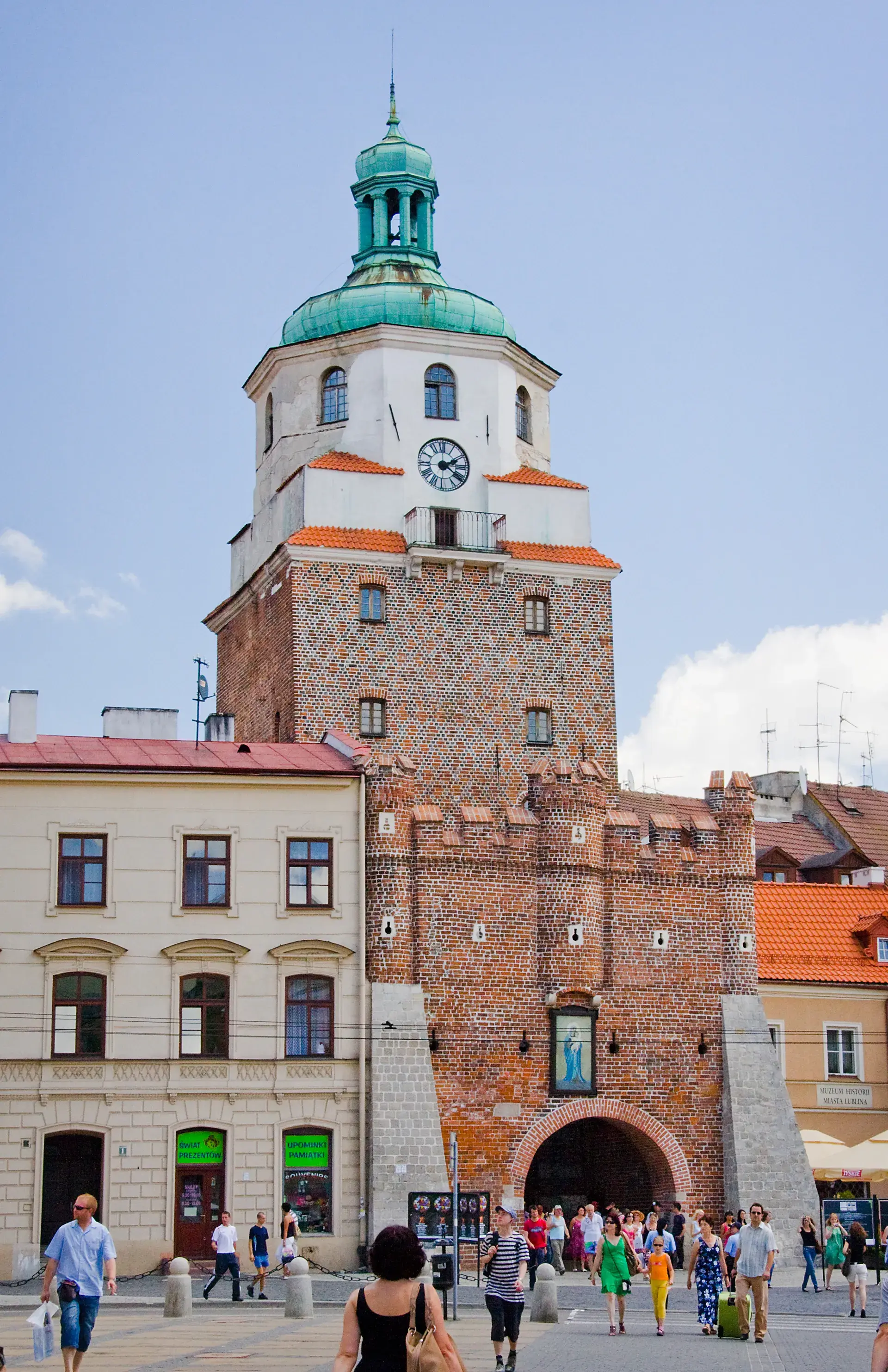
Located at Ulica Królewska 10, the site originally functioned as a small postern in Lublin’s medieval city walls. It was rebuilt into a gate in 1560. In 1693, funding from Dorota Zamoyska allowed for the addition of a belfry above the gatehouse to hold church bells.
Following the suppression of the Jesuit Order, the Trinitarians occupied the complex from 1781 to 1814. Although their tenure was relatively brief, the order permanently lent its name to the tower. After the city acquired the property in 1818, Italian-born architect Antonio Corazzi remodeled the structure into its current neo-Gothic form. During this 19th-century transformation, surrounding dilapidated monastery wings were demolished to create the open Cathedral Square, and the gatehouse briefly functioned as the city's official weighing scales.
The tower sustained heavy damage during German air raids in September 1939 but underwent extensive restoration between 1945 and 1952.
The Archdiocesan Museum of Religious Art
Today, the interior of the Trinitarian Tower houses the Archdiocesan Museum of Religious Art. The collection spans multiple levels across the tower's interior spaces.
Exhibits displayed in the dimly lit exhibition rooms include sacred regional sculptures, tapestries, icons, historic clocks, and crucifixes dating from the 14th to the 18th centuries, alongside various liturgical vessels.
Historic Bells and the Tin Rooster
The tower remains a functional belfry containing significant historical bells. Among them is the historic bell Michał, which was salvaged from a demolished 14th-century church. The tower also holds Maria, the largest bell in Lublin, cast in 1951 and sounded during major solemnities.
Atop the conical tin-clad spire sits a famous weathercock. This tin rooster was immortalized in the opening lines of Józef Czechowicz's landmark modernist poem, Poemat o mieście Lublinie. According to local tradition, the weathercock historically crowed to warn residents of invading armies and fires. A more humorous local folk legend claims the rooster will crow whenever an unfaithful person walks through the gate arch below.
Scaling Lublin's Highest Historical Lookout
The Trinitarian Tower reaches a total height of 60 meters. Its structure consists of a square brick base, an octagonal superstructure, and the crowning spire.
Ascending the tower requires climbing 207 wooden steps set within a multi-tiered framework. The vertical climb routes directly beneath the giant suspended church bells. At a height of 40 meters, a seasonal observation platform offers a panoramic 360-degree vista over the red-tiled roofs of the Old Town, Lublin Castle, and modern urban districts. The upper floor also hosts a small café and serves as a venue for cultural events.
FAQ
How high is the Trinitarian Tower observation deck?
The observation terrace is located 40 meters above ground level. Reaching it requires climbing 207 wooden steps.
What is the legend of the tin rooster on the Trinitarian Tower?
Local folklore claims that the tin rooster atop the spire crows to warn the city of fires and invaders. A humorous alternative legend suggests it crows whenever an unfaithful person walks through the archway below.
What exhibits are inside the Trinitarian Tower?
The tower houses the Archdiocesan Museum of Religious Art, which displays 14th- to 18th-century crucifixes, sacred sculptures, historic clocks, icons, tapestries, and liturgical vessels.
Where did the Trinitarian Tower get its name?
The tower is named after the Order of the Most Holy Trinity (Trinitarians), who occupied the monastery complex from 1781 to 1814 after the suppression of the Jesuit Order.