Crown Tribunal: Lublin's Historic Supreme Court
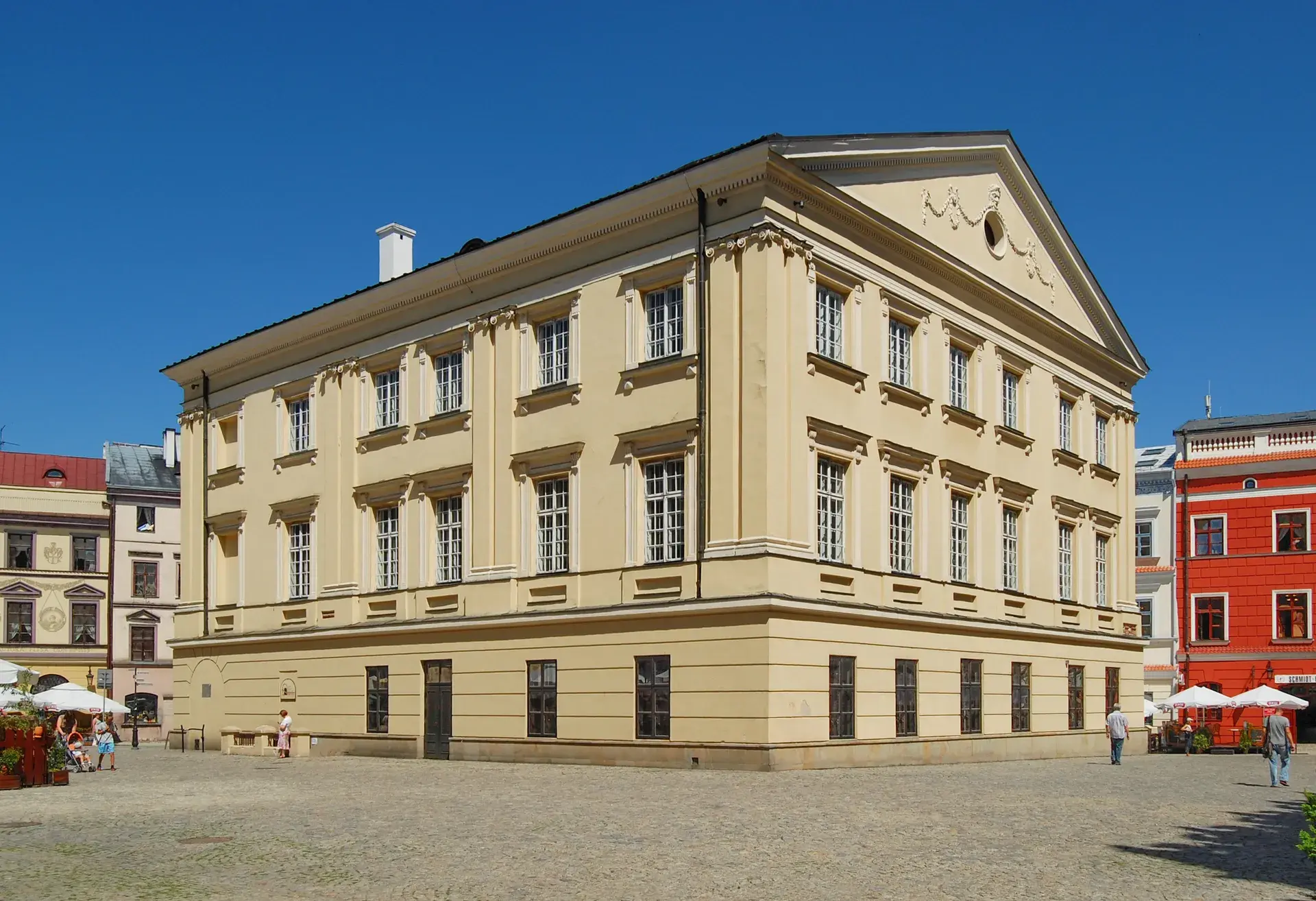
In the center of Lublin's historic square stands an elegant supreme court where noblemen, kings, and supposedly even devils once passed judgment. Occupying the absolute center of the Old Town Market Square at Rynek 1, the Crown Tribunal is the defining architectural symbol of Lublin's golden age during the Polish-Lithuanian Commonwealth.
From Town Hall to Supreme Court
Originating in the 14th century as a wooden Gothic town hall, the building underwent several reconstructions in brick Gothic, Renaissance, and Baroque styles following a series of city fires. In 1578, King Stephen Báthory transformed its purpose by establishing the Crown Tribunal. This body served as the supreme court of appeal for the nobility of Lesser Poland and Ruthenian lands.
The annual court sessions ran from after Easter until all cases were resolved. This legal activity drew thousands of nobles, lawyers, and merchants from across Europe, triggering a massive economic and architectural boom in the city.
Neoclassical Architecture
Between 1781 and 1787, the building was extensively remodeled to accommodate the expanding court administration. Domenico Merlini, court architect to King Stanisław August Poniatowski, doubled the building's floor area and introduced its current classicist design.
The rectangular edifice features a monumental Neoclassical facade. A prominent front pediment displays a bas-relief depicting the classical symbols of justice—scales and a sword. The building stands isolated in the middle of the cobbled square, surrounded on all four sides by pastel Renaissance and Baroque burgher townhouses.
The Legend of the Devil's Paw
A famous local myth surrounds the historic courtroom. According to tradition, corrupt judges accepted a bribe from a wealthy magnate in 1637 and unfairly ruled against a poor widow. In her despair, she declared that even devils would judge more fairly.
That night, a court of demonic judges reportedly appeared, reheard the case, and ruled in the widow's favor. The presiding devil burned his handprint deep into the wooden courtroom table as an enduring seal. This legendary Devil's Table is now preserved as an artifact at the National Museum in Lublin Castle.
Modern Functions and the Underground Trail
The supreme court ceased operating over 160 years ago, but locals still commonly call the building the Tribunal. Today, it functions as the city's Civil Registry Office and Wedding Palace. The historic Great Hall regularly hosts chamber music concerts, lectures, and municipal ceremonies.
The basements, once used as wine vaults and detention cells, now serve as the ticketed starting point for the 300-meter Lublin Underground Trail. This subterranean route physically links local myths, beginning near wooden representations of the Tribunal devils and ending at Po Farze Square.
FAQ
What is the Crown Tribunal currently used for?
Today, the Crown Tribunal functions as Lublin's Civil Registry Office and Wedding Palace. Its historic Great Hall is used for chamber music concerts and municipal ceremonies, while the basement serves as the starting point for the Lublin Underground Trail.
Where is the Devil's Table from the Crown Tribunal legend located?
The wooden table with the legendary scorched handprint is preserved and on display at the National Museum in Lublin Castle.
Who designed the current building?
The Neoclassical structure was reconstructed between 1781 and 1787 by Domenico Merlini, the royal court architect to King Stanisław August Poniatowski.