Sandomierz Cathedral: Byzantine Frescoes & History
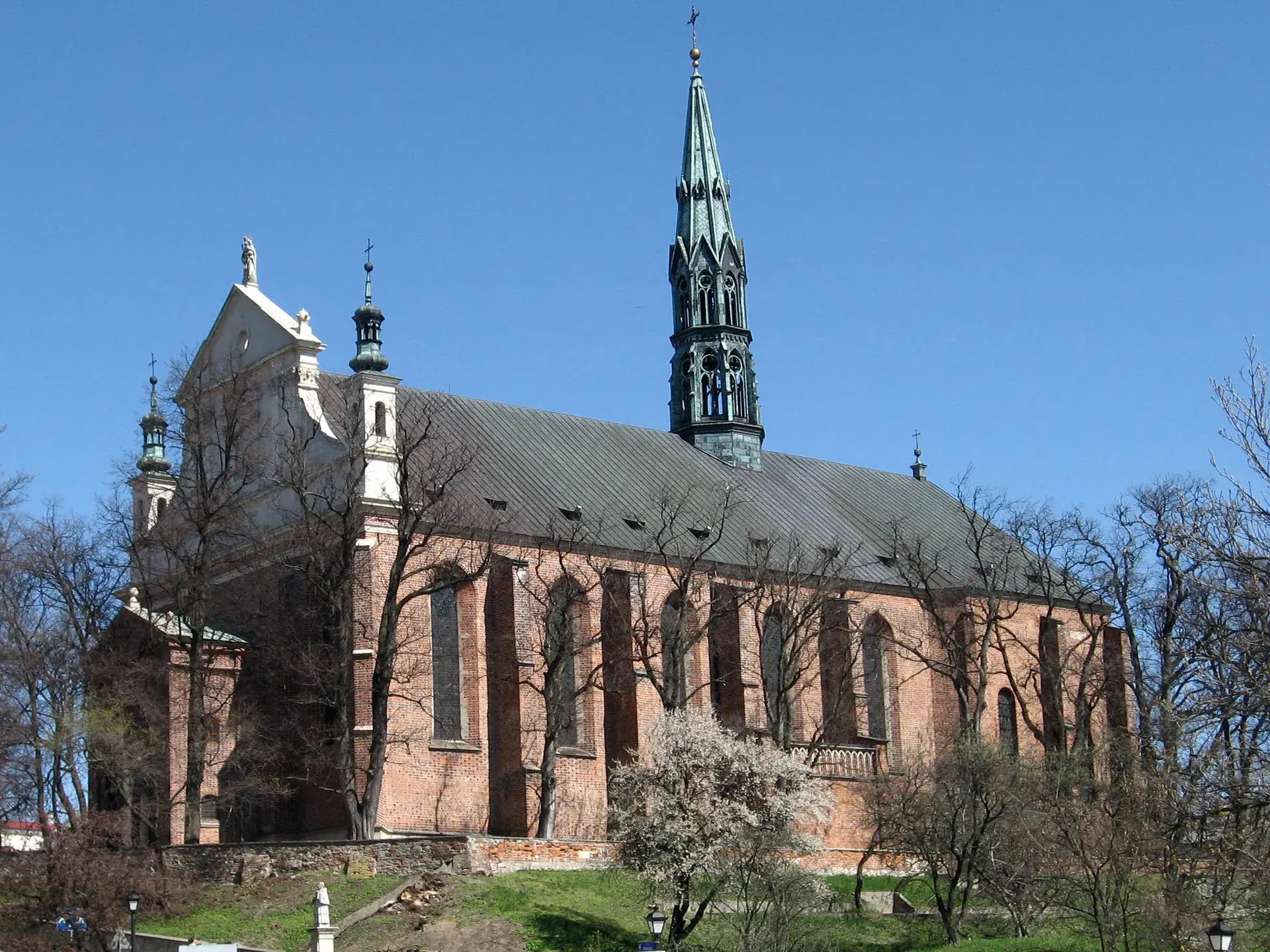
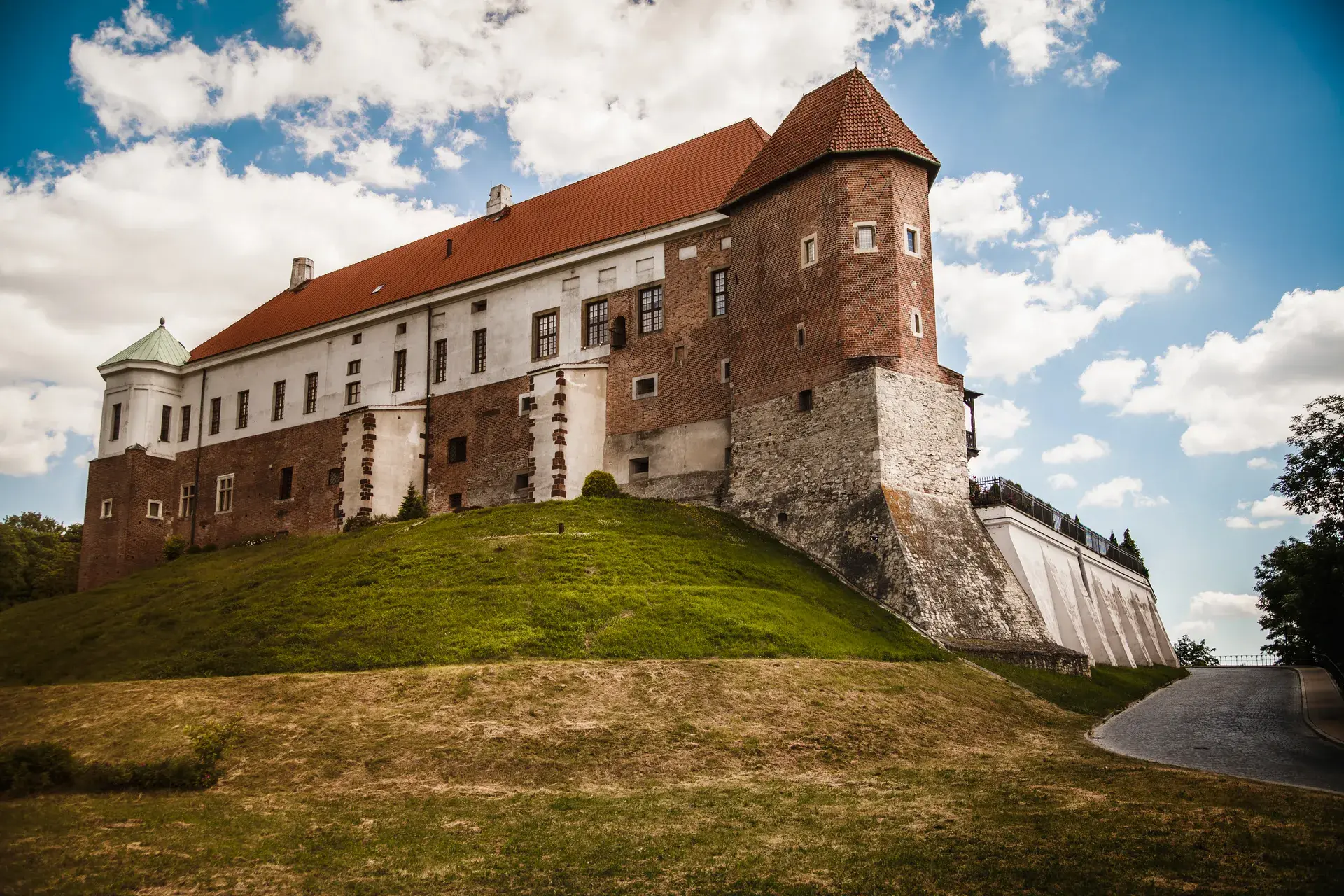
The Cathedral Basilica of the Nativity of the Blessed Virgin Mary in Sandomierz stands prominently on Cathedral Hill overlooking the Vistula River. Anchoring the southern crest of the historic ridge, the brick monument forms a key structural link connecting the town's Market Square with the Royal Castle and Długosz House. Today, the building serves as the principal cathedral of the Roman Catholic Diocese of Sandomierz and holds the papal rank of minor basilica.
Origins and Royal Foundations
The present Gothic collegiate church was founded around 1360 by King Casimir III the Great. It was constructed over the remains of earlier Romanesque structures that had sustained heavy damage during thirteenth- and fourteenth-century invasions. Built from classic Gothic brickwork with high, angular cross-ribbed vaulting, the church established a significant Latin Catholic presence in the region.
Following his coronation, King Władysław II Jagiełło—the son of Lithuanian Grand Duke Algirdas and Orthodox Ruthenian princess Uliana—frequently visited Sandomierz. Between 1420 and 1423, the monarch introduced royal patronage to the sanctuary, commissioning an Eastern painting workshop to decorate the presbytery.
Byzantine-Ruthenian Wall Paintings
Attributed to an Eastern workshop directed by the Orthodox master painter known as Master Hayl (pop Hayl) from Przemyśl, the paintings in the presbytery are executed in the buon fresco technique on wet plaster. They represent one of only four surviving medieval Russo-Byzantine wall painting complexes in Poland, sharing this distinction with the Holy Trinity Chapel in Lublin Castle, the Holy Cross Chapel in Kraków's Wawel Cathedral, and the collegiate church in Wiślica.
According to fifteenth-century chronicler Jan Długosz, King Władysław Jagiełło explicitly favored the "Greek" Byzantine-Orthodox aesthetic over Western Latin styles. This royal preference led him to hire Orthodox iconographers to adorn Roman Catholic interiors. The visual result creates a striking aesthetic contrast, where Western Gothic vaulting frames figures executed in warm earth pigments, ochres, and elongated Eastern iconographic forms.
Iconographic Cycles and Royal Heraldry
The extensive decorative scheme covers the chancel walls and vaulting with Marian and Christological cycles. Depictions include the Annunciation, the Nativity of Christ and Mary, the Passion, and the Anastasis (the Harrowing of Hell) situated above the altar. The vaulting features Christ Pantocrator in a mandorla accompanied by archangels, cherubim, seraphim, and a liturgical procession of patriarchs, prophets, and angels. Another prominent scene depicts the Mission of the Apostles, which tradition connects to royal gratitude for the 1410 victory over the Teutonic Knights at Grunwald, fought on the liturgical feast day of the Apostles' Dispersion.
Along the northern chancel wall runs a 6.7-meter-long heraldic frieze containing nine painted shields. This heraldic display features the Polish White Eagle, the Lithuanian Pahonia, the Jagiellonian double cross, regional insignia such as the land of Sandomierz, and the arms of the Counts of Celje, representing Jagiełło's second wife, Anna of Celje.
Concealment and Modern Restoration
During Baroque-era renovations in 1713, the medieval wall paintings were covered beneath a layer of whitewash. They remained concealed until an accidental rediscovery in 1887 during wall investigations. Between 1934 and 1936, the murals underwent cleaning and heavy repainting.
A thorough conservation project carried out between 2008 and 2010 stripped away the twentieth-century overpaintings to stabilize the original fifteenth-century pigments. This conservation effort uncovered 65 previously altered scenes and brought the heraldic frieze back to light. Additionally, conservators discovered remnants of earlier fourteenth-century Latin decorative work hidden beneath the Jagiełło-era layers.
The cathedral remains open to visitors outside of regular liturgical services, offering both guided access and audioguides detailing its architecture and medieval art.
FAQ
Why are there Orthodox-style frescoes inside a Roman Catholic cathedral?
King Władysław II Jagiełło had an explicit aesthetic preference for the Byzantine-Orthodox style over Latin Western painting, leading him to commission Eastern Orthodox masters to decorate Roman Catholic sanctuaries across Poland.
Who painted the frescoes in Sandomierz Cathedral?
The frescoes are attributed to an Eastern workshop led by an Orthodox master historically identified as Master Hayl (pop Hayl) from Przemyśl, who completed the work between 1420 and 1423.
What other sites in Poland have similar medieval Byzantine-Ruthenian wall paintings?
Sandomierz Cathedral is one of only four surviving sites in Poland with this type of painting, alongside the Holy Trinity Chapel at Lublin Castle, the Holy Cross Chapel in Kraków's Wawel Cathedral, and the collegiate church in Wiślica.