St. James Cathedral Szczecin: A Historic Guide
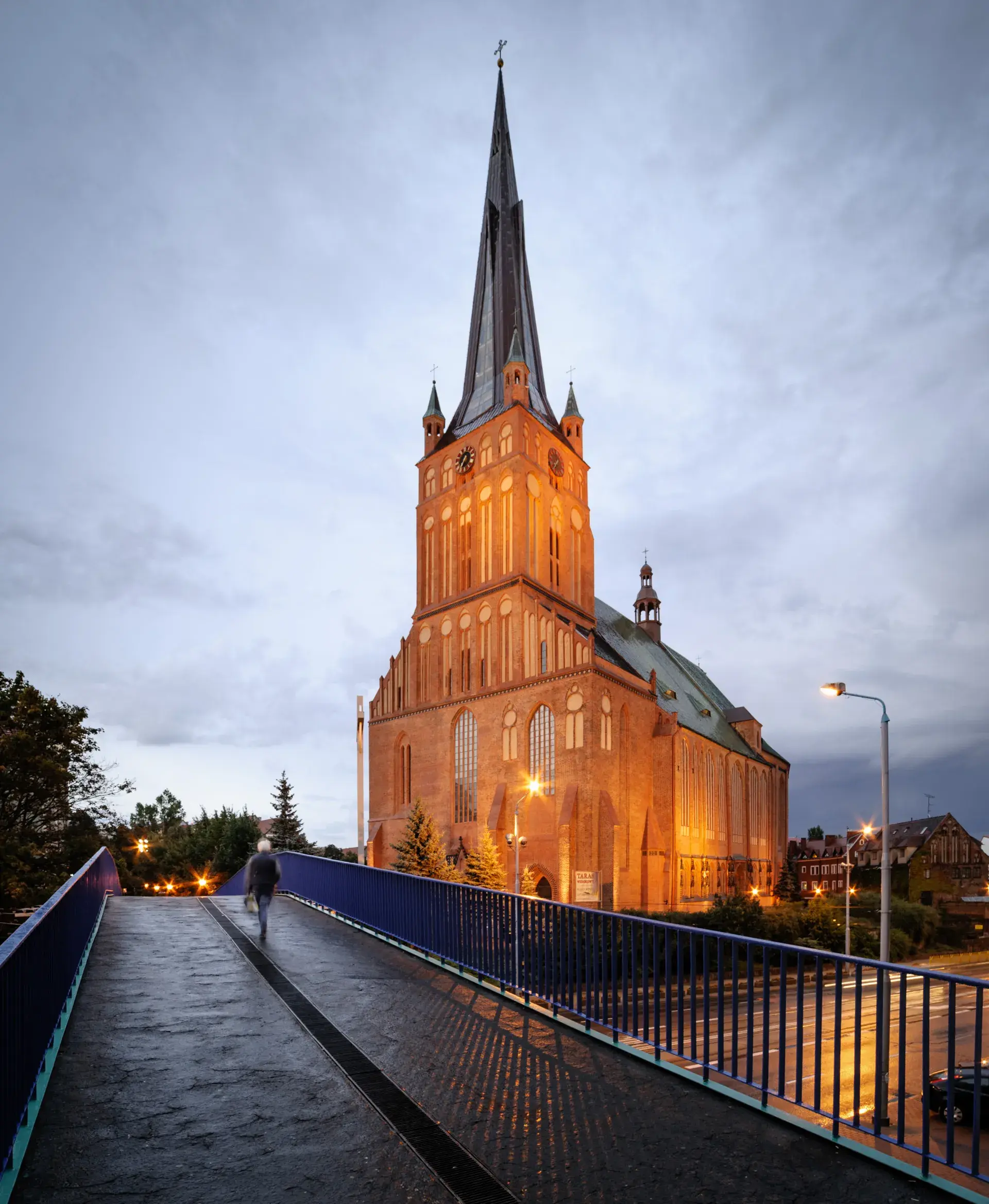
Saved from the wrecking ball only because demolition would have been too expensive, Szczecin's most iconic cathedral had to be rebuilt brick by brick from a roofless ruin. Today, the Archcathedral Basilica of St. James the Apostle stands as a monumental three-nave brick Gothic hall church located at ul. św. Jakuba 1 in the city's Old Town.
A History of Destruction and Resurrection
Founded in 1187 by a Bamberg merchant named Beringer to aid the Christianisation of Pomerania, the church was expanded in the 13th and 14th centuries. Its grand Gothic hall design was modeled after St. Mary's Church in Lübeck. For over four centuries, from 1534 until 1945, the building served as Pomerania's primary Evangelical church.
The structure faced complete devastation on August 16, 1944, when Allied air raids collapsed its 1901 spire and burned its interior. For decades, the church stood as a roofless ruin. State authorities considered demolishing the remains, but preservationists successfully argued that rebuilding would be more cost-effective. Between 1971 and 1974, the monumental walls were reconstructed brick by brick. The building was reconsecrated as a Catholic cathedral in 1982 and elevated to minor basilica status in 1983 by Pope John Paul II.
Architectural Marvels and Recovered Art
The cathedral is a listed historic monument on the European Route of Brick Gothic. Its vast nave is defined by a stark transition from soaring red-brick walls to modern stained glass. Along the perimeter, 19 chapels act as a repository for salvaged medieval artwork from across Pomerania. These chapels house significant historical artifacts, including a 14th-century carved triptych and a preserved Gothic crucifix dating back to around 1500.
One of the most surprising features of the interior is the modern pipe organ built in 2008. The main body of the instrument weighs approximately 30 tonnes and hangs suspended over the nave without any supporting columns. It remains perfectly balanced by a counterweight structure located in the choir loft.
Tower Views and City Skyline
Following tower reconstructions and the addition of a modern soaring spire in 2008, the basilica reaches a height of 110.18 meters, making it the second-tallest church building in Poland. This soaring spire serves as the primary visual anchor for Szczecin's Old Town skyline, defining the classic route that connects the Castle of the Pomeranian Dukes to the riverside boulevards.
The cathedral functions as the mother church of the Roman Catholic Archdiocese of Szczecin-Kamień. It also features a year-round indoor observation deck near the top of the tower. Accessible via passenger elevators, the glassed deck provides a breezy, 360-degree panoramic vista of the surrounding city.
FAQ
How tall is the Archcathedral Basilica of St. James the Apostle?
The cathedral stands at 110.18 meters following its tower reconstruction, making it the second-tallest church building in Poland.
Is there an observation deck at the cathedral?
Yes, the cathedral operates a year-round indoor observation deck near the top of the tower. It is accessible via passenger elevators and offers 360-degree views of Szczecin.
What happened to the cathedral during World War II?
On August 16, 1944, Allied air raids devastated the building, collapsing its spire and burning its interior. It stood as a roofless ruin for decades before being rebuilt brick by brick between 1971 and 1974.