Wały Chrobrego: Szczecin's Historic Oder River Terrace
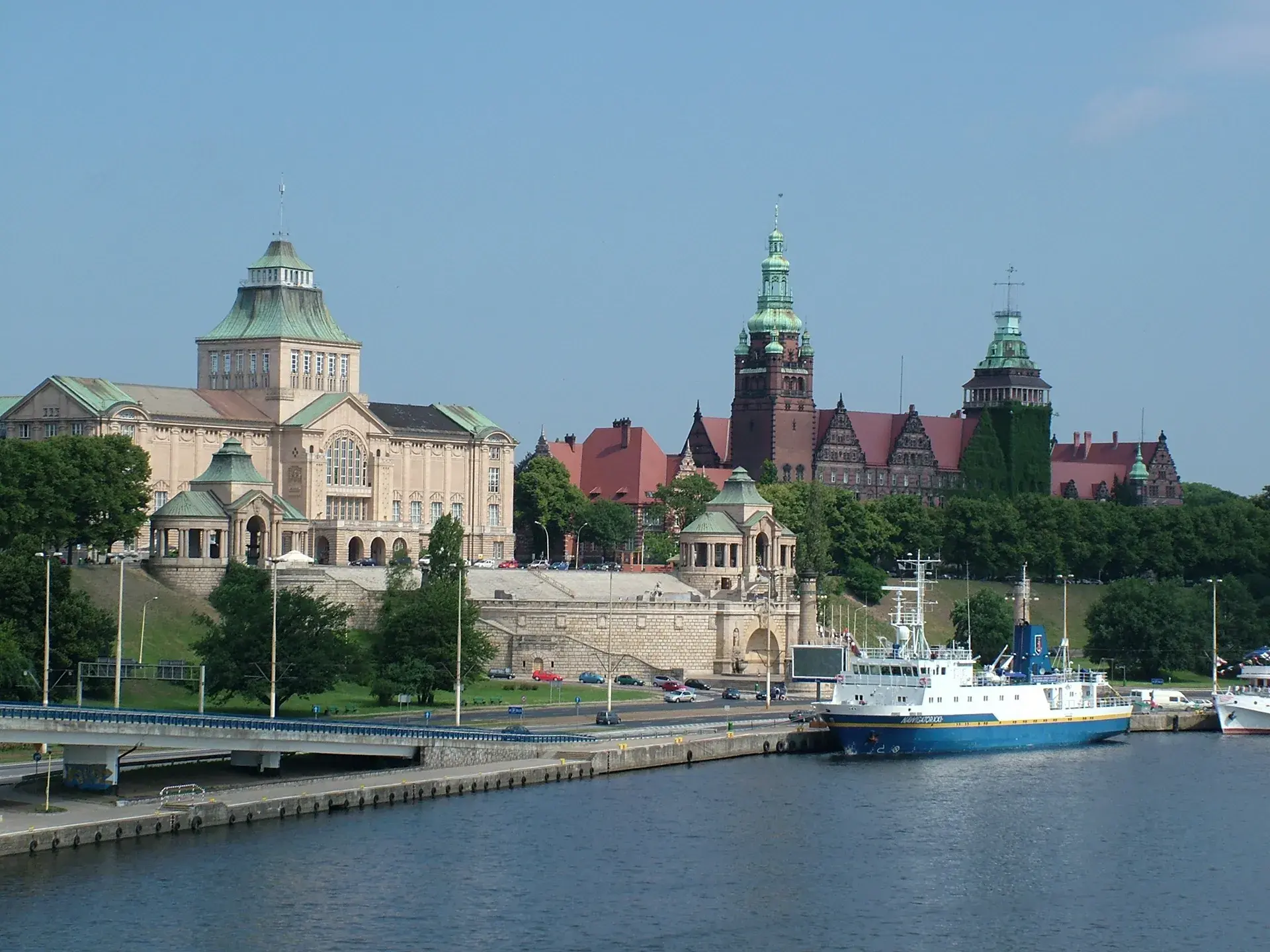
A grand riverside facade built over a demolished 18th-century fortress, Wały Chrobrego was originally designed to impress travelers arriving from the water. Formerly known as Hakenterrasse, this 500-meter-long viewing terrace sits elevated approximately 19 meters above the West Oder River. Today, it stands as Szczecin's signature promenade and forms the city's most iconic river-facing panorama.
Origins and Transformation
The terrace was constructed on the former site of Fort Leopold, an 18th-century Prussian fortress dismantled in the late 19th century to accommodate city expansion. Longtime Mayor Hermann Haken championed the area's transformation from an industrial river slope into an urban civic showpiece. Conceived around 1900, the complex was built between 1902 and 1921 under the direction of city architect Wilhelm Meyer-Schwartau.
Surviving World War II largely undamaged, the embankment underwent significant changes following the 1945 border shifts and the ensuing repopulation process. Polish authorities renamed the terrace after Poland's first crowned king, Bolesław I the Brave.
Monumental Architecture
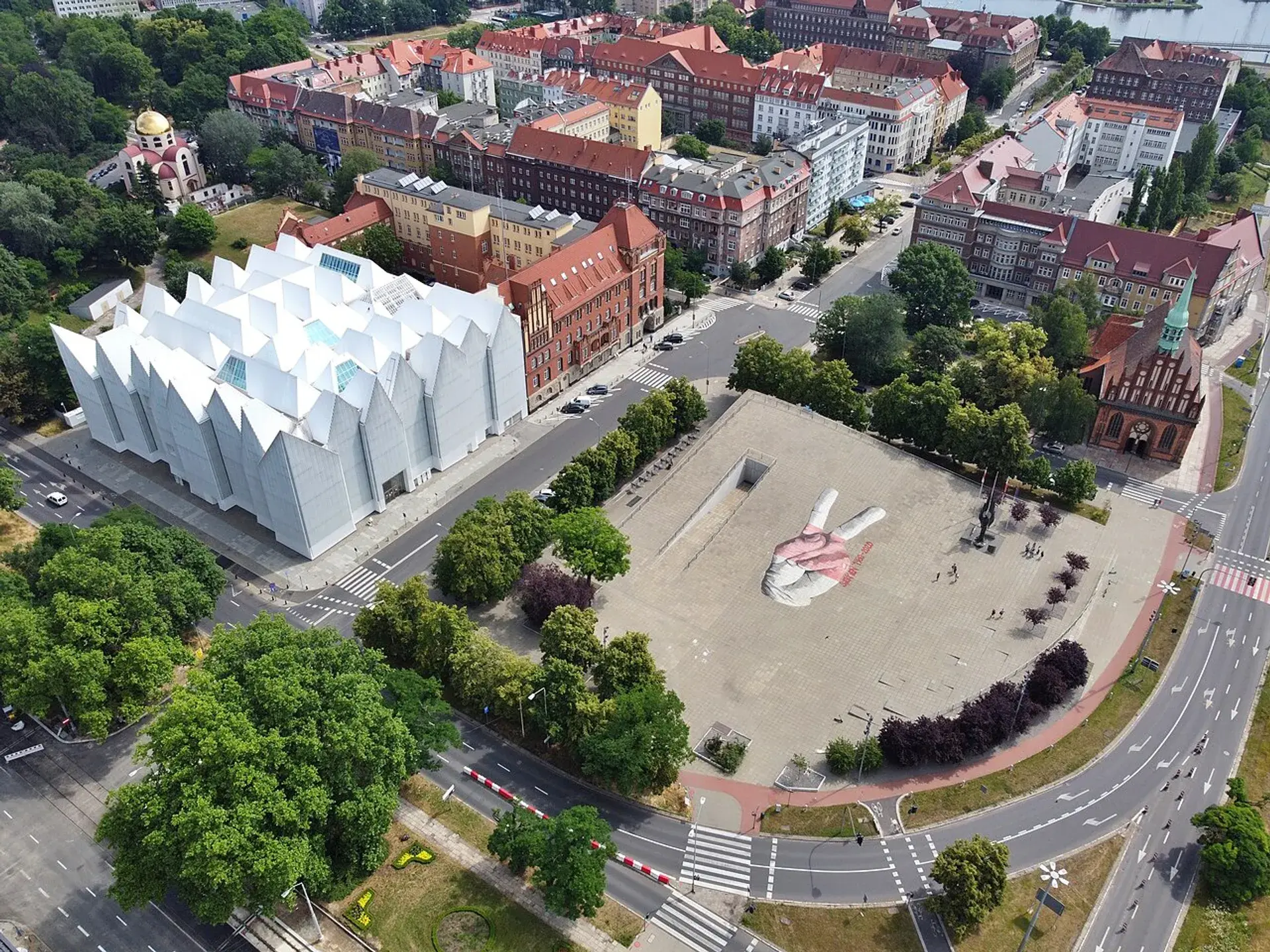
The upper ensemble of Wały Chrobrego is anchored by three monumental public edifices. The central structure, originally the Municipal Museum built between 1908 and 1913 by Meyer-Schwartau, now houses the National Museum in Szczecin and the Contemporary Theatre. To the north stands the West Pomeranian Voivodeship Office, a red-brick Neo-Renaissance complex designed by Paul Kieschke. The southern end is occupied by the Maritime University of Szczecin, operating in former regional finance and insurance administration buildings.
The complex features warm sandstone retaining walls and monumental symmetrical staircases. At the river level, twin stone lantern towers were designed to resemble lighthouses, adding to the site's distinct maritime aesthetic.
Hidden Historical Details
Several curiosities remain embedded within the terrace's architecture. On the central intermediate landing stands a 1913 sandstone sculpture by Karl Ludwig Manzel depicting Hercules fighting a centaur.
The stonework also bears the marks of post-war Polonization. Old German Baltic port names carved into the decorative balustrades were chiseled away or plastered over, replaced with the names of Polish coastal towns. The physical length discrepancies from these altered carvings are still traceable today. In a nod to its origins, historic plaques commemorating Hermann Haken were restored to the site in the 1990s and 2000s.
A Hub of Civic and Maritime Life
Wały Chrobrego functions as the epicenter for major outdoor maritime festivals, including regattas like the Tall Ships Races, as well as open-air concerts. The terrace provides panoramic perspectives over the Oder, Łasztownia island, the shipyards, and port docks.
The atmosphere is heavily shaped by the sensory details of the active waterfront. The sound of rushing water from the central fountain mingles with a river breeze, horn signals from passing tugs and barges, and the distant mechanical sounds of the shipyards. Down at the river level, pavilions feature seasonal cafes, waterfront dining, and boarding docks for river cruises, seamlessly connecting the active waterfront to Szczecin's historic town core.
FAQ
What are the main buildings located on Wały Chrobrego?
The upper terrace features three main buildings: the National Museum and Contemporary Theatre in the center, the West Pomeranian Voivodeship Office to the north, and the Maritime University of Szczecin to the south.
Who designed the Wały Chrobrego complex?
The complex was designed and constructed between 1902 and 1921 under the direction of city architect Wilhelm Meyer-Schwartau, fulfilling the vision of Szczecin's longtime Mayor, Hermann Haken.
Are there any remnants of the terrace's German history visible?
Yes, length discrepancies are still visible in the balustrades' stonework where German Baltic port names were altered to Polish coastal towns after World War II. Additionally, historic plaques commemorating Hermann Haken were restored in the 1990s and 2000s.