Szczecin Old Town Hall: A Historic Architectural Hybrid
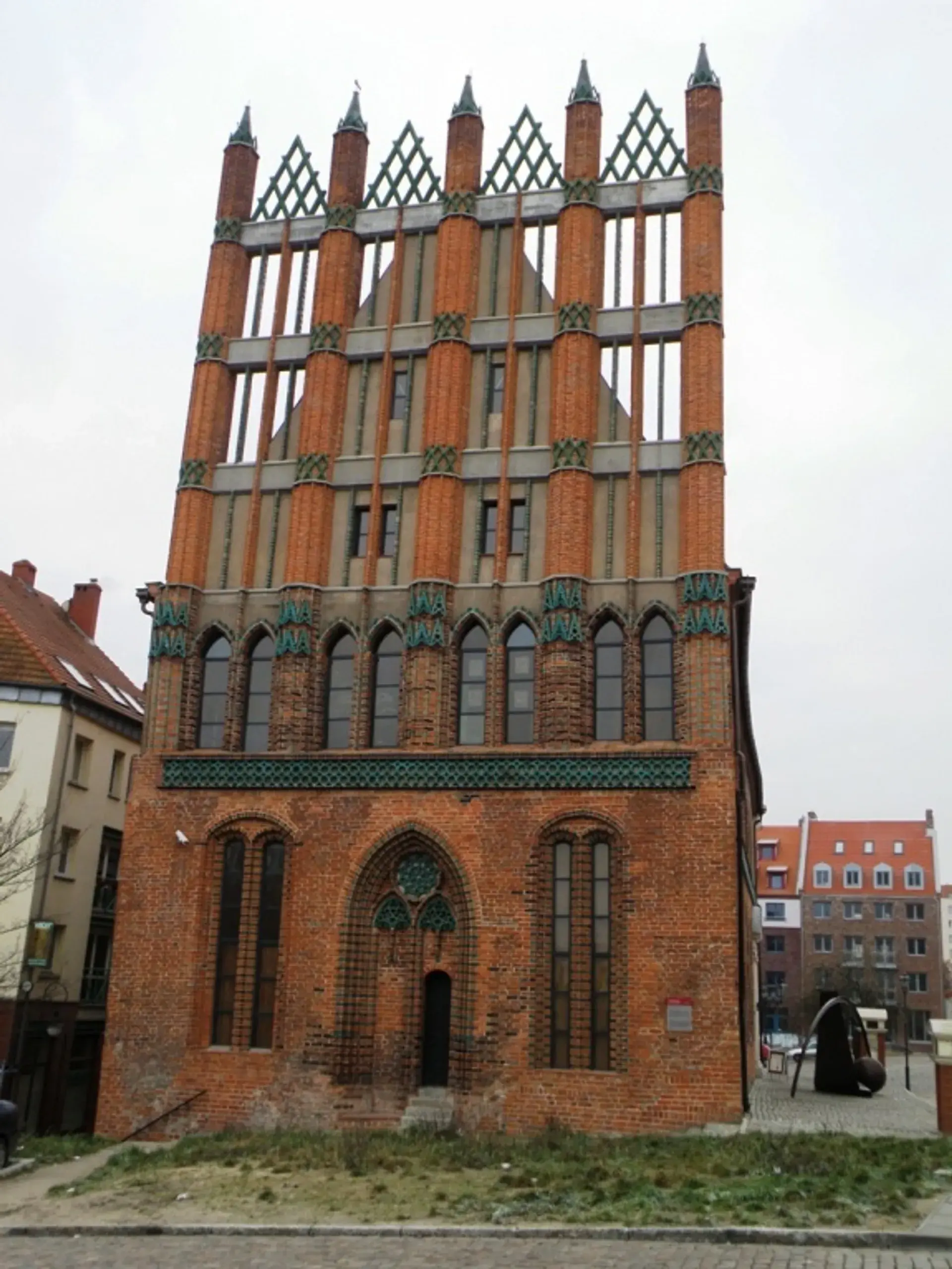
The ornate historic gable and facade of the Old Town Hall stand as a resilient landmark in the old quarter. The town hall literally wears two faces, split directly between the Middle Ages and the Baroque era.
An Architectural Hybrid
The post-war reconstruction intentionally left the building as an architectural hybrid. Conservators restored the north-eastern elevation and pinnacle gable to their 15th-century Gothic form, while preserving the 18th-century Baroque volutes and plasterwork on the southwestern side. The smooth, glassy texture of the exterior walls showcases alternating bands of red and dark bottle-green glazed bricks.
Center of Civic Power
Located between Hay Market and New Market squares, the site became Szczecin's administrative, judicial, and trade core following the 13th-century granting of Magdeburg town rights by Duke Barnim I. The current Late-Gothic structure was built in the late 14th to early 15th centuries to replace an earlier 13th-century wooden hall. Its Gothic design is attributed to the workshop of master builder Heinrich Brunsberg. In December 1570, the hall gained international significance when it hosted the congress that produced the Treaty of Stettin, ending the Northern Seven Years' War.
Destruction and Polish Conservation
The building endured heavy damage during artillery sieges in 1659 and 1677, leading to early 18th-century Baroque modifications. It served as the municipal government seat until 1879, after which authorities adapted it into offices, flats, and warehouses. Gutted during 1944 Allied bombings, the ruined structure was chosen for full reconstruction between 1968 and 1975 under the principles of the Polish conservation school. For roughly two decades after this reconstruction, the town hall stood almost entirely alone in a grassy clearing before surrounding townhouses were rebuilt on their medieval footprints in the late 1990s.
Museum and Cellar Brewery
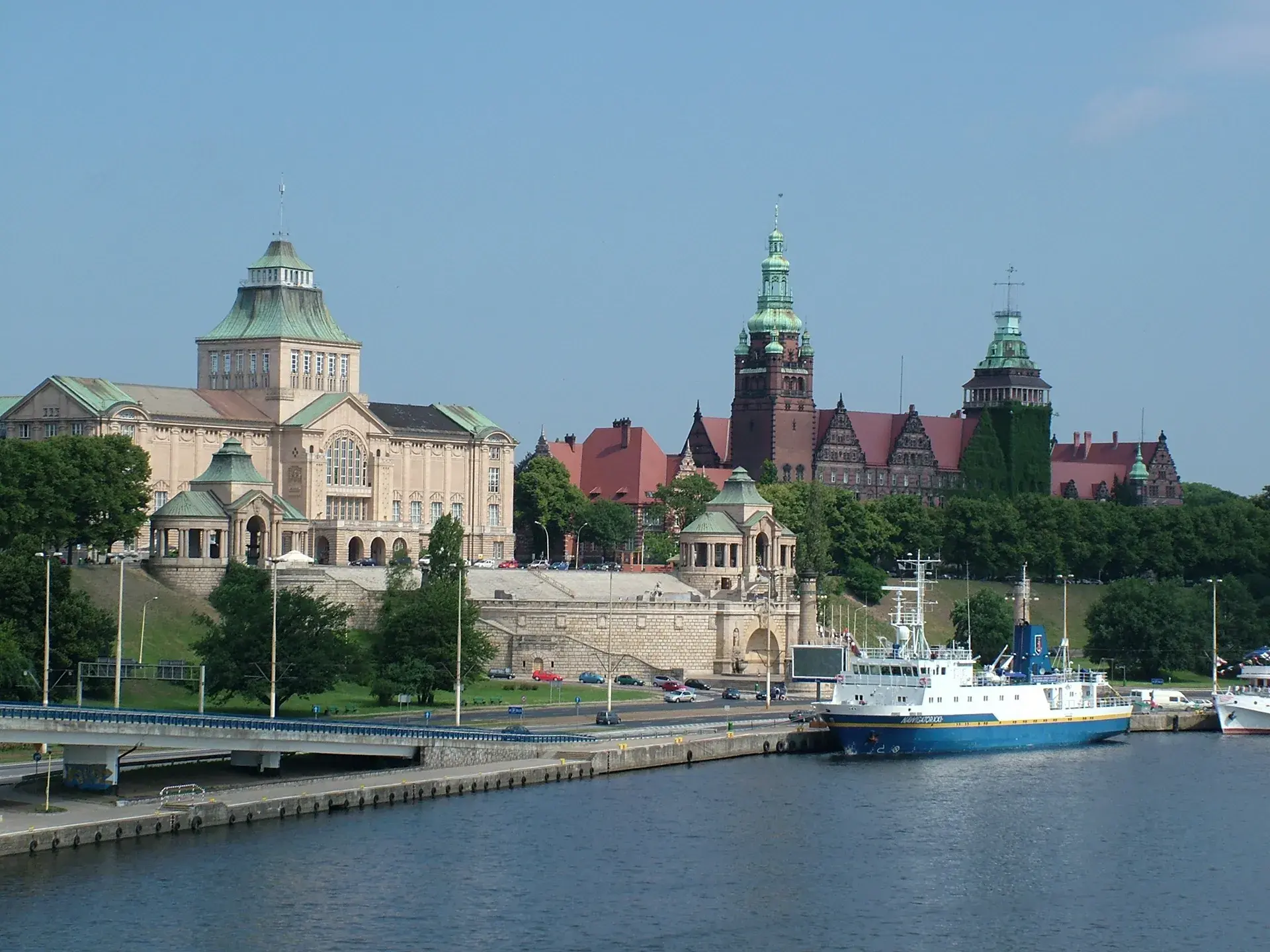
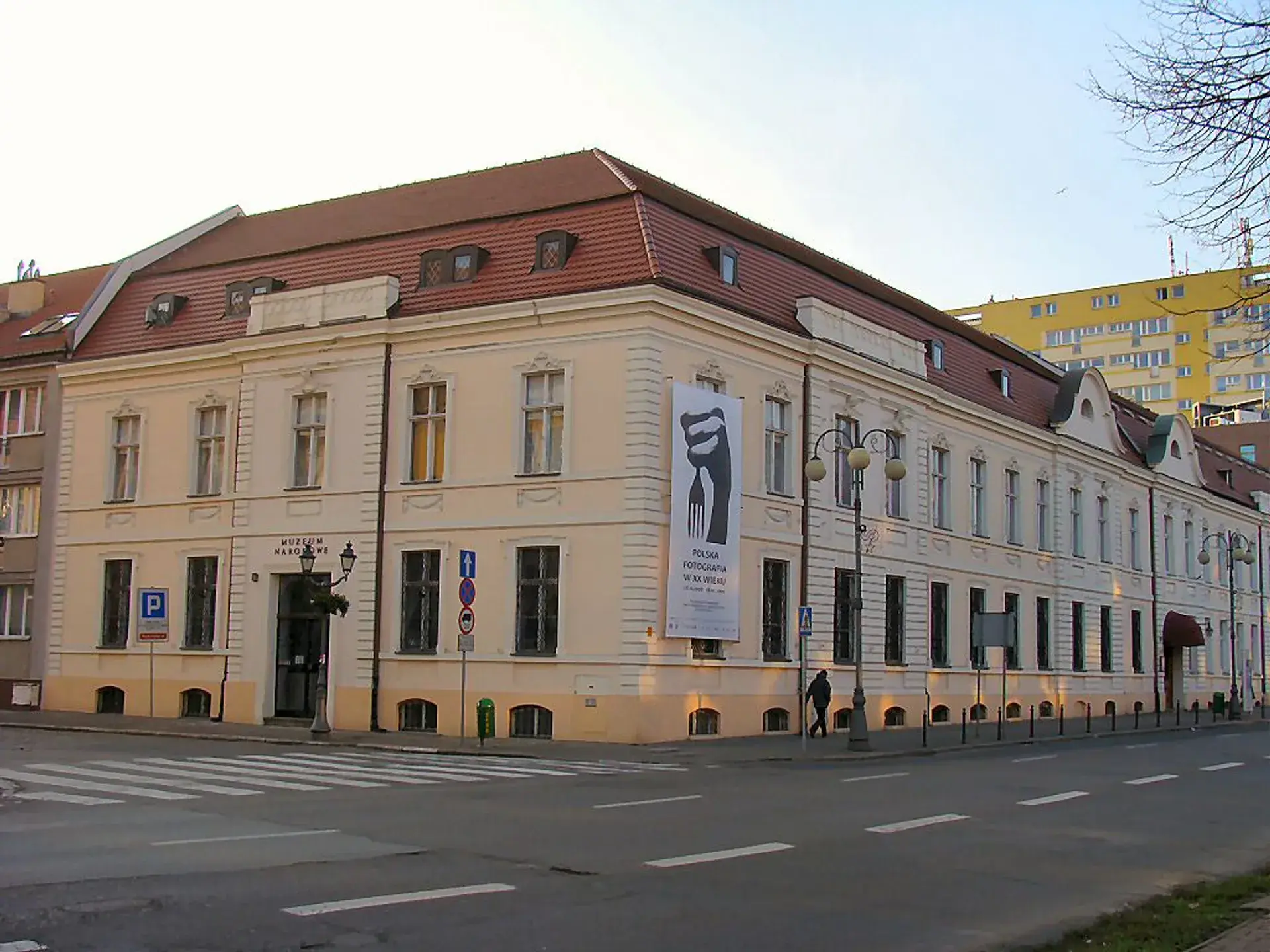
Today, the Old Town Hall anchors the lower historical quarter near the Oder riverbank. It operates as the Szczecin History Museum, a branch of the National Museum in Szczecin, showcasing artifacts from the city's Swedish, Prussian, German, and Polish periods. Below ground, the Gothic cellar houses Browar Wyszak, an independent restaurant and craft brewery. The brewery takes its name from Wyszak, a historical 12th-century Slavic merchant and privateer mentioned in medieval chronicles. Just outside the entrance, a bronze modern sculpture titled 'Wielki Łuk' (Large Arch, 1991) by Szczecin-born artist Bernhard Heiliger sits on the square.
FAQ
What is inside the Old Town Hall in Szczecin today?
The building houses the Szczecin History Museum on its upper floors and an independent craft brewery and restaurant, Browar Wyszak, in its Gothic cellar.
When was the Old Town Hall in Szczecin built?
The original wooden hall dates to the 13th century. The current brick structure was initially built in the late 14th to early 15th centuries, with Baroque modifications added in the early 18th century and a major reconstruction completed between 1968 and 1975.
Why does the Old Town Hall have two different architectural styles?
Following damage in 1944, conservators rebuilt the hall as an architectural hybrid. The north-eastern side was restored to its 15th-century Gothic form, while the southwestern side preserved its 18th-century Baroque details.