Pomeranian Dukes' Castle in Szczecin: History & Guide
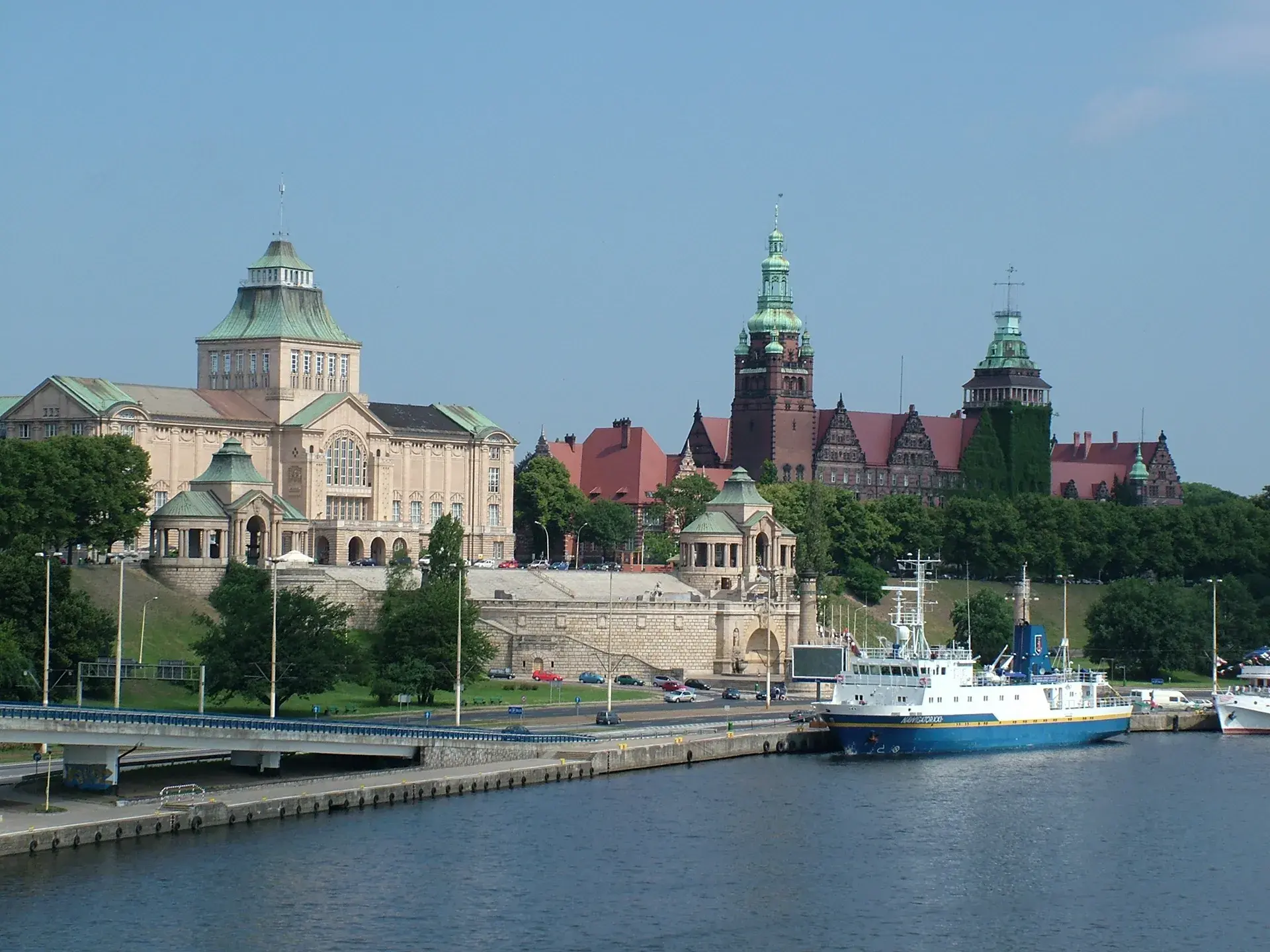
Situated on Castle Hill overlooking the Oder River, the Pomeranian Dukes' Castle stands as the historical centerpiece of Szczecin. For over 500 years, it was the principal residence of the Slavic Griffin dynasty, heavily destroyed in World War II and deliberately rebuilt to revive a distant past. Today, the complex serves as a vital cultural institution connecting the lower riverfront and Old Town to the city's grand 19th-century boulevards.
Five Centuries of the Griffin Dynasty
Originating as an early medieval Slavic stronghold, the site saw its first stone residence erected by Duke Barnim III in 1346. The castle expanded significantly around 1490–1491 under Duke Bogislaw X to celebrate his marriage to Polish Princess Anna Jagiellon.
In the late 16th century, Duke John Frederick commissioned Italian stonemasons to transform the complex into a Mannerist palace. Duke Philip II later added a wing specifically for art and a library. Following the childless death of the last duke, Bogislaw XIV, in 1637, the duchy was partitioned. The castle subsequently housed Swedish governors, an exiled Polish king, and Prussian and German administrators who stripped much of its Renaissance ornamentation for garrison use.
Post-War Reconstruction and Slavic Revival
During World War II, Allied bombing in 1944 destroyed roughly 60 percent of the castle. Post-1945 Polish restorers made a deliberate political and cultural choice during the extensive reconstruction between 1958 and 1980.
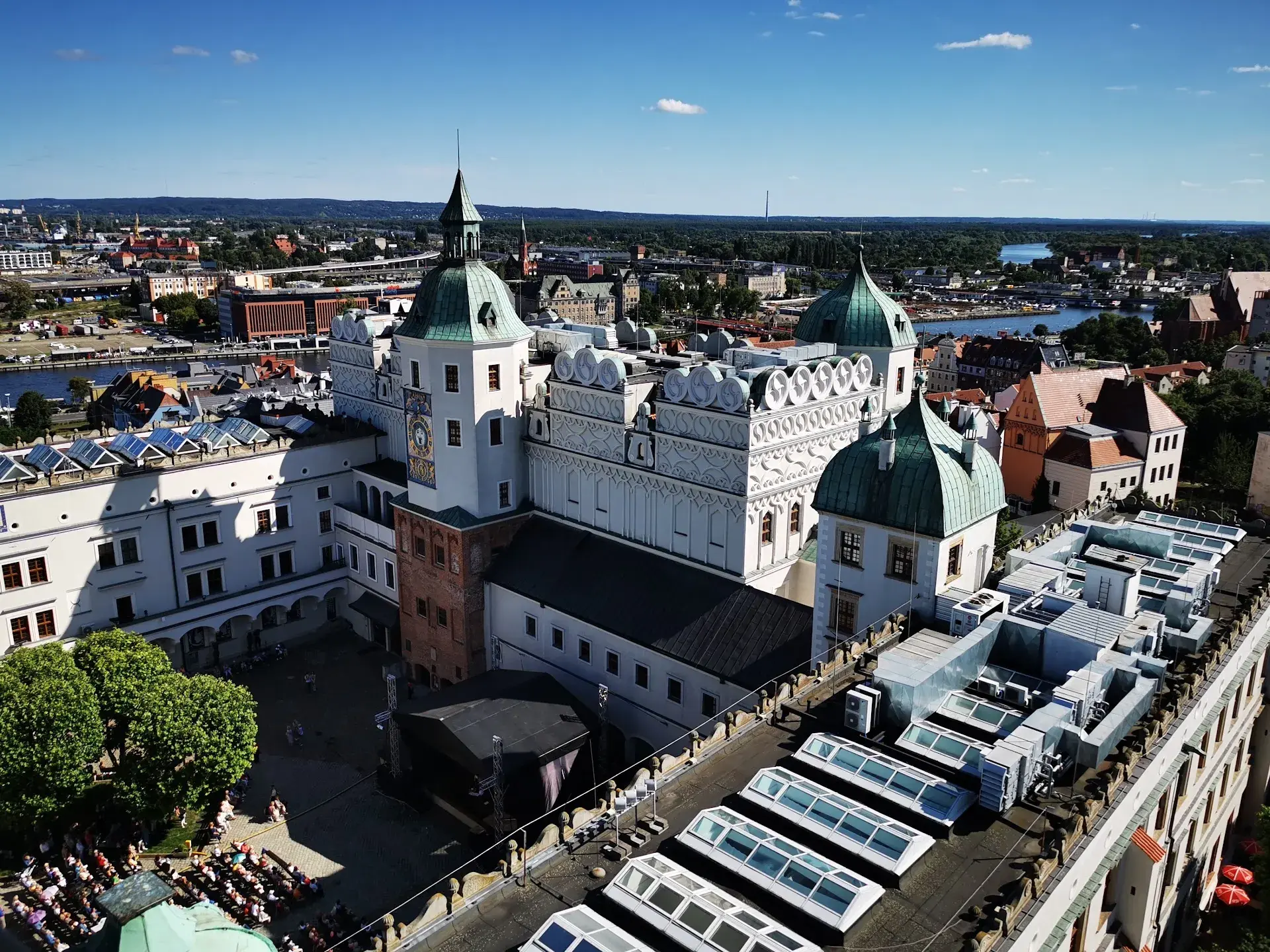
Instead of rebuilding the fortress to its most recent Prussian and German administrative forms, restorers returned the castle to its 16th- and 17th-century appearance. This decision emphasized the region's pre-Prussian Slavic heritage. Today, the striking contrast of white-plastered walls and green copper roofs once again rises above the Oder riverbank.
Courtyards, Crypts, and Cultural Exhibitions
The modern castle operates as a major regional cultural hub. It houses the Castle Opera, concert halls like the Duke Bogusław X Hall, an armory, and various museum exhibitions. Visitors have open access to the Great Courtyard and Mint Courtyard, both framed by tiered arcades and decorative Mannerist gables.
Other accessible areas include the rooftop Ducal Terrace, the Bell Tower viewing platform, and the Ducal Crypt, which contains the tin and bronze sarcophagi of the Griffin dukes.
Legends and the Astronomical Clock
The mechanical sounds of striking bells draw attention to the Great Courtyard's Clock Tower, which features a 1693 baroque astronomical clock. The timepiece displays a painted green mascaron with rolling eyes that track time, a clock hand protruding from its nose, and a moving jester that strikes the bells.
The castle also embraces local lore. Local tradition attributes the extinction of the Griffin line to a curse from noblewoman Sydonia von Borck, executed for sorcery in 1620. A dedicated Witches' Cell exhibition commemorates this legend. Nearby stands the medieval Tower of Seven Coats, tied to a tale of a court tailor imprisoned for stealing leftover fabric meant for the dukes' coats.
FAQ
When was the Pomeranian Dukes' Castle destroyed and rebuilt?
The castle was severely damaged by Allied bombing in 1944, losing roughly 60 percent of its structure. It was extensively rebuilt between 1958 and 1980 to restore its 16th- and 17th-century Renaissance appearance.
What can visitors see inside the Pomeranian Dukes' Castle?
The castle houses museum exhibitions, an armory, concert halls, and the Castle Opera. Accessible areas include the Great and Mint courtyards, the rooftop Ducal Terrace, the Bell Tower viewing platform, and the Ducal Crypt containing Griffin dynasty sarcophagi.
Who was Sydonia von Borck?
Sydonia von Borck was a noblewoman executed for sorcery in 1620. According to local legend, she placed a curse on the Griffin dynasty that led to their extinction, a story commemorated in the castle's Witches' Cell exhibition.
How does the castle's astronomical clock work?
Mounted on the Clock Tower, the 1693 baroque mechanical clock features a painted green mascaron with rolling eyes that follow the time, a clock hand protruding from its nose, and a moving jester figure that strikes the bells.
Discover Szczecin like never before
Dive into Szczecin hidden stories and secret spots with Ciceru interactive tours.
Explore tour
Audioguide
Quizzes
Maps
Solo
Couples
Groups & families

© Photo by Jan via Google Maps · Google Places