The Royal Gate: Szczecin's Baroque Fortress Monument
The Royal Gate stands as a rare surviving piece of 18th-century fortification history in Szczecin, Poland. Originally serving as the northern entry point to a massive bastion fortress, this High Baroque structure is now a standalone monument bridging the city's Prussian military heritage with its modern landscape.
Prussian Military Origins
Built between 1725 and 1728 during the reign of Prussian King Frederick William I, the structure was originally named the Anklam Gate. It was constructed following Prussia's takeover of Szczecin from Sweden, when the city was transformed into a heavily fortified stronghold. The gate was renamed the Royal Gate in 1841 to honor a visit by Prussian King Frederick William IV. It is one of only two surviving 18th-century fortress gates in the city, alongside the Harbour Gate.
High Baroque Architecture
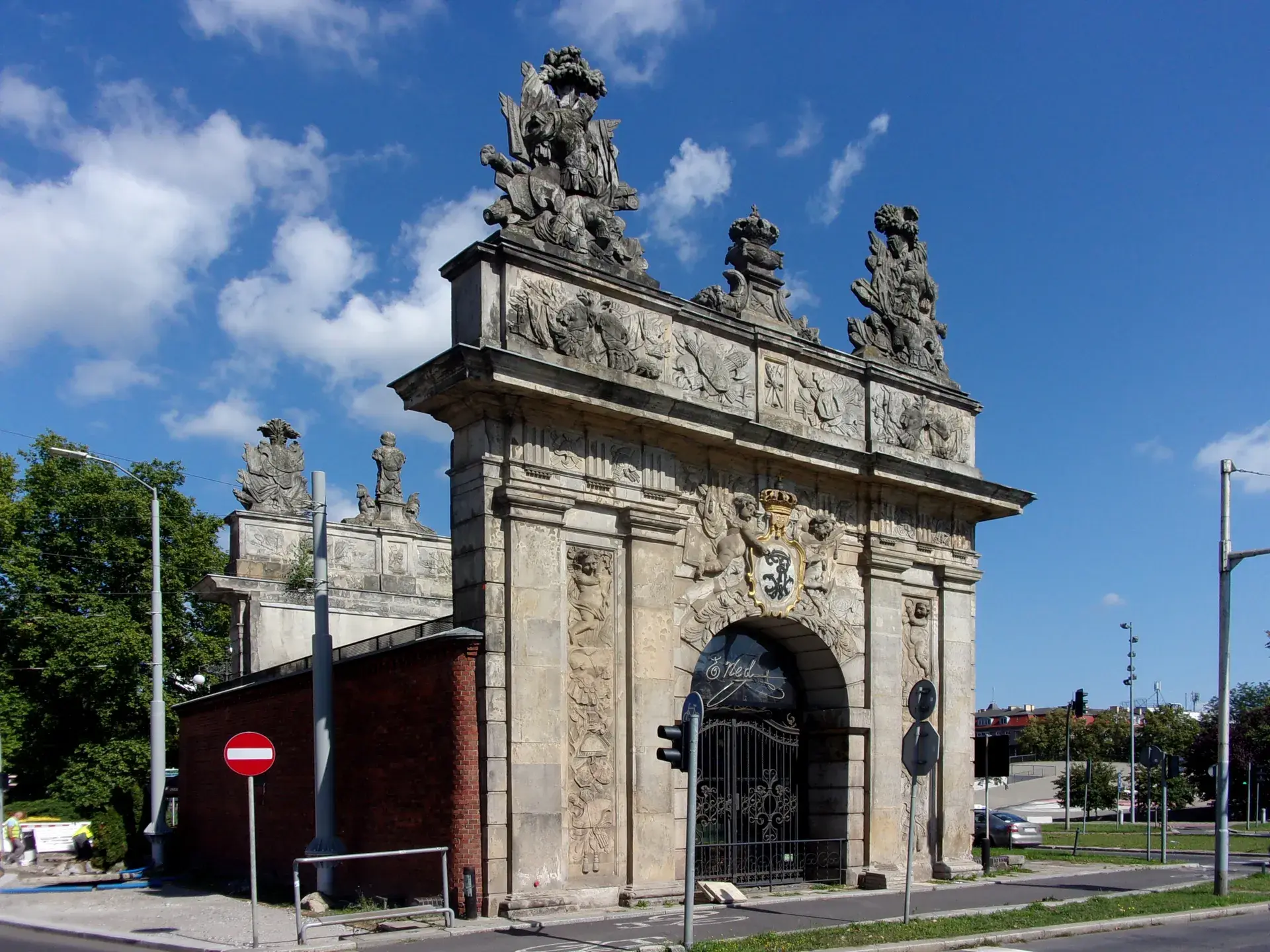
The Royal Gate features a striking contrast between the heavy, vaulted stone barrel passageway of its interior and the deeply carved sandstone decorations on its exterior. Dutch military engineer Gerhard Cornelius van Wallrawe designed the gate, while French sculptor Bartholomé Damart created the intricate façade reliefs. A central cartouche above the arch displays the Prussian eagle enclosed within the collar of the Order of the Black Eagle, topped with a royal crown.
Mythological Sculptures
The gate's attic is crowned with freestanding stone figures of mythological heroes and captives. These include Mars holding a sword and shield, and Hercules wielding a club draped in a lion skin. At the very top sits a torso in Roman armor mounted on a pedestal, flanked by two seated, chained captive figures.
Surviving Demolition and War
When Szczecin dismantled its bulky ring of ramparts in 1873 to accommodate urban expansion, preservationists successfully intervened to save the Royal Gate. During World War II, authorities took drastic measures to protect the monument from Allied air raids. The main structure was camouflaged in ivy, while the ornate roof statues were dismantled in 1942 and buried underground in the nearby Arkona Forest. These hidden sculptures spent 15 years in the woods before being recovered and reinstalled during post-war reconstruction in 1957.
A Modern Landmark
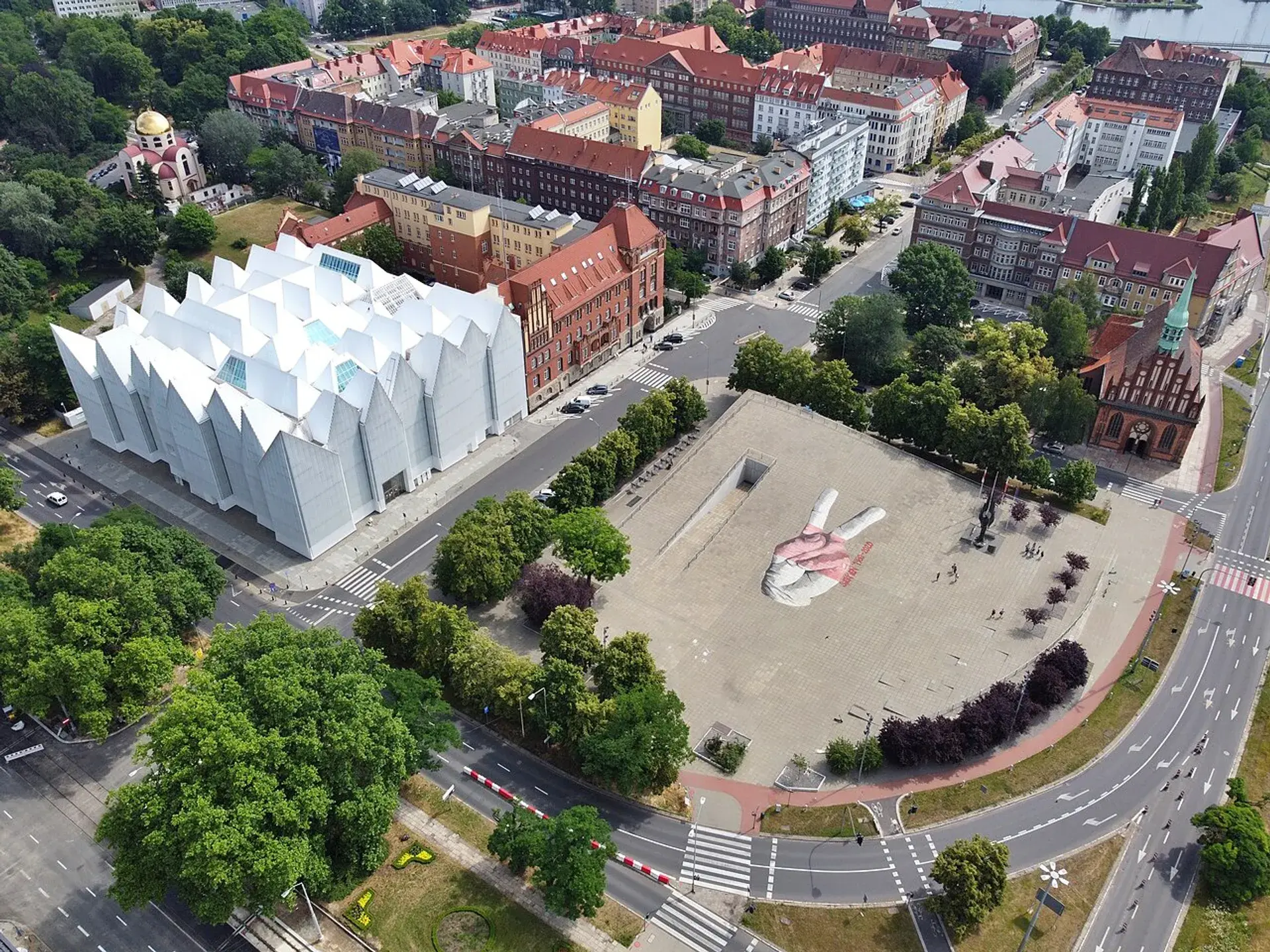
Today, the Royal Gate is a pedestrian focal point on Prussian Homage Square, located directly across from the Szczecin Philharmonic and Solidarity Square. A bronze plaque added to the western exterior wall commemorates Polish General Dezydery Chłapowski, who was imprisoned in a nearby fort in the 1830s. The interior of the gate now functions as a confectionery and chocolate café, continuing the structure's evolution from a military checkpoint to a welcoming city landmark.
FAQ
Who designed the Royal Gate in Szczecin?
The architectural design was created by Dutch military engineer Gerhard Cornelius van Wallrawe, with façade sculptures by French sculptor Bartholomé Damart and masonry by Hans Jürgen Reinecke and J.H. Trippel.
How did the Royal Gate survive World War II?
To protect the gate from Allied air raids in 1942, the structure was camouflaged in ivy. Its statues were removed and hidden underground in the Arkona Forest, remaining there for 15 years until their reinstallation in 1957.
What is inside the Royal Gate today?
The heavy, vaulted stone barrel passageway inside the gate currently operates as a confectionery and chocolate café. In the past, it also housed an art gallery and a jazz club.