Brama Klasztorna: Toruń's Medieval Monastery Gate
A Flemish Gothic Stronghold
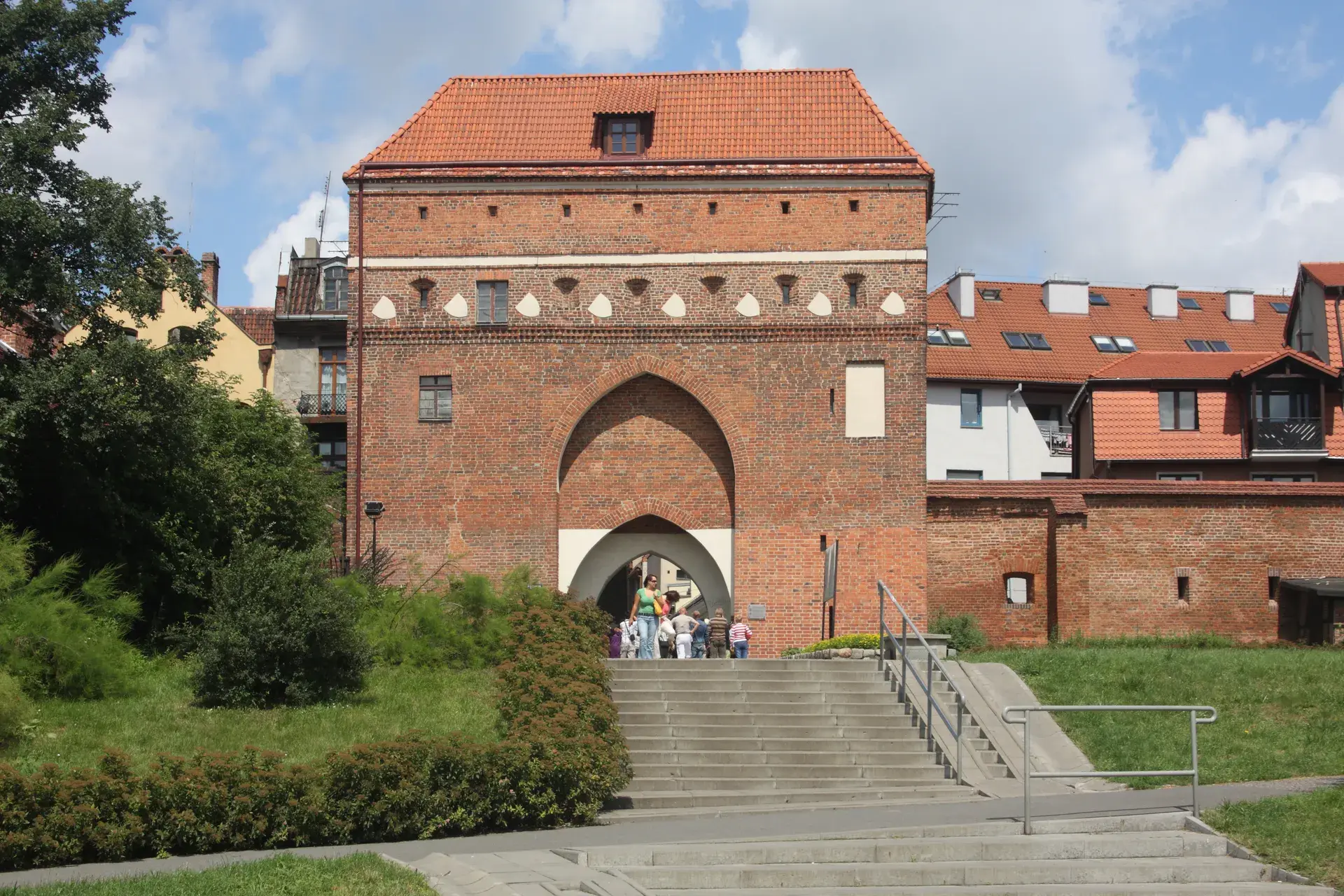
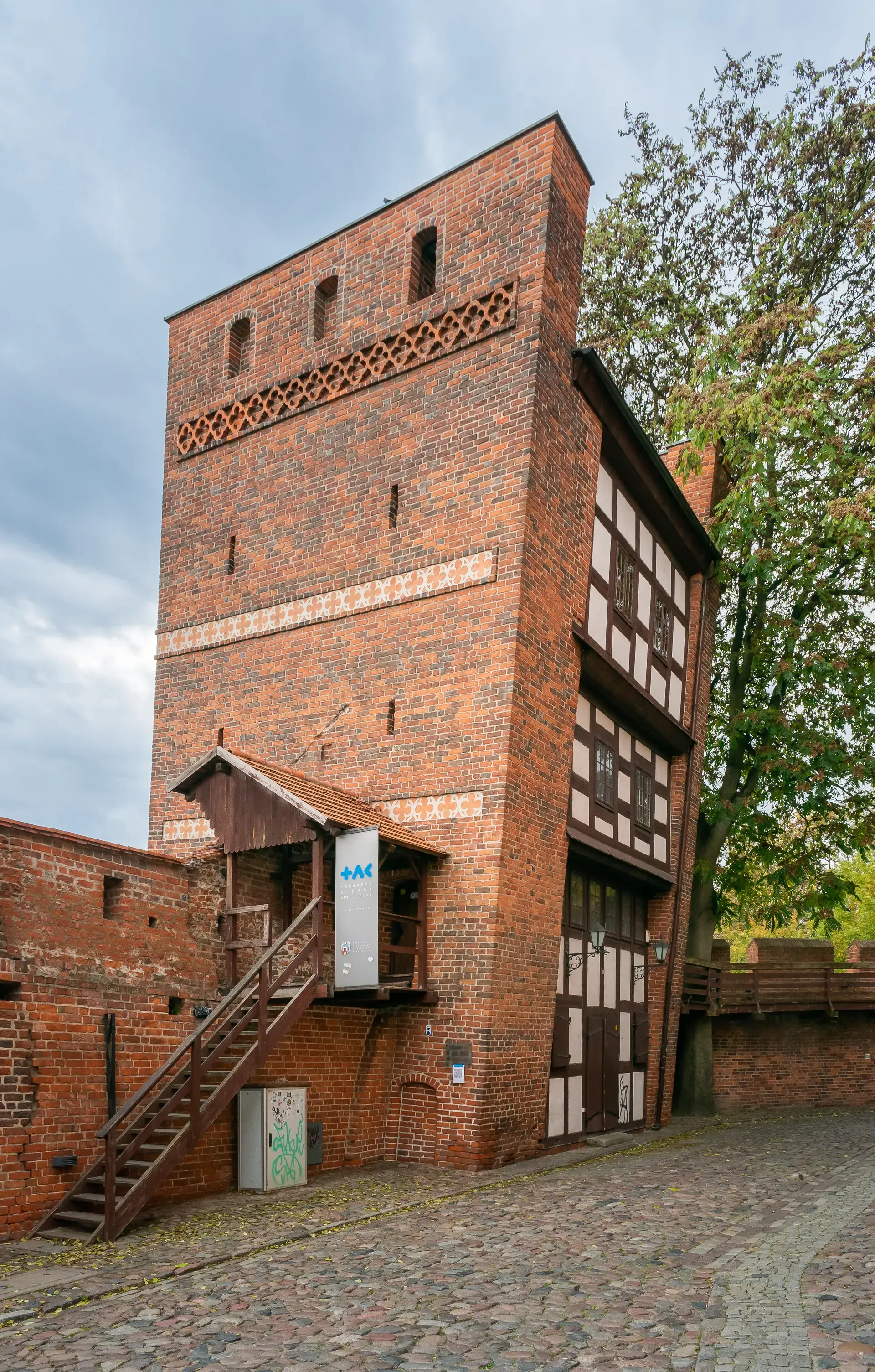
Constructed in the first half of the 14th century, Brama Klasztorna (the Monastery Gate) is characterized by its squat, massive rectangular brick form built in the Flemish Gothic style. Also known historically as the Holy Spirit Gate, Maidens' Gate, or Nuns' Gate, it stands as one of only three surviving medieval town gates in Toruń out of an original thirteen to fourteen. The gate anchors the southern line of Toruń's UNESCO-listed fortifications, positioned just east of the Leaning Tower and the historic grain storehouses along the Vistula riverbank.
Toruń's Triple-Barrier Defenses
To defend this medieval gateway, Toruń's guards relied on heavy iron, thick oak, and vats of boiling breakfast porridge. The structure was raised by one storey around 1420 to accommodate firearms and featured a formidable triple-barrier defensive system. The outer pointed arch housed a sliding wooden portcullis, while the inner arch was fitted with heavy double wooden gates reinforced with iron fittings and securing beams.
Between these barriers lay a middle vault featuring a ceiling murder hole known locally as a "kaszownik." Defenders frequently used this opening to pour boiling groats (kasza) onto attackers below. The thick porridge was favored over boiling water because it held heat much longer and stuck painfully to armor and skin.
The Lost Convent and Wooden Foundations
The gate took its primary name from a nearby medieval Benedictine nunnery and the associated Holy Spirit hospital situated just outside the city walls. During the Swedish invasion in the mid-17th century, Toruń authorities deliberately leveled this entire convent complex. The strategic demolition ensured that besieging forces could not use the masonry structures for cover or as artillery positions against the city.
Centuries later, archaeological excavations conducted in 2001 uncovered the gate's hidden structural secrets. Because of the unstable, waterlogged clay near the Vistula riverbed, medieval builders erected the massive brick gate over hundreds of vertically driven oak piles.
Modern Functions and a Wartime Bunker
By the 19th century, the gate ceased to serve a military function, and Prussian authorities converted its upper chambers into residential quarters. Today, the structure operates as an active pedestrian passage, connecting the Vistula riverside boulevard to the historic Old Town core via Holy Spirit Street.
While the upper floors now house non-governmental and municipal offices, the subterranean level holds a more modern historical artifact. An air-raid shelter built beneath the gate in October 1943 during the German occupation accommodated up to 100 people. It currently operates as a visitor attraction featuring air-raid and bombing simulations.
The Legend of Sister Katarzynka
Local lore connects the Monastery Gate directly to Toruń's famous culinary heritage. A popular legend claims that during a severe famine, a Benedictine nun named Sister Katarzynka discovered barrels of aged gingerbread dough in the convent cellars outside the gate. The baked breads fed starving residents, an act that supposedly gave Toruń's iconic six-lobed gingerbread, known as Katarzynki, its lasting name.
FAQ
What was the 'kaszownik' used for at Brama Klasztorna?
The 'kaszownik' was a ceiling murder hole in the middle vault of the gate. Defenders used it to pour boiling groats (porridge) onto attackers, as the thick mixture retained heat longer than water and stuck painfully to armor and skin.
Why is Brama Klasztorna called the Monastery Gate?
The gate was named after a medieval Benedictine nunnery and hospital complex that stood outside the city walls. Toruń authorities deliberately destroyed the convent during the 17th-century Swedish invasion so attackers could not use it for cover.
What is located beneath the Monastery Gate today?
A sub-level air-raid shelter built in October 1943 is located beneath the gate. Originally constructed to hold up to 100 people, it now operates as an attraction that features historical bombing simulations.