Krzywa Wieża: Guide to Toruń's Leaning Tower
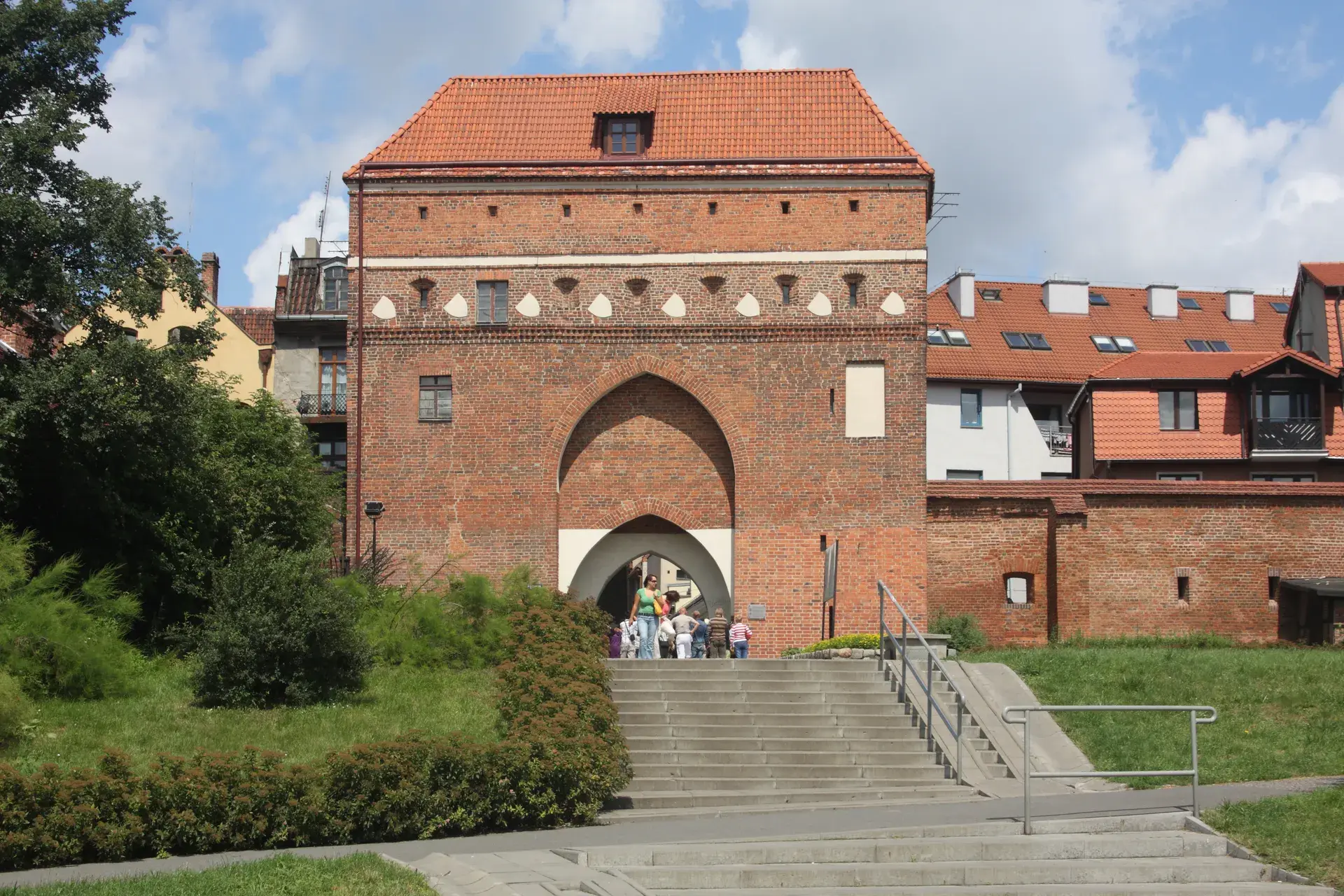
Marvel from the street at the dramatic 13th-century lean of this historic defensive tower, steeped in local legend. The Leaning Tower (Krzywa Wieża) forms one point of Toruń's traditional cultural trinity alongside Nicolaus Copernicus and gingerbread. Sitting at the western anchor of the preserved southern riverside fortifications, it connects the interior of the Old Town to the Monastery Gate and the Vistula embankment.
A Medieval Defensive Marvel
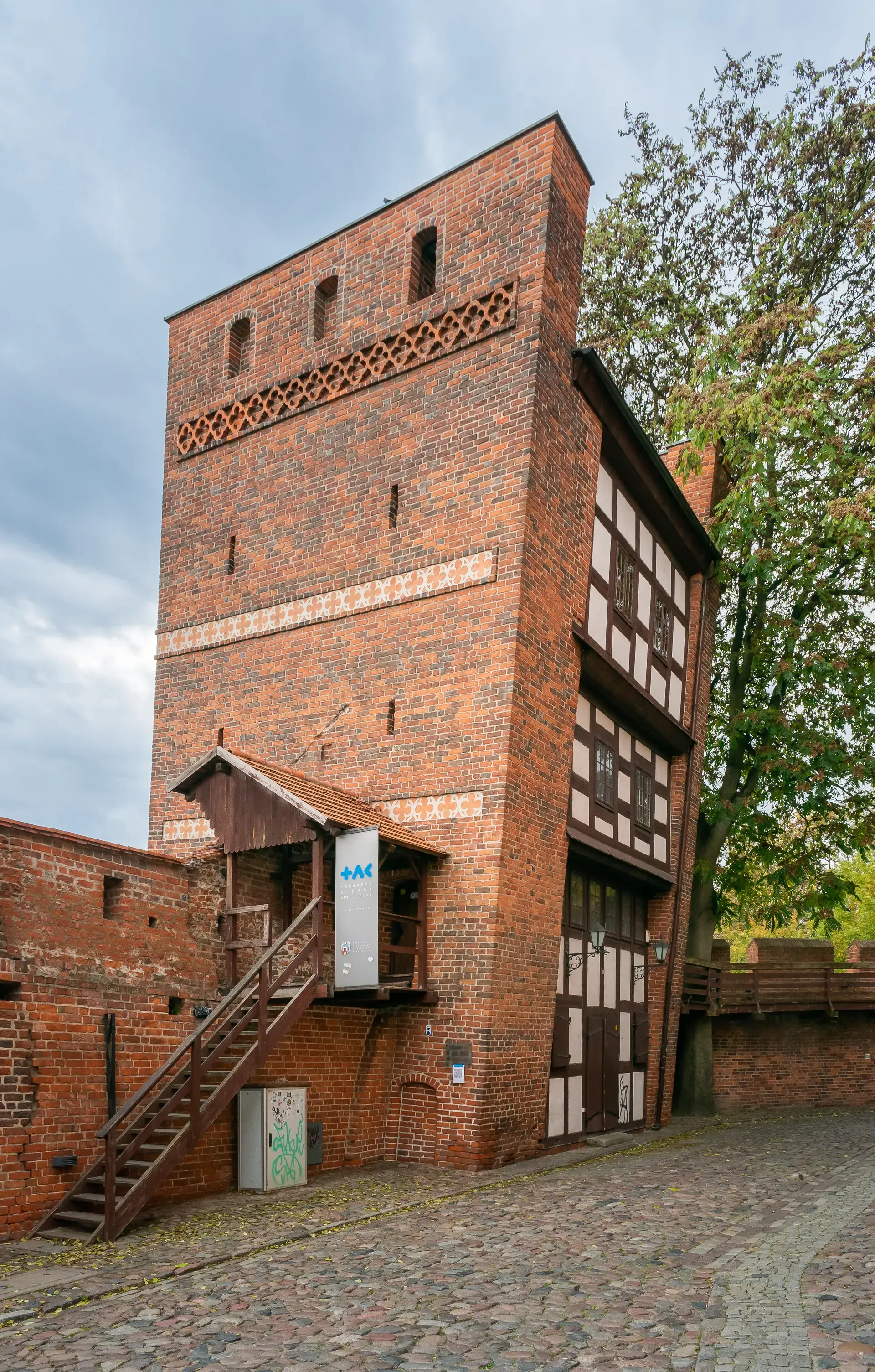
Erected in the late 13th to early 14th century, the tower is an approximately 15-meter-high bastion built from red Gothic brick on a rhombus-shaped ground plan. Originally, it functioned as one of roughly 54 fortified watchtowers along the city's perimeter wall facing the Vistula River. In its initial medieval phase, the structure had only three outer walls and was open toward the town. This open-back construction allowed defenders to easily haul supplies upward while preventing attackers from using it as an enclosed fortress if captured.
The Physics Behind the Famous Tilt
Built on unstable, clay-rich ground along the river terrace, the foundation settled unevenly during or shortly after construction. This caused the structure to tilt permanently toward the city. The deflection from the vertical is approximately 1.46 meters, leaning northwards at an angle of roughly 5° 13′. Standing at the base along the narrow cobblestone alleyway of Pod Krzywą Wieżą, the dramatic tilt against surrounding vertical facades creates an optical illusion that the tower is actively falling toward the street.
From Prison to Fortress Workshop
After losing its military relevance in the 18th century, the city enclosed the rear wall and converted the tower into a prison. Despite the external walls leaning by nearly 1.5 meters, the internal floors and staircases added during this conversion were reconstructed strictly level so occupants would not slide across the rooms. In 1742, a captured rebel famously escaped from the tower by slipping out through its external, cantilevered latrine chute. By 1826, the structure was repurposed into a fortress blacksmith workshop and living quarters, at which point its original Gothic tented roof was replaced by the current sloped roof.
Local Lore and Current Use
Today, the tower serves as a popular exterior landmark on the Old Town walking route. Internally, it houses municipal offices for the Toruń Cultural Agency, alongside small periodic displays and souvenir stalls. The tower is famously surrounded by myth. Local legend holds that it was built by a Teutonic Knight as penance for breaking his vow of chastity with a merchant's daughter, ordered to make the tower lean as visibly away from the vertical as his behavior had deviated from monastic rule. Another popular tradition challenges individuals to stand with their heels and back flush against the leaning wall. Lore asserts that only those with a clean conscience can avoid toppling forward, though the center-of-gravity physics of the tilt make balancing physically impossible.
FAQ
Why does the Krzywa Wieża lean?
The tower was built on unstable, clay-rich ground along the Vistula River terrace, causing its foundations to settle unevenly and tilt permanently toward the city by roughly 1.46 meters.
What is the purity test at the Leaning Tower?
Local tradition challenges visitors to stand with their heels and back flush against the leaning wall. Legend says only those with a clean conscience can stay upright, though physics makes balance impossible.
What was the Krzywa Wieża originally used for?
Built in the late 13th to early 14th century, it originally served as one of roughly 54 fortified watchtowers along Toruń's perimeter wall system facing the Vistula River.