St. Mary's Church Torun: Gothic Architecture & History
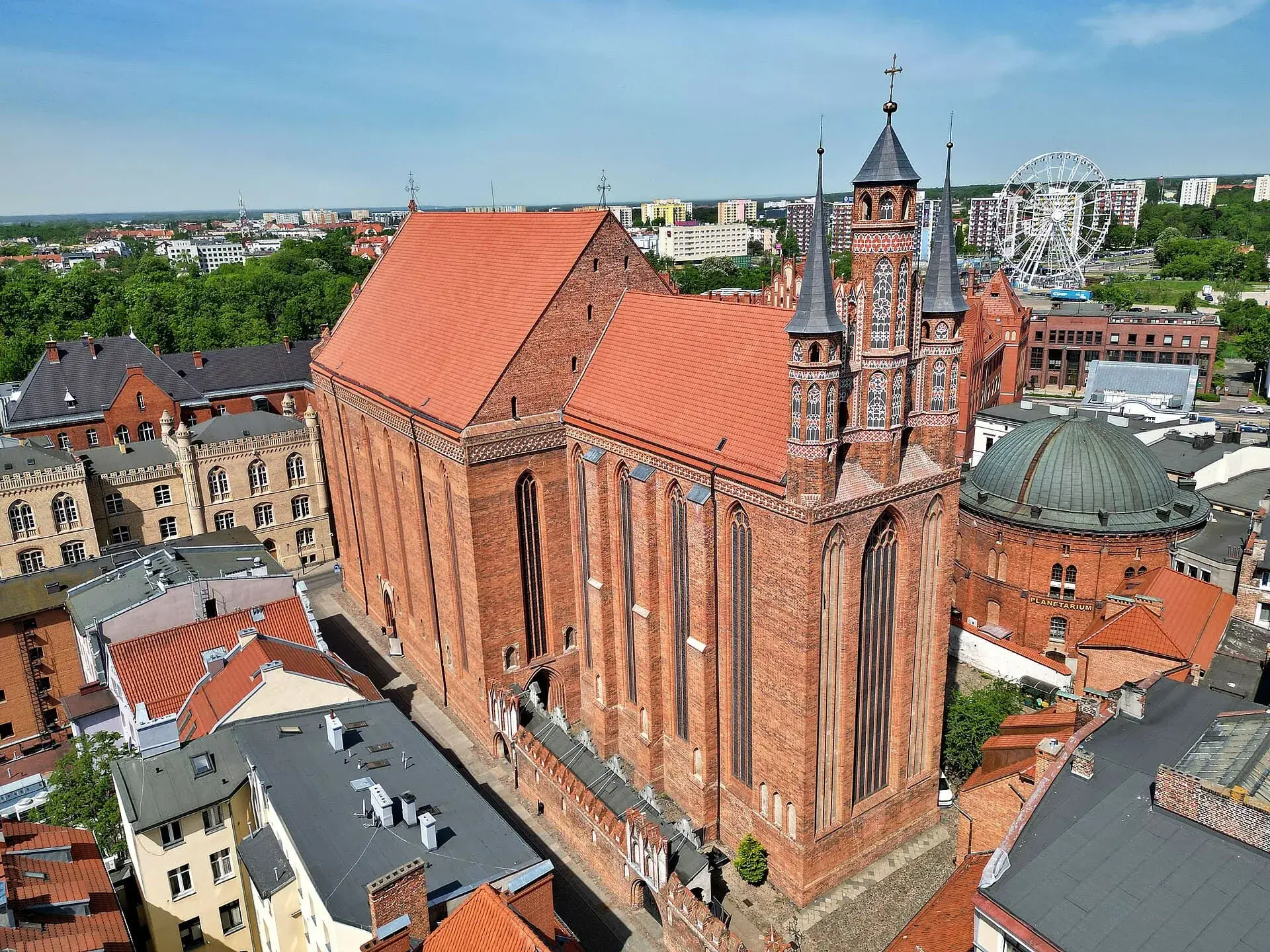
Admire the soaring Gothic brick architecture and striking facade of this historic 14th-century church. In a city dominated by wealthy merchants eager to build the tallest bell towers, St. Mary's Church made its boldest architectural statement by refusing to build one at all.
A Marvel of Mendicant Architecture
The Church of the Assumption of the Blessed Virgin Mary, commonly known as St. Mary's Church, is a monumental 14th-century Brick Gothic hall church. Built by Franciscan friars who adhered to strict mendicant rules of architectural simplicity and poverty, the structure famously lacks a massive bell tower. Instead, the roofline features only slender turret flèches. Despite this austere exterior, the building sets a regional architectural benchmark that inspired similar expansions in Toruń and Gdańsk. Measuring approximately 66 meters long and 25 meters wide, its three-aisle layout features soaring brick piers that draw the eye up to 26.8-meter-high stellar-vaulted ceilings lit by towering lancet windows.
Centuries of Shifting Faiths
Franciscan friars first arrived in Toruń around 1239, and their adjacent monastery hosted a pivotal 1243 papal synod that divided Prussian lands into dioceses. The current monumental church reached its definitive hall form in the second half of the 14th century. In 1466, it served as the site for thanksgiving services marking the Second Peace of Toruń.
Following the Reformation, the church underwent a major transition. From the late 1550s until 1724, it served as the Old Town's primary Lutheran place of worship, while the adjacent monastery housed the Toruń Academic Gymnasium. Following the religious riots known as the 1724 Tumult of Toruń, the complex returned to Catholic control under Bernardine monks, who added Baroque and Rococo interior elements. Today, the church operates as an active Roman Catholic parish and serves as the Sanctuary of Blessed Stefan Wincenty Frelichowski.
Royal Tombs and Hidden Curiosities
The church interior houses a wealth of historical artifacts, notably the 1636 mausoleum of Swedish Princess Anna Vasa. An ardent Lutheran and early pioneer of botany and herbal medicine in Poland, the princess was barred by Catholic clergy from a royal burial in Kraków's Wawel Cathedral. Instead, her nephew commissioned the black-and-white marble Renaissance-Baroque tomb found north of the chancel.
Along the southern wall, faded 1380s frescoes depict saints and religious scenes. Nearby, the late 16th-century Neisser family epitaph contains the oldest known painted panoramic depiction of Toruń. The church also features an Ecce Homo painting in the south aisle, traditionally believed to have been King John III Sobieski's battlefield altar at the 1683 Siege of Vienna. In the presbytery, intricately carved early 15th-century oak choir stalls remain, having been used successively by medieval Catholic friars and Lutheran town councilors.
FAQ
Why does the Church of the Assumption of the Blessed Virgin Mary lack a bell tower?
The church was built by Franciscan friars who followed strict mendicant rules requiring architectural simplicity and poverty. As a result, it was constructed without a massive bell tower, utilizing only slender turret flèches on the roofline.
Who is buried in the black-and-white marble mausoleum inside the church?
Swedish Princess Anna Vasa is buried in the mausoleum. An ardent Lutheran and pioneer of botany, she was denied burial in Kraków's Wawel Cathedral by Catholic clergy, leading her nephew to commission a royal tomb for her in Toruń in 1636.
What historical artwork can be found on the church's southern wall?
The southern wall features faded 1380s frescoes of saints and religious scenes, as well as the late 16th-century Neisser family epitaph, which displays the oldest known painted panoramic depiction of the Toruń cityscape.