Rynek Nowomiejski: Toruń's Historic Artisan Square
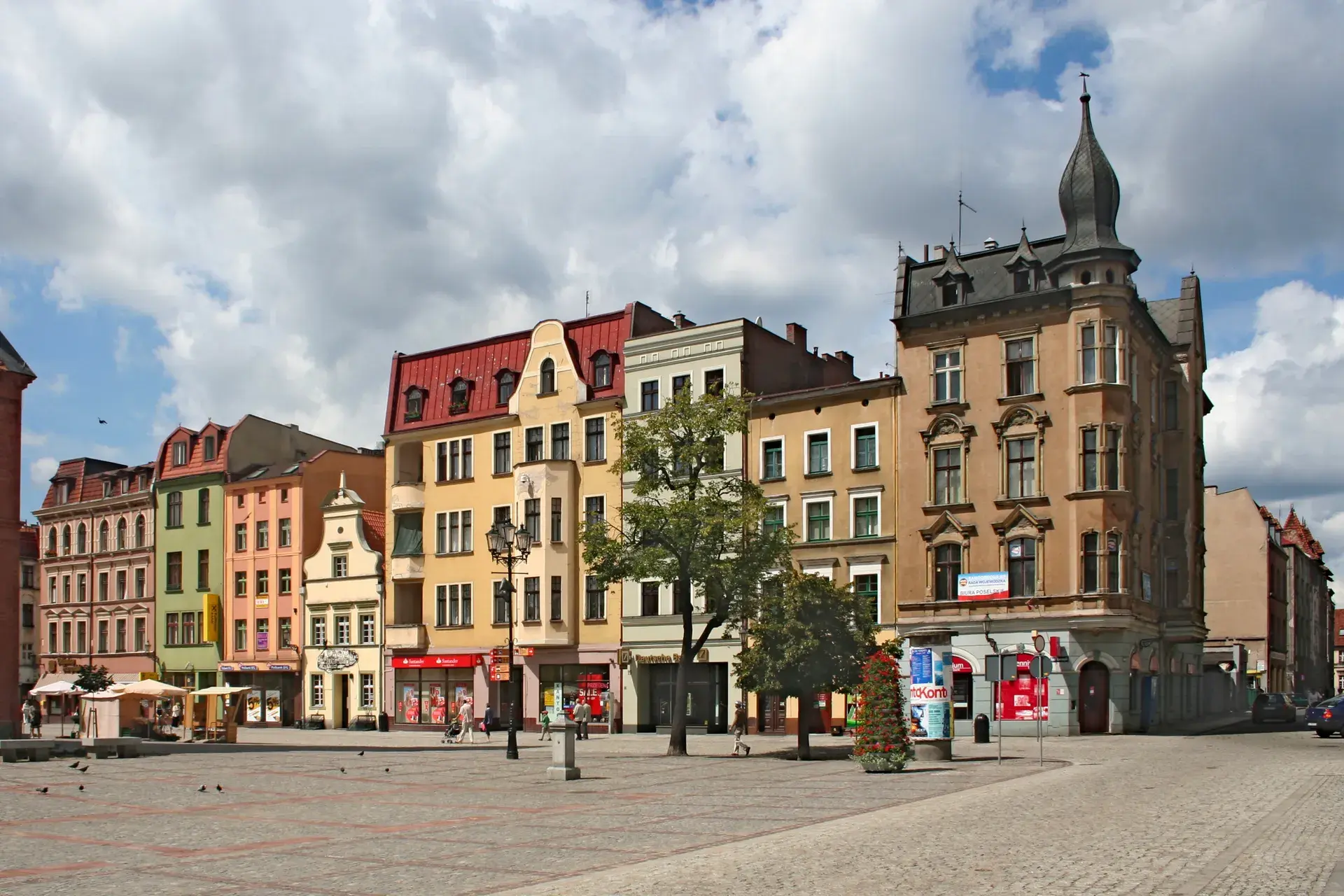
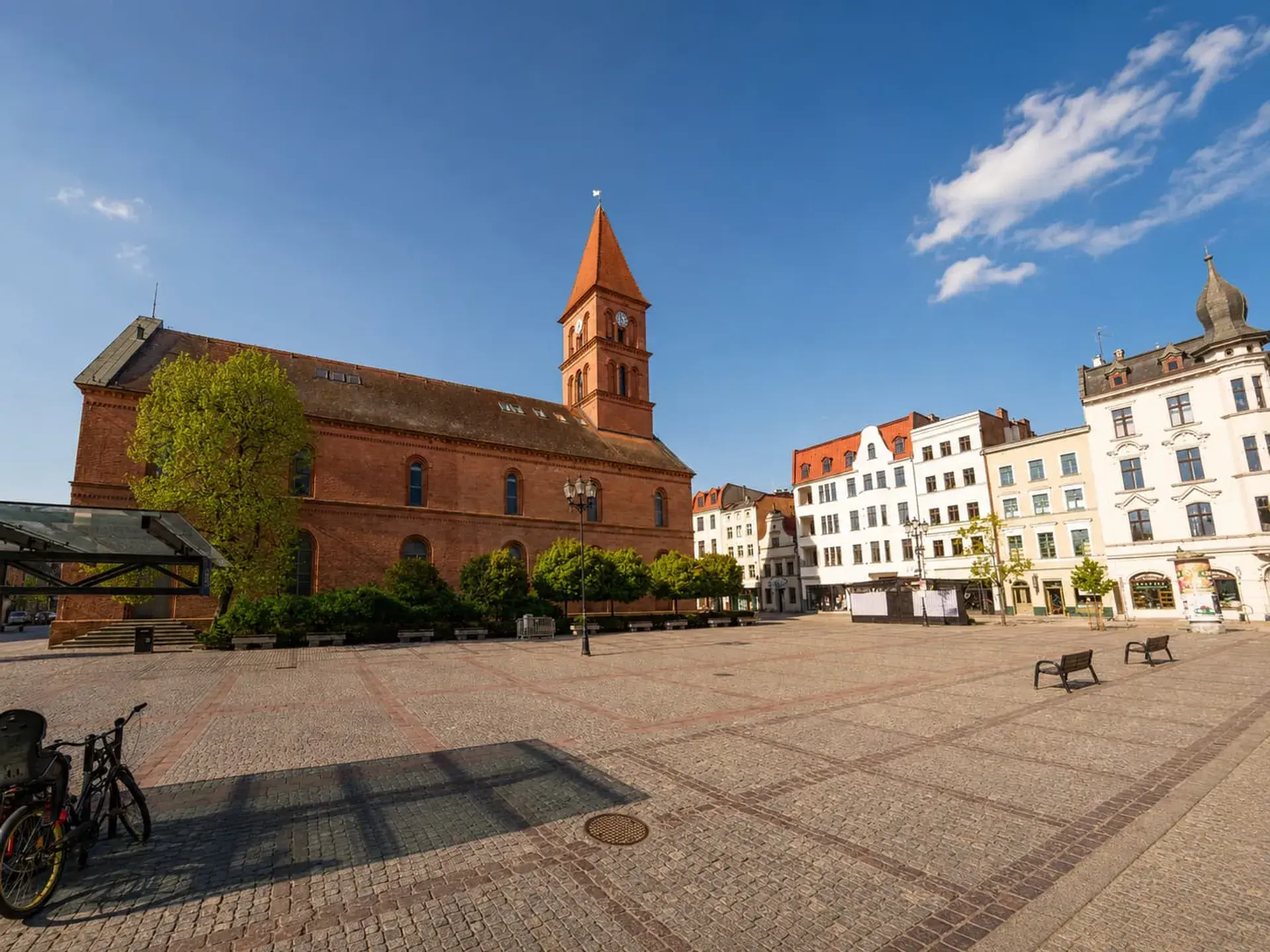
The expansive cobblestone layout of Rynek Nowomiejski reflects the historic scale of Toruń's New Town market square. The transition from the commercial foot traffic of Szeroka Street reveals a wide, open plaza framed by residential facades and the massive red-brick silhouette of St. James's Church towering over the northeast corner.
The Artisan Half of Medieval Toruń
Established in 1264 by the Teutonic Order, the New Town functioned as an independent municipality. While the Old Town was dominated by wealthy Hanseatic merchants, the New Town developed primarily as a settlement for artisans and craftsmen, such as brewers, tanners, locksmiths, and masons. The square measures approximately 95 by 95 meters and features a unique layout with two perpendicular streets running diagonally from each of its four corners. The artisan municipality operated its own council, court, and defensive walls until an anti-Teutonic uprising in 1454 unified the Old and New Towns into a single city. This rare dual-center heritage is a key component of Toruń's UNESCO World Heritage designation.
A Church Built on a Town Hall
Unlike traditional European medieval squares that feature a standalone civic building, the structure in the center of Rynek Nowomiejski is a 19th-century Protestant church. Following the 1454 unification, the early 14th-century Gothic New Town Hall lost its primary administrative function. It served as a warehouse until 1668, when the interior was gutted to create a Lutheran church. In 1824, the current Church of the Holy Trinity was erected directly upon the structural footprint and cellar foundations of the medieval Gothic town hall. Today, the central building houses the Tumult Foundation, serving as a venue for art and cultural events, while the original hidden Gothic vaults remain preserved beneath it.
Historic Landmarks and Hidden Curiosities
The perimeter of the square serves as an active civic space lined with local bakeries, outdoor cafes, and historic architecture. Notably, the Golden Lion Pharmacy features a 19th-century Neoclassical exterior facade that entirely masks fully preserved medieval Gothic masonry walls underneath. Another significant structure is the Children's Creative Art Centre, which occupies the former 17th or 18th-century guild inn of the Toruń bricklayers and masons. The square is also home to the Inn Under the Blue Apron (Gospoda Pod Modrym Fartuchem), which dates its operation as a public tavern to 1489, making it one of the oldest operating inns in Poland.
FAQ
When was Rynek Nowomiejski established?
The square was founded in 1264 by the Teutonic Order as the civic and commercial center of Toruń's New Town.
What is the building in the center of the New Town Market Square?
The central structure is a 19th-century former Protestant church built directly upon the foundation and Gothic cellar vaults of the original medieval New Town Hall.
What is the oldest tavern in Rynek Nowomiejski?
The Inn Under the Blue Apron (Gospoda Pod Modrym Fartuchem) operates on the square and dates back to 1489, making it one of the oldest operating inns in Poland.
Gallery