Toruń Teutonic Castle Ruins & Museum
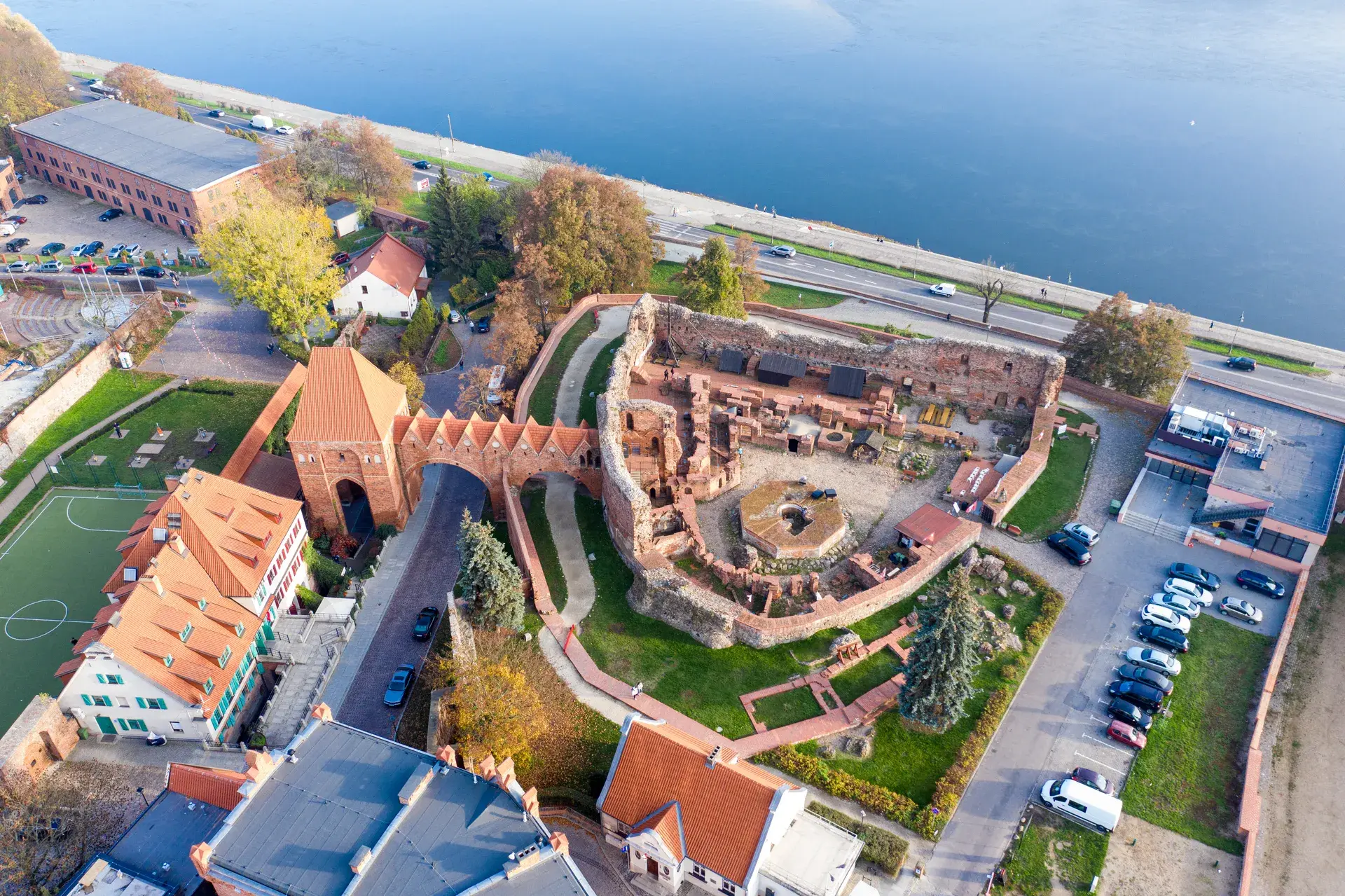
The ruins of the Teutonic Order Castle (Zamek Krzyżacki w Toruniu) stand as a testament to a medieval fortress where the Teutonic Order once ruled. Situated on Przedzamcze Street, the site is a key component of the 1997 UNESCO World Heritage site, the "Medieval Town of Toruń." When the citizens of Toruń finally tore down the imposing Teutonic castle that had dominated their city for two centuries, the only major tower they left standing was the latrine.
A Horseshoe-Shaped Fortress
Founded in the mid-13th century over an earlier Slavic stronghold, the fortress served as an administrative commandery and a military base for Prussian crusading campaigns. Unlike later, standard square convent castles built by the Teutonic Order, this complex was constructed on an irregular, horseshoe-shaped ground plan. Despite the imposing size of the complex, the permanent castle garrison rarely numbered more than 12 Teutonic knight-monks alongside the commander and military servants.
The 1454 Burghers' Rebellion
The fortress originally sat wedged between Toruń's Old Town and New Town, physically dominating both medieval municipal settlements. In February 1454, the burghers of Toruń rebelled against the Teutonic Order, besieging the stronghold and forcing its surrender. Shortly after, the Toruń City Council ordered the intentional demolition of the fortress to ensure no future ruler could use a central garrison to subjugate the autonomous city.
This deliberate destruction physically and symbolically united the two civic zones into a single city. The uprising also sparked the Thirteen Years' War (1454–1466), which ultimately led to the region's incorporation into the Kingdom of Poland via the Second Peace of Toruń.
The Surviving Gdanisko Tower
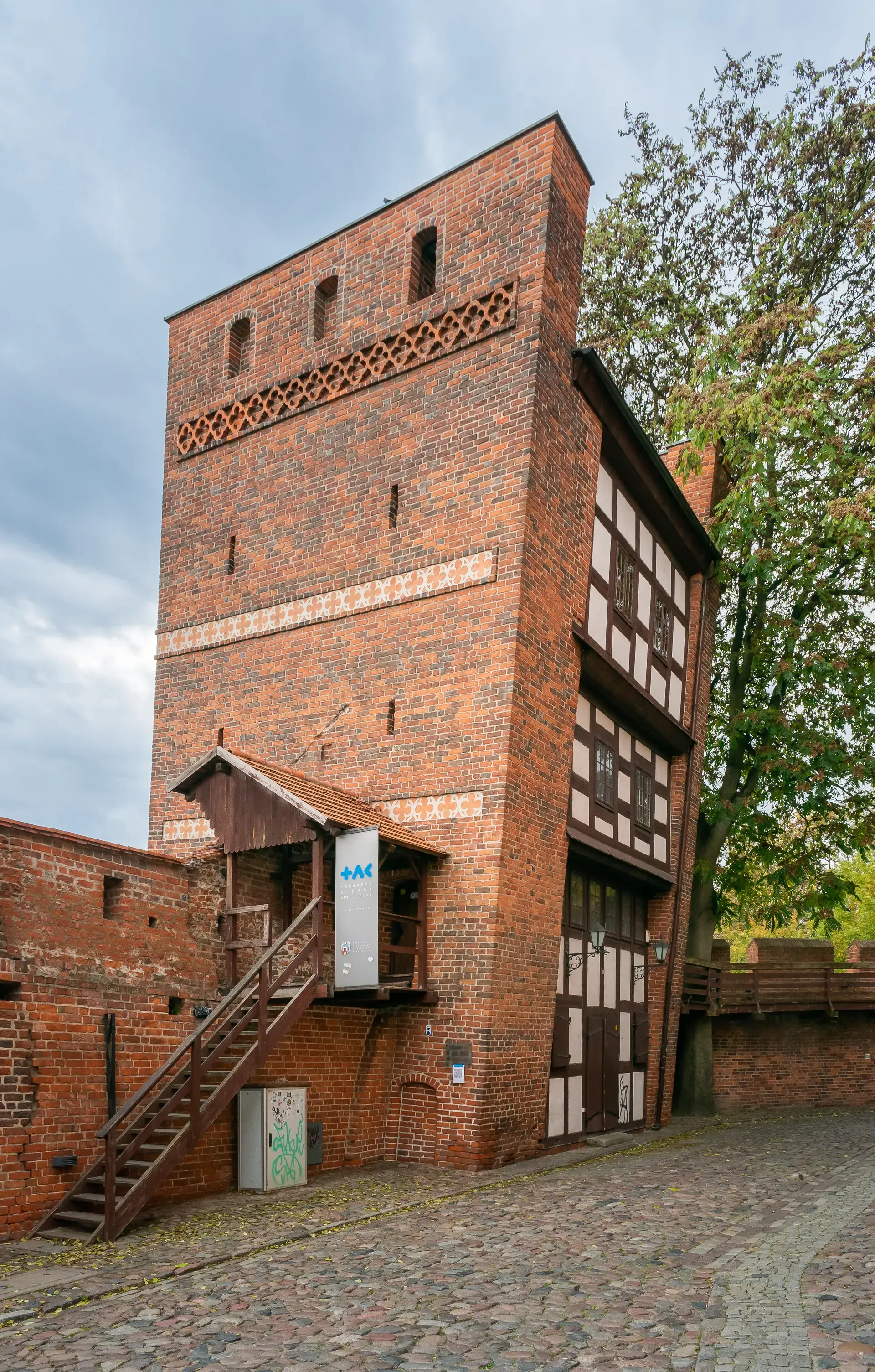
The only major above-ground tower that survived the citizens' intentional 15th-century demolition was the Gdanisko, the fortress's communal toilet tower. It was spared largely because its location standing detached over the Toruń Stream made it a separate fortified outpost rather than a central residence. Today, it remains connected to the castle walls by a raised, covered arcaded bridge.
Exploring the Ruins Today
The site now functions as an open-air historical attraction and museum. The grounds offer a striking physical transition from the dark, enclosed red-brick barrel vaults of the subterranean cellars out into the open, overgrown ruins of the dry moat framed by heavy Gothic brickwork. Visitors can access the excavated Gothic cellars, the outer perimeter walls, and the interior of the Gdanisko tower.
The castle courtyard and moat frequently serve as venues for medieval reenactments, historical combat tournaments, open-air concerts, and cultural festivals. Furthermore, the western moat carries its own unique history; after the castle was razed, King Casimir IV Jagiellon allowed the townspeople to convert it into a municipal shooting range (Fosa Strzelecka), a function it retained into the early 20th century.
FAQ
Why is the Teutonic Castle in Toruń in ruins?
In February 1454, the burghers of Toruń rebelled against the Teutonic Order, captured the castle, and ordered its intentional demolition. The City Council dismantled the fortress to prevent any future rulers from using it to subjugate the autonomous city.
What is the Gdanisko tower?
The Gdanisko is a defensive latrine tower and the only major above-ground structure to survive the 1454 demolition. It stands detached over the Toruń Stream and connects to the main castle walls via a covered arcaded bridge.
How many Teutonic knights lived in the castle?
Despite the imposing size of the complex, the permanent castle garrison rarely numbered more than 12 Teutonic knight-monks, who lived alongside the commander and their military servants.