Krasnal Papa: Wrocław’s First Bronze Dwarf
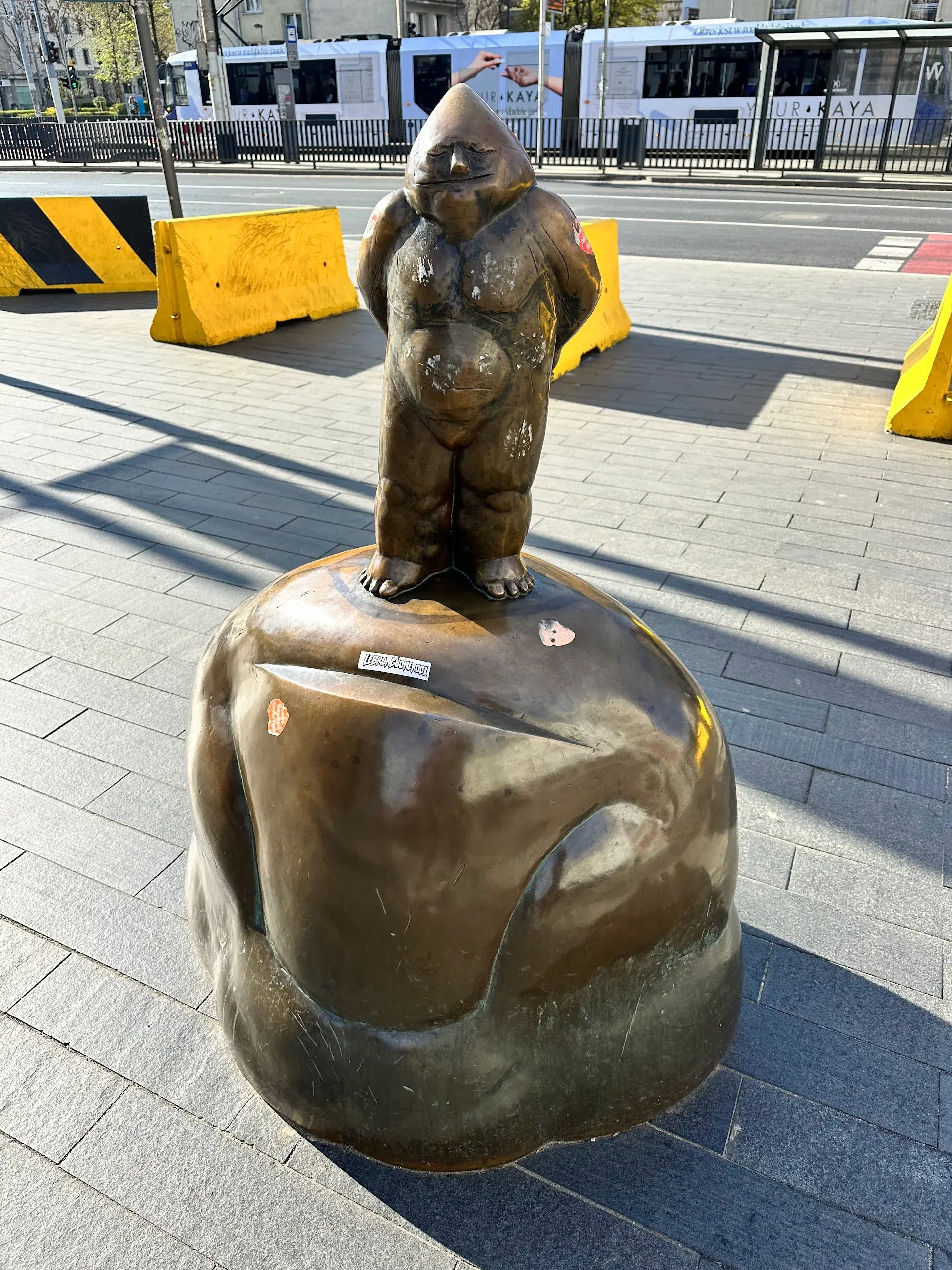
Before hundreds of miniature bronze figures appeared across Wrocław's pavements, a single nude dwarf atop a bronze fingertip established the city's tradition of subversive public art. Officially titled the Orange Alternative Monument (Pomnik Pomarańczowej Alternatywy), the sculpture is commonly known as Krasnal Papa or Krasnal Major. Located in the pedestrian zone of ulica Świdnicka near its intersection with ulica Kazimierza Wielkiego, this statue marks milestone zero of Wrocław's famous dwarf trail.
The Subversive History of the Orange Alternative
The origins of Krasnal Papa trace back to the early 1980s. Following the declaration of martial law in Poland in 1981, state censors routinely painted over anti-regime graffiti with patches of white or grey paint. In August 1982, the Orange Alternative movement, led by art history student Waldemar "Major" Fydrych, countered this censorship with surrealist humor. Activists began painting cartoon dwarfs wearing orange pointed hats directly over the censors' blotches.
By the late 1980s, the movement expanded into spontaneous street happenings along ulica Świdnicka. Demonstrators held mock celebrations and distributed scarce goods, such as toilet paper and sanitary towels, highlighting everyday shortages. On International Children's Day, June 1, 1988, thousands of residents joined the "Revolution of the Dwarfs," marching down the street in orange conical hats and chanting for dwarf liberation. Communist police (Milicja Obywatelska) arrested participants simply for wearing dwarf costumes, exposing the regime's absurdity through peaceful satire.
Artistic Design and Symbolism
To commemorate the movement and its demonstrations, media publisher Agora funded a permanent bronze monument on ulica Świdnicka at the site of the street actions. Sculpted by Polish artist Olaf Brzeski, the monument was unveiled on June 1, 2001, exactly thirteen years after the 1988 Children's Day march.
The entire installation stands approximately 1.20 meters tall. The dwarf figure measures roughly 40 centimeters in height and is elevated on an 80-centimeter pedestal shaped like a human fingertip. Unlike subsequent dwarf statues that wear vocational clothing or display tools, Krasnal Papa is completely nude. Depicted with a subtle, confident smile, the figure holds its hands clasped behind its back, concealing a small stone in its fist. Over the years, pedestrians touching the bronze have left smooth, reflective highlights across the figure and fingertip pedestal.
Milestone Zero of the Dwarf Trail
Krasnal Papa stood alone as Wrocław's only bronze dwarf for four years. In 2005, the city commissioned sculptor Tomasz Moczek to create the first series of small street-level dwarfs, sparking the widespread installation of statues throughout the urban landscape.
Today, the statue serves as an orientation marker and meeting point on ulica Świdnicka, the historic royal route connecting the southern city gate to the Market Square (Rynek). It stands as a bridge between the city's architectural past and its late-20th-century tradition of peaceful political satire.
FAQ
What does Krasnal Papa commemorate?
Krasnal Papa commemorates the Orange Alternative, an anti-communist surrealist movement led by Waldemar "Major" Fydrych that held peaceful, humorous street protests in Wrocław during the 1980s.
Where is Krasnal Papa located?
The sculpture is located in the pedestrian zone of ulica Świdnicka, near its intersection with ulica Kazimierza Wielkiego in central Wrocław.
How does Krasnal Papa differ from other Wrocław dwarfs?
Krasnal Papa was the city's very first bronze dwarf statue. Unlike later street-level, clothed dwarfs holding tools, Krasnal Papa is elevated on an 80-centimeter bronze fingertip pedestal, is completely nude, and holds a small stone behind his back.