Slaughtered Animals Monument in Wrocław: Stare Jatki
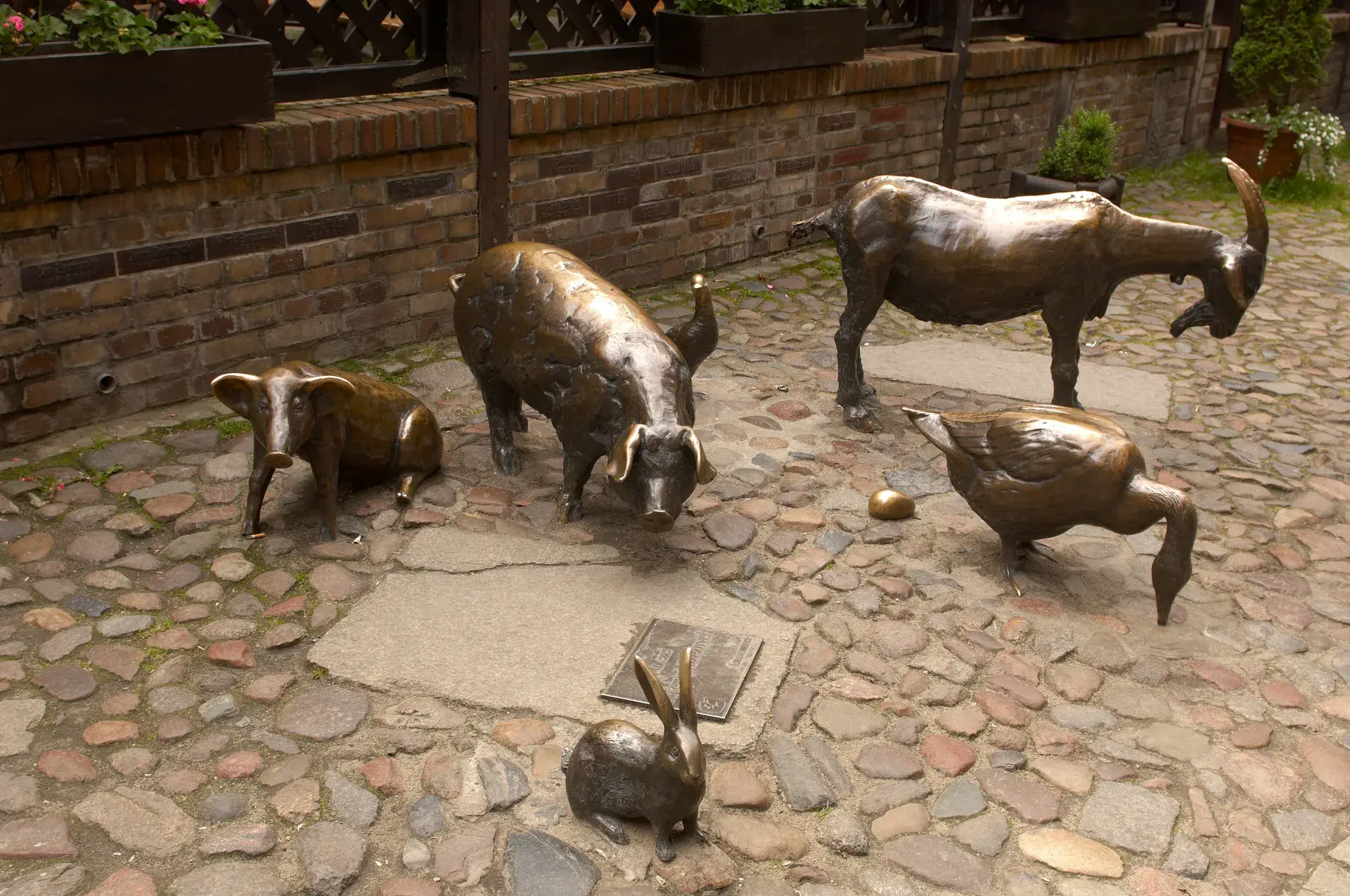
In the historic center of Wrocław, the narrow cobblestone alleyway of Stare Jatki preserves centuries of urban history behind its restored half-timbered façades. Embedded directly into the paving is a bronze plaque with the inscription "Ku czci Zwierząt Rzeźnych / Konsumenci" ("In honor of slaughtered animals / The Consumers"). This memorial, along with a collection of life-sized bronze farm animals, pays homage to the livestock that sustained the city across more than seven centuries of butcher trade.
History of Stare Jatki and the Medieval Meat Trade
Stare Jatki connects Malarska and Odrzańska streets just northwest of Wrocław’s Main Market Square. Records document butchers operating on this ground as early as 1242. Originally operating under ducal control, the stalls were transferred to the municipal council in the mid-14th century by Duke Bolesław II Rogatka, establishing an organized commercial shambles.
At the height of its commercial activity, the lane contained 48 butcher stalls arranged in two parallel rows of 24. These stalls faced one another across a central drainage channel designed to manage waste. Over time, timber and half-timbered upper levels were constructed over the stalls to provide living quarters for apprentices and servants. By the mid-18th and 19th centuries, growing sanitation concerns led the city to relocate animal slaughter operations away from the urban center to the outskirts. After sustaining severe damage in 1945 during the Siege of Breslau, the alley underwent careful reconstruction between the 1950s and 1978, reviving its historic cobblestones and wooden architecture.
The Bronze Herd and Its Sculptural Details
In 1997, Piotr Wieczorek, former president of the Wrocław branch of the Association of Polish Artists and Designers (ZPAP), initiated the monument Ku czci Zwierząt Rzeźnych (In Honor of Slaughtered Animals). Crafted by local sculptors, the installation features domestic livestock placed directly onto the cobblestones. The figures include a goat, a sow, a piglet, a goose with an egg, a duck, a rabbit, an oversized rooster, a calf introduced in 2017, and a hen added in 2022.
The sculptures incorporate realistic details cast directly in bronze, such as tiny droppings behind the goat and an egg tucked beneath the goose. Rather than standing at street level with the rest of the herd, the large rooster perches high on an elevated stone ledge overlooking the alley entrance from ul. Odrzańska. When the ensemble was expanded in 2017, artists specifically chose to sculpt a calf instead of a mature cow to ensure the artwork did not block pedestrian passage through the narrow corridor.
Traditions and the Modern Arts Quarter
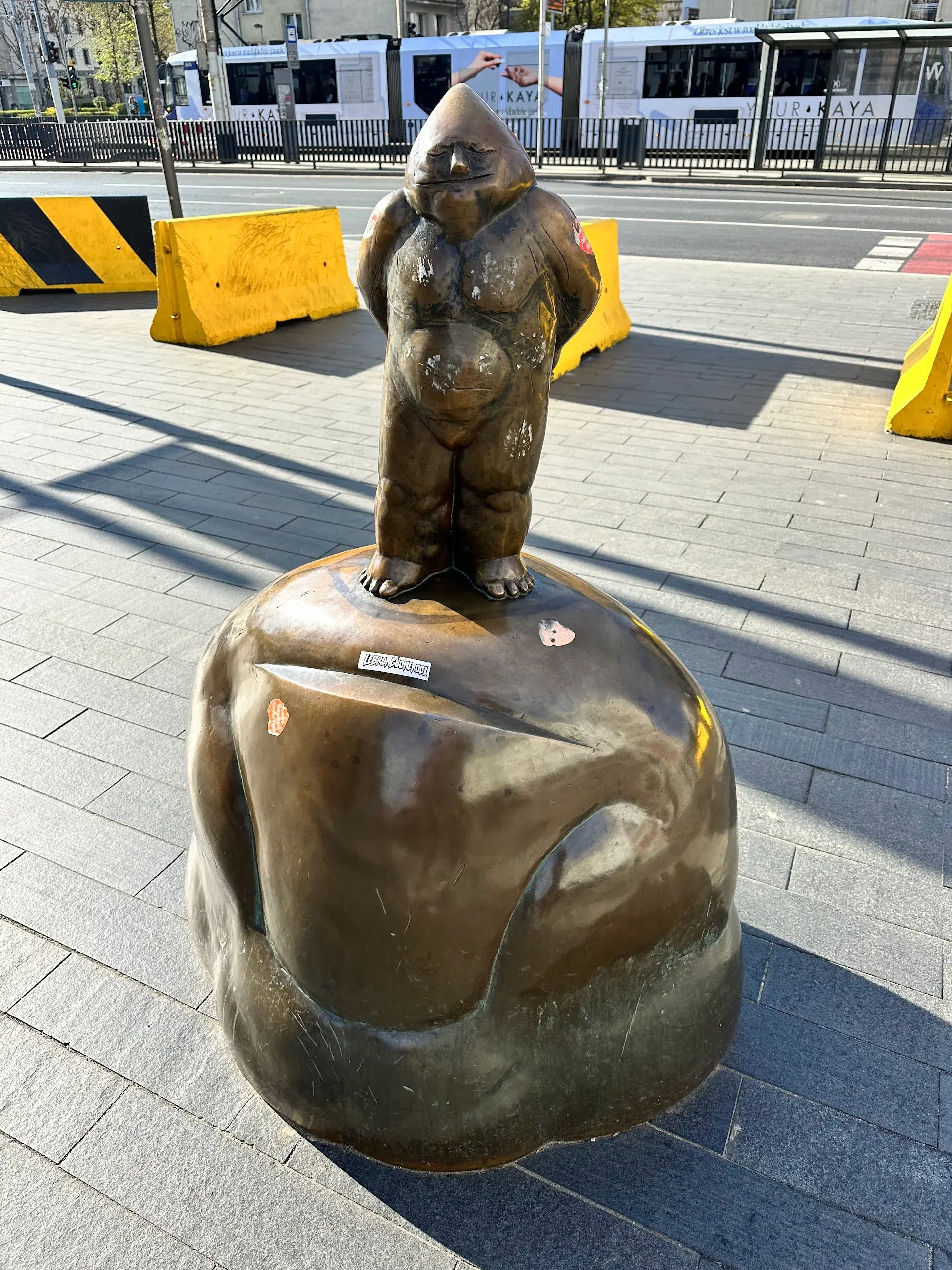
Today, the quiet, shaded corridor of Stare Jatki forms a distinct sensory enclave, shielded from surrounding street noise by deep timber overhangs. Decades of passersby engaging with the herd have rubbed the bronze ears of the rabbit and the snout of the piglet to a bright, mirror-like gloss, a gesture rooted in local lore as a way to bring good luck and prosperity. Near one of the entrances stands Krasnal Rzeźnik (The Butcher Dwarf), a miniature statuette wielding an axe and cleaver that links the lane to Wrocław’s famous citywide dwarf trail.
While its origins lie in the meat trade, Stare Jatki has transformed into an active artistic enclave. The former butcher stalls now operate as workshops and studios specializing in contemporary art, stained glass, ceramics, jewelry, and custom framing. The lane houses creative institutions including Galeria Domus, Galeria Tkacka Na Jatkach, and the regional headquarters of the Association of Polish Artists and Designers, serving as an atmospheric thoroughfare linking the city center to the University quarter and the Oder River.
FAQ
Why was a calf added to the monument instead of a full-grown cow?
When expanding the installation in 2017, sculptors chose to create a bronze calf because a full-sized adult cow would have physically blocked pedestrian movement through the narrow medieval lane.
What does the inscription on the street plaque say?
The bronze plaque embedded in the cobblestones reads "Ku czci Zwierząt Rzeźnych / Konsumenci", which translates to "In honor of slaughtered animals / The Consumers".
What is the history behind the Stare Jatki lane?
Butchers operated on the site as early as 1242. By the mid-14th century, the city established an organized commercial shambles that eventually featured 48 butcher stalls before slaughter operations were moved to the city outskirts in the 18th and 19th centuries.
What functions occupy the former butcher stalls today?
The restored half-timbered stalls house an arts quarter consisting of independent contemporary art galleries, ceramic and stained-glass workshops, jeweler studios, framing shops, and the regional headquarters of the Association of Polish Artists and Designers.