National Museum of Romanian History in Bucharest
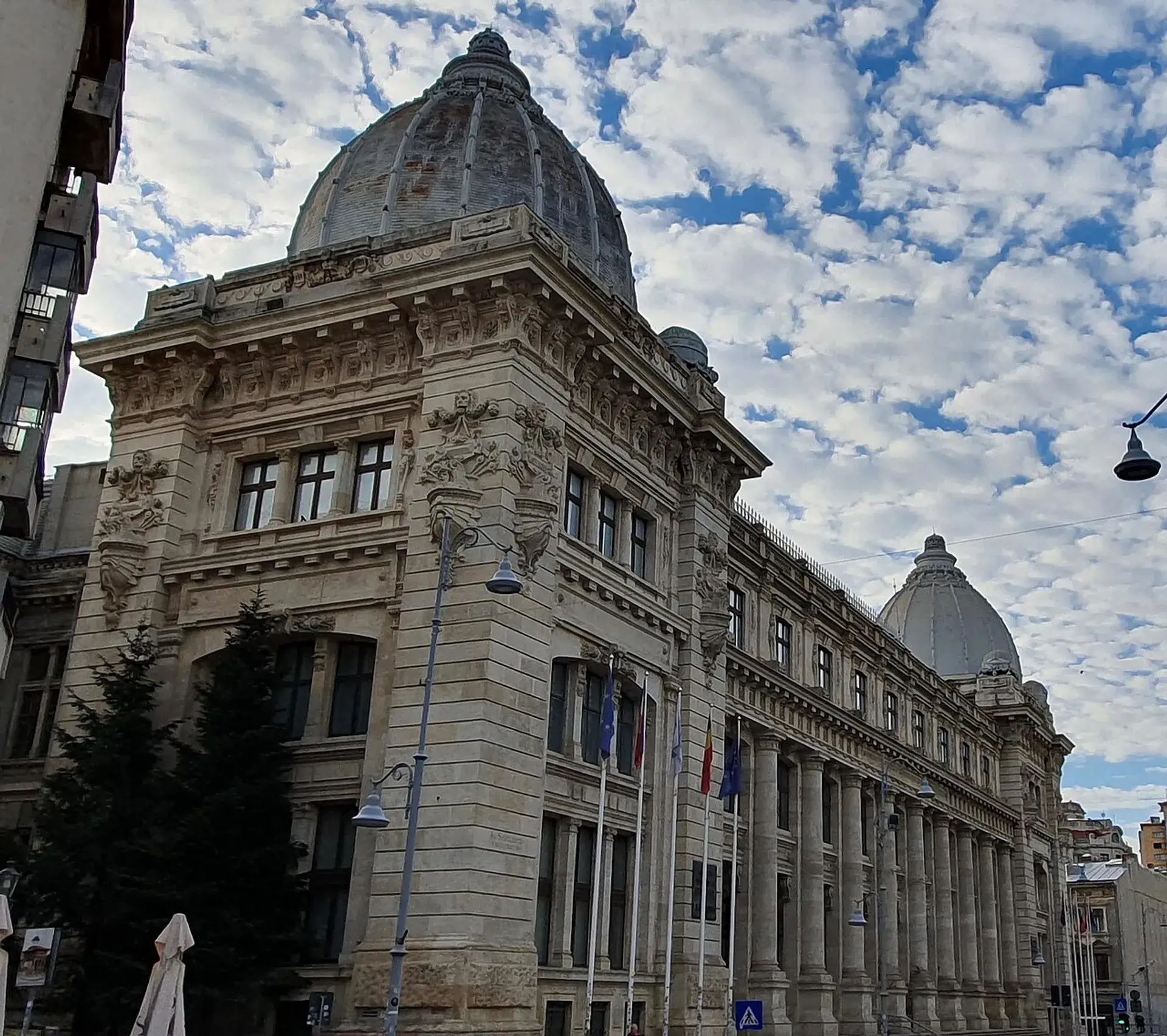
The National Museum of Romanian History (MNIR) stands as Romania's foremost institution dedicated to archaeology and history. Housed in a grand neoclassical building, it safeguards the country's most significant historical artifacts, tracing a continuous narrative from prehistory to the modern era.
From Post Office to National Museum
This impressive structure wasn't always a museum. It was originally constructed between 1894 and 1900 as the Palace of the Post Office (Palatul Poștelor). King Carol I attended the laying of the foundation stone in 1894, highlighting its national importance from the start. The building served as Bucharest's central post office until 1970. Following renovation works, it officially opened its doors as the National Museum of Romanian History in 1972. The site itself has a deep history, having previously hosted the Constantin Vodă Inn, which was destroyed by a fire in 1847.
Architectural Grandeur
The building is an architectural marvel designed by French architect Alexandru Săvulescu. He drew inspiration from the Federal Post Office in Geneva, Switzerland, creating an eclectic style with strong neoclassical elements. The grand façade features a prominent portico supported by ten Doric columns, resting on a high basement. Spanning over 8,000 square meters, the building's design reflects the monumental aesthetics of its time.
Treasures Within the Walls
The museum's patrimony includes over 650,000 pieces distributed across approximately 60 exhibition rooms. Among its most prominent permanent exhibitions are the Historical Treasure, which displays over 3,000 precious items made of metal and stone, and the Lapidarium. A central and commanding exhibit is the full-size plaster cast of Trajan's Column, a project overseen between 1939 and 1943. The building also continues to house a philatelic museum.
The Museum Today
Currently, the National Museum of Romanian History serves as a vital center for chronicling the nation's past through its extensive collections, temporary exhibitions, and educational programs. Since 2012, the museum has been undergoing extensive restoration work and is only partially open to the public. During these works, a late medieval archaeological site was discovered beneath the building, adding another layer to the location's rich history. The museum also publishes a scientific periodical, 'The National Museum' magazine, which began in 1974.
FAQ
What was the National Museum of Romanian History building originally?
The building was originally the Palace of the Post Office, constructed between 1894 and 1900. It served as Bucharest's central post office until its conversion into a museum began in 1970.
When did the National Museum of Romanian History open?
The museum officially opened to the public in 1972 after the former post office building was renovated for its new purpose.
What are some key exhibits at the museum?
Key exhibits include the Historical Treasure, which contains over 3,000 valuable artifacts, a full-size plaster cast of Trajan's Column, and the Lapidarium exhibition.
Is the entire museum open to visitors?
No, the museum has been undergoing extensive restoration work since 2012 and is only partially open to the public.