University Square Bucharest: History and Landmarks
University Square (Piața Universității) is a vibrant public space in Bucharest, framed by historic buildings and serving as a long-standing stage for the city's public life. Its origins trace back to the 15th century when this area marked the northern limit of the city. It evolved into a major urban crossroads after 1880, shaped by 19th-century modernization efforts.
Architectural and Cultural Landmarks
The square is dominated by the main building of the University of Bucharest, also known as the University Palace. Originally constructed between 1857 and 1869 under architect Alexandru Orăscu, its current facade was completed in stages between 1921 and 1943. The university itself was formally established in 1864 by Prince Alexandru Ioan Cuza, evolving from the earlier Princely Academy which was founded on this site in the late 17th century.
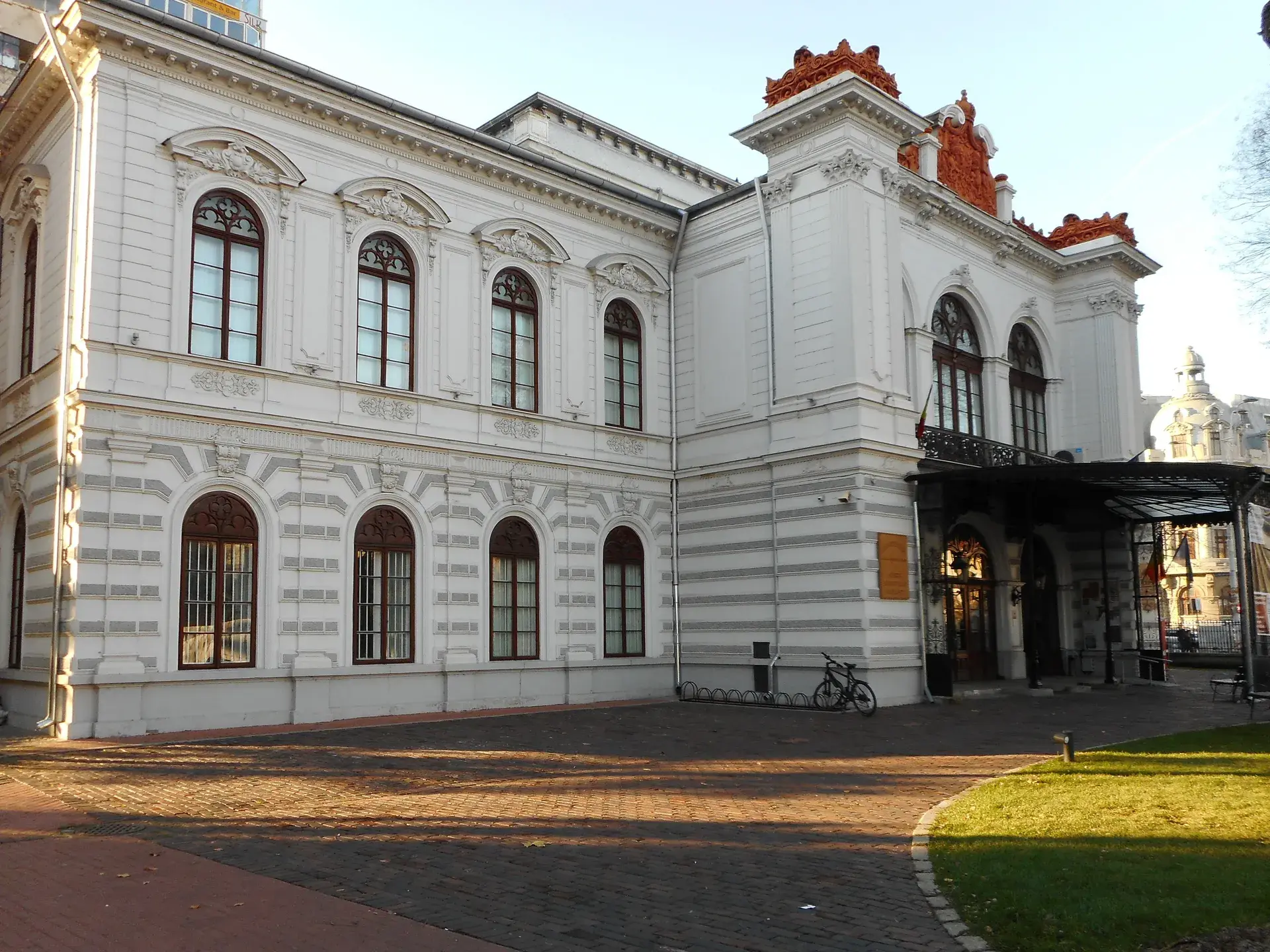
Other significant structures define the square's perimeter, including the National Theatre, built between 1964-1973 and subsequently rebuilt, and the landmark InterContinental Hotel, constructed from 1968 to 1970. The Şuţu Palace, home to the Bucharest Municipality Museum, is also located here.
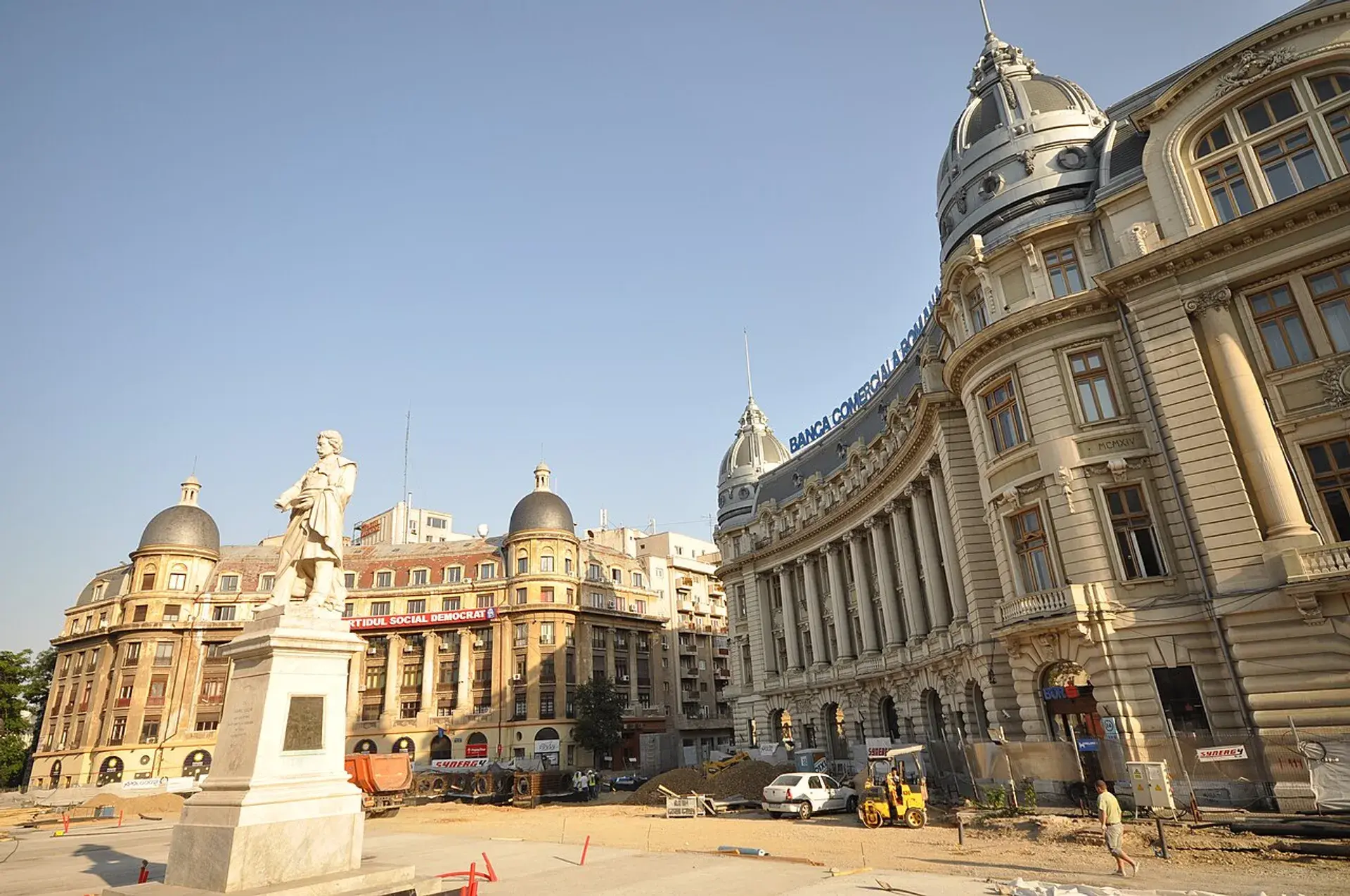
Four prominent statues adorn the square, honoring key figures in Romanian history and culture: Michael the Brave (1876), Ion Heliade Rădulescu (1880), Gheorghe Lazăr (1886), and Spiru Haret (1935). A fifth monument, dedicated to politician Ion C. Brătianu and unveiled in 1903, was destroyed by the communist regime in 1948.
A Stage for History
University Square holds a profound place in Romania's contemporary history as a symbol of democratic struggle. It was a central point for anti-communist demonstrations during the Romanian Revolution in December 1989, which led to the fall of Nicolae Ceaușescu's regime.
In the spring of 1990, the square became the epicenter of the Golaniad, a 52-day peaceful student protest demanding a government free of former communists. The demonstration, which drew up to 50,000 people, was violently suppressed in June 1990 by miners brought to Bucharest by then-President Ion Iliescu. The square continues to be a primary site for public gatherings and protests, including the major Roșia Montană protests in 2013.
The Heart of Modern Bucharest
Today, University Square functions as a bustling urban hub and a major transportation nexus. The Universitate metro station and a large pedestrian underpass, opened in 1987, connect the different parts of the square and the city. It is also officially considered the "Kilometer Zero" of Romania's national road network, the point from which all road distances to and from the capital are measured.
Beyond its infrastructural role, the square is a popular meeting point for locals and tourists, offering easy access to the nearby Old Town and its numerous cafes and restaurants. During the 2010 construction of an underground parking lot, archaeological work uncovered fragments of walls and human bones, remnants of the 17th-century Princely Academy that once stood on the site.
FAQ
Why is University Square important in Romanian history?
University Square was a central site for the 1989 Romanian Revolution against the communist regime and the epicenter of the 1990 Golaniad protests, cementing its role as a symbol of civic engagement and democratic struggle in Romania.
What is the significance of "Kilometer Zero" at University Square?
University Square is officially designated as Romania's "Kilometer Zero." This means it is the central point from which all distances on the national road network are measured.
What major buildings are located at University Square?
The square is surrounded by several key institutions, including the University of Bucharest, the National Theatre, the InterContinental Hotel, and the Şuţu Palace, which houses the Bucharest Municipality Museum.
What was the Golaniad?
The Golaniad was a peaceful, 52-day student-led protest in University Square in 1990. Protesters demanded a government free of former communists but were violently dispersed by miners under orders from the government.