The Museum of Bucharest: History in the Suțu Palace
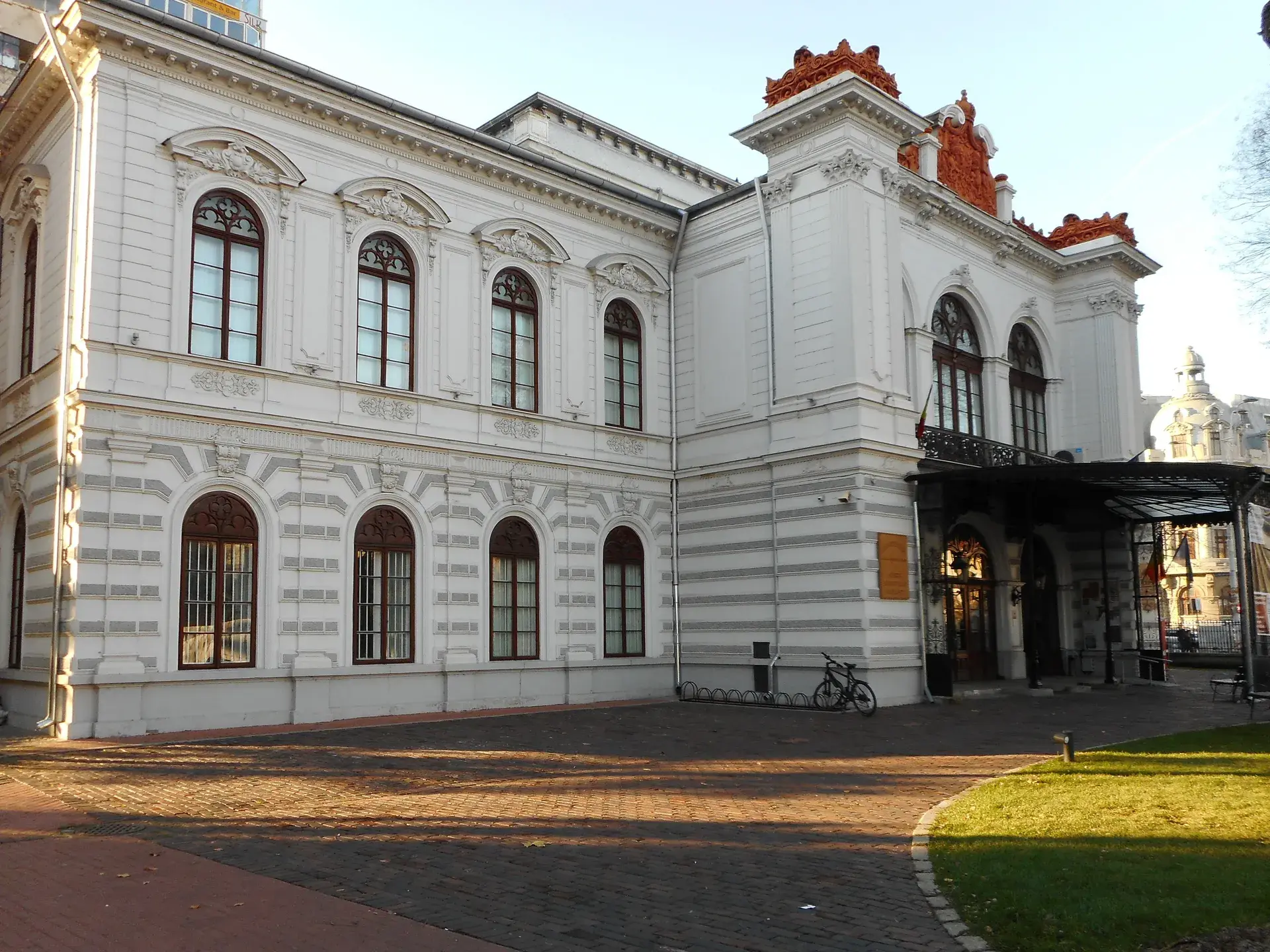
Gaze upon the stately architecture of The Museum of Bucharest, whose grand entrance at the Suțu Palace invites you to discover the city's rich past from its historic core. This landmark serves as a crucial repository for Bucharest's extensive history, from its origins to modern times.
A Palace of Aristocratic Heritage
The Museum of Bucharest is headquartered in the Suțu Palace, one of the city's oldest aristocratic residences. Commissioned by Costache Suțu, the palace was constructed between 1833 and 1835 based on designs by Viennese architects Conrad Schwink and Johann Veit. Initially built in a neoclassical style, the building underwent significant renovations between 1862 and 1864, which gave its façade a romantic, Neo-Gothic, and eclectic appearance. For over 150 years, the palace remarkably maintained its structural integrity as an aristocratic home amidst Bucharest's significant urban changes.
From Social Hub to Cultural Institution
In the latter half of the 19th century, under the ownership of Grigore and Irina Suțu, the palace became a prominent social center, renowned for hosting the city's first ball of the year each February. In 1862, sculptor Karl Storck redesigned the interior, creating the monumental double-winder staircase. A key feature of his design is the immense Murano mirror, which ingeniously corrects perspective in the hall. A sculpted wooden medallion of Irina Suțu remains above the mirror, a permanent tribute to the palace's former lady.
The building became the headquarters for the Bucharest Municipal Museum in 1956 and officially opened its doors to the public on January 23, 1959. The museum as an institution was formally established in 1921, with its early holdings significantly boosted by the numismatic collection of its first director, Dr. George Severeanu.
Exhibits and Unique Features
The Suțu Palace houses the permanent exhibition 'Time of the City,' which was updated and reopened on May 15, 2015. This exhibit offers a historical journey through Bucharest's evolution. The museum also hosts various temporary exhibitions on art, history, and culture. A unique feature in the main hall is a clock, specially commissioned from Paris, with an inverse dial. It was designed to be read correctly only when viewed in the reflection of the grand Murano mirror.
Another point of historical interest is the blazon on the palace's pediment, which depicts the eagle of Wallachia and the auroch of Moldavia. Prince Alexandru Ioan Cuza ordered its removal after the Union of Principalities, but it was later reinstated with the permission of King Carol I following Cuza's abdication.
Visiting the Museum of Bucharest
The Suțu Palace is the main site of the Bucharest Municipality Museum, a network of 12 museums and memorial houses. It functions as a cultural and educational center for the city. The museum is open to the public from Wednesday to Sunday, 10:00 to 18:00, with the last admission at 17:30. A full-price ticket for all exhibitions is 30 lei, with discounts available for students, retirees, and military personnel. Guided tours can be arranged for groups of more than 15 people with prior booking.
FAQ
What building houses The Museum of Bucharest?
The Museum of Bucharest is headquartered in the Suțu Palace, an aristocratic residence built between 1833 and 1835.
What is the main exhibition at The Museum of Bucharest?
The museum's main permanent exhibition is 'Time of the City,' which presents a historical overview of Bucharest's evolution.
What are the opening hours for The Museum of Bucharest?
The Museum of Bucharest, located in the Suțu Palace, is open from Wednesday to Sunday, between 10:00 and 18:00. The last entry is at 17:30.
What is a unique feature of the Suțu Palace's interior?
The palace features a monumental staircase with a large Murano mirror. Facing the mirror is a clock with an inverse dial, which can only be read correctly in the mirror's reflection.