St. Anthony’s Church: Bucharest's Oldest Royal Church
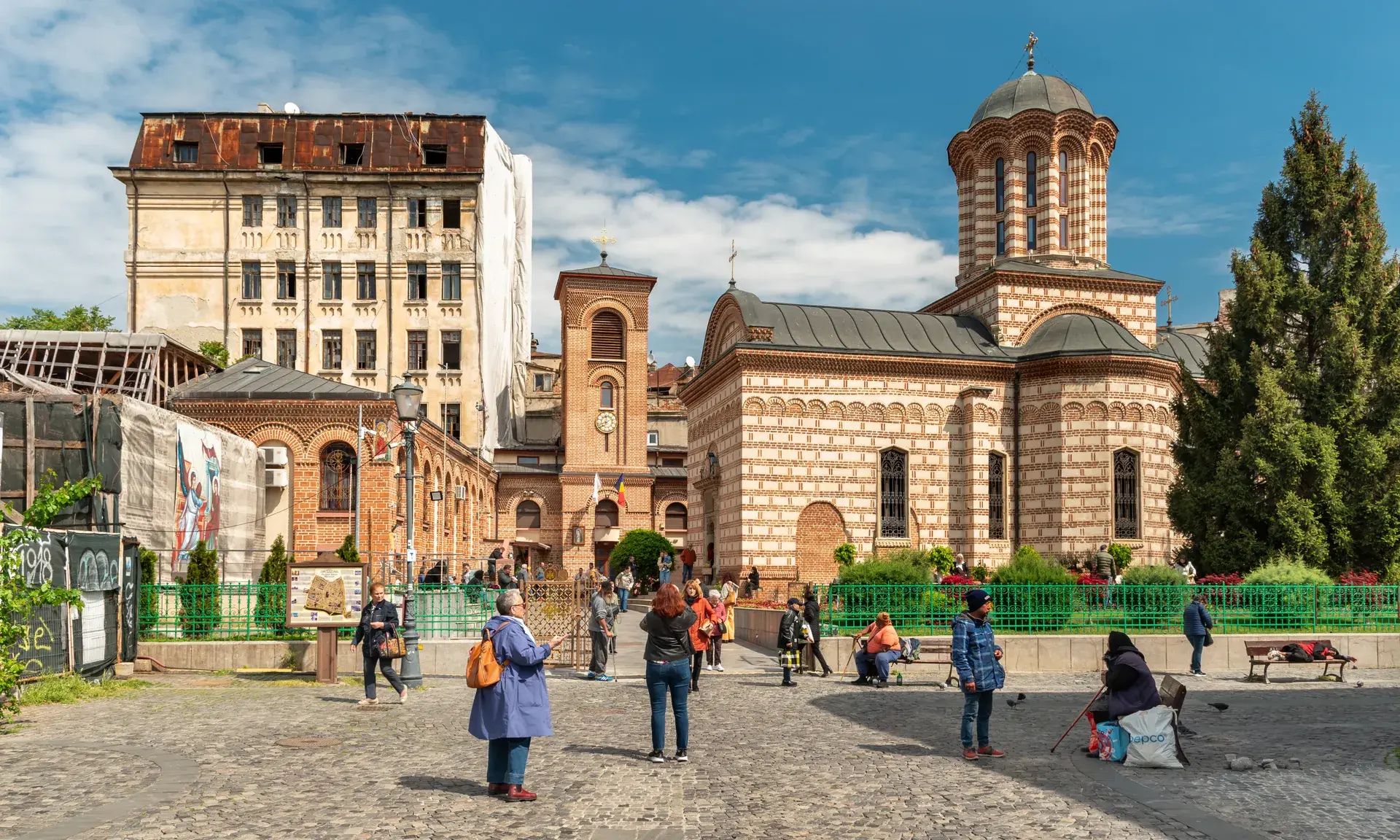
St. Anthony’s Church stands as a historical anchor in Bucharest's Old Town, recognized as the capital's oldest surviving church. Its foundations were laid in 1559 under the reign of Prince Mircea Ciobanul. Initially built as a wooden chapel for the rulers of Wallachia, it was dedicated to the Annunciation and Saint Anthony the Great.
A Royal Legacy
For two centuries, this church held immense political and religious significance as the official coronation site for Wallachian rulers. Princes such as Mihai Viteazul, Matei Basarab, Șerban Cantacuzino, and Constantin Brâncoveanu offered prayers within its walls. Adjacent to the Old Princely Court (Curtea Veche), it served as the princely chapel. Underscoring its importance, the church also functioned as a burial place for members of the ruling dynasty until 1842.
Architectural Evolution
The original wooden structure was rebuilt in brick between 1695 and 1700. The church's architecture is predominantly Brancovenesc, a style that blends Byzantine influences with elements of the Italian Renaissance. It also features buttresses and ornamental brickwork characteristic of medieval Moldavian architecture. In 1715, an ornate portal was added by Stefan Cantacuzino. A major restoration between 1928 and 1935, supervised by historian Nicolae Iorga, removed later Neo-Gothic additions to restore the church to its perceived original state.
A History of Resilience
St. Anthony's Church has remarkably survived numerous disasters, including seven major fires and several earthquakes since the early 1700s. Most notably, the Great Fire of 1847, which destroyed four-fifths of Bucharest, miraculously stopped at the church's walls. During this fire, an icon of Saint Anthony the Great was recovered undamaged from a nearby destroyed prison church. The icon was moved to this sanctuary, leading to the church adopting St. Anthony as its primary patron.
The Church Today
St. Anthony's Church remains an active Romanian Orthodox place of worship and a significant historical landmark. It draws believers and tourists alike, with many visiting on Tuesdays to venerate the miraculous icon and a fragment of the relics of Saint Anthony the Great, which were permanently placed in the church in 2017. The site, which includes a parochial museum in an adjacent building, hosts numerous religious services and events throughout the year. Entry is typically free, allowing visitors to admire its frescoes, iconostasis, and experience a pocket of spiritual peace in the bustling city.
FAQ
When was St. Anthony's Church built?
The foundational structure of St. Anthony's Church dates to 1559, established by Prince Mircea Ciobanul. This makes it the oldest surviving church in Bucharest.
What is the historical significance of St. Anthony's Church?
For two centuries, it was the official coronation site for the rulers of Wallachia. It also served as the princely chapel for the Old Princely Court and was a burial place for the ruling dynasty until 1842.
Why is the church named after St. Anthony?
The church adopted St. Anthony as its main patron following the Great Fire of 1847. An icon of Saint Anthony the Great was saved from the ruins of a nearby prison church and moved here, an event considered miraculous.
Can you visit St. Anthony's Church?
Yes, the church is an active place of worship and a historical landmark open to visitors. Entry is typically free, and it also has an adjacent parochial museum.