Stavropoleos Monastery: Bucharest's 18th-Century Gem
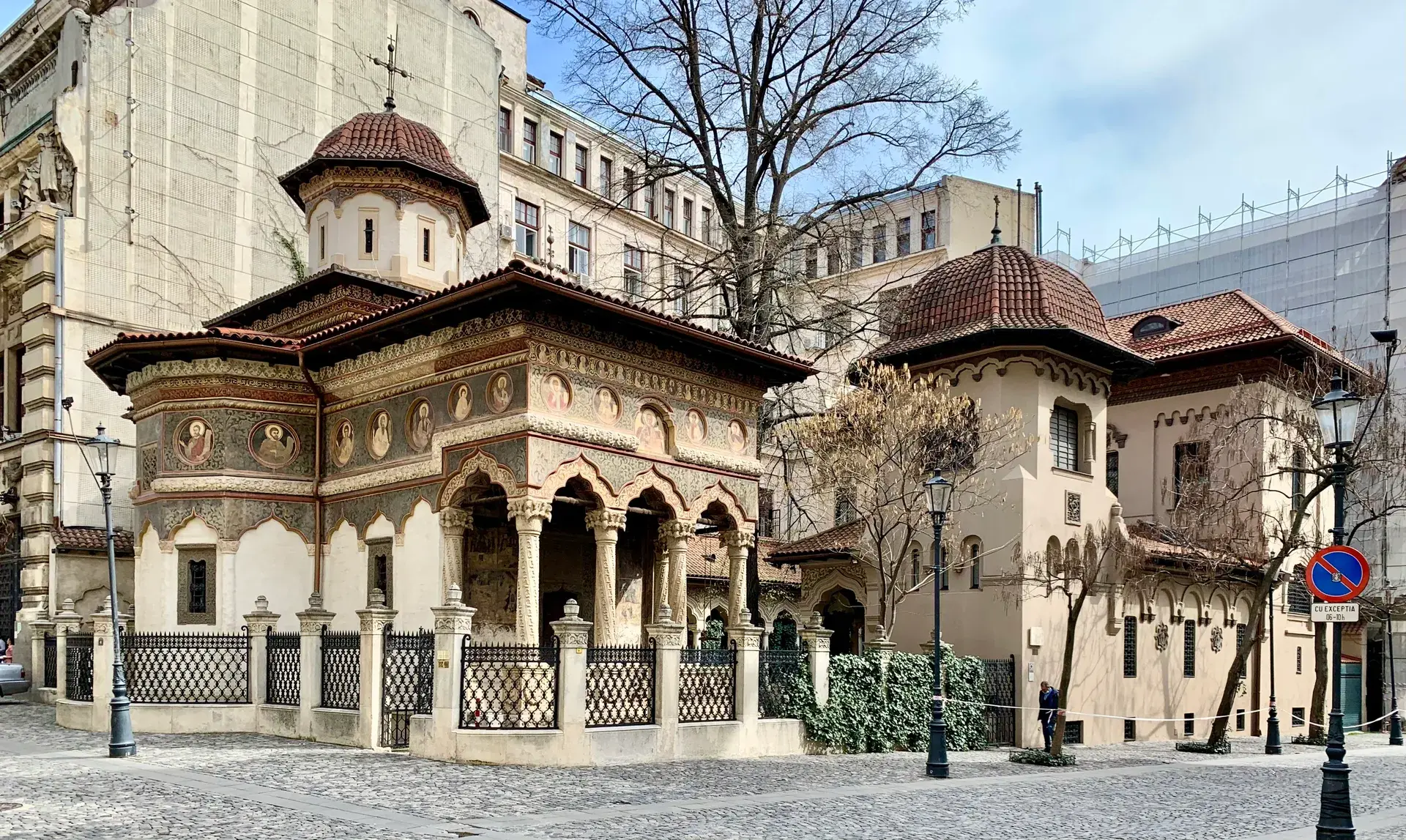
The Church of the "Stavropoleos" Monastery is an Eastern Orthodox monastery for nuns located in the heart of Bucharest. Established in 1724, this small but significant site is a celebrated example of Brâncovenesc architecture, a unique Romanian style that masterfully blends Byzantine, Ottoman, Baroque, and late Italian Renaissance elements.
A History of Foundation and Renewal
The monastery's story began in 1724 when the Greek archimandrite Ioanichie Stratonikeas founded it within the courtyard of his inn, a common practice at the time to ensure financial support for the religious community. In 1726, Ioanichie became the Metropolitan of Stavropolis, lending the name to his new establishment. He was later buried in the church in 1742.
The 19th century was a period of decline, as the complex suffered damage from earthquakes and fires. This led to the demolition of the original inn and monastic buildings, leaving only the church standing for approximately 100 years. A major restoration project took place between 1904 and 1940 under the direction of architect Ion Mincu, who also designed new ancillary buildings in a Neo-Romanian style. The site was formally reopened for nuns in 2008, reviving its monastic tradition.
A Living Spiritual and Cultural Hub
Today, Stavropoleos is an active monastery for a community of nuns. It serves as a vibrant place of worship and a prominent cultural center, hosting Byzantine music concerts and other events. The monastery's choir is known for performing a rare style of neo-Byzantine music, characterized by a single voice part sustained by a prolonged tonic note known as an 'ison'.
The tranquil inner courtyard offers a peaceful retreat from the bustling Old Town. It also functions as an open-air lapidarium, displaying a collection of stone crosses and architectural fragments salvaged from other Bucharest churches demolished during the communist era.
A Community of Scholars and Artisans
Beyond their spiritual duties, the resident nuns are highly educated, with many holding doctorates and speaking multiple languages. This community is dedicated to the preservation of religious heritage, undertaking the delicate restoration of old books, icons, and sacerdotal vestments. In a notable example of their expertise, the nuns perform specialized book restoration for the Vatican.
The monastery houses a library with over 8,000 books, including the largest collection of Byzantine music books in Romania. An ongoing project aims to digitize these ancient texts, making them accessible through a virtual library.
FAQ
When was the Stavropoleos Monastery built?
The Church of the "Stavropoleos" Monastery was built in 1724 by its founder, the Greek archimandrite Ioanichie Stratonikeas. Construction was finalized on October 30 of that year.
What is the architectural style of the Stavropoleos Monastery?
The monastery's church is a prime example of the Brâncovenesc style, a unique Romanian architectural form that combines Byzantine, Ottoman, Baroque, and late Italian Renaissance influences.
What is special about the nuns at Stavropoleos Monastery?
The community of nuns is highly educated, with many holding advanced degrees. They are skilled artisans who specialize in restoring old books, icons, and vestments, and have even performed restoration work for the Vatican.
Is there an entrance fee for the Stavropoleos Monastery?
No, entry to the Stavropoleos Monastery is free for all visitors.