
Belgrade Fortress: History & Guide to Kalemegdan
The Crossroads of Empires on a Limestone Bluff
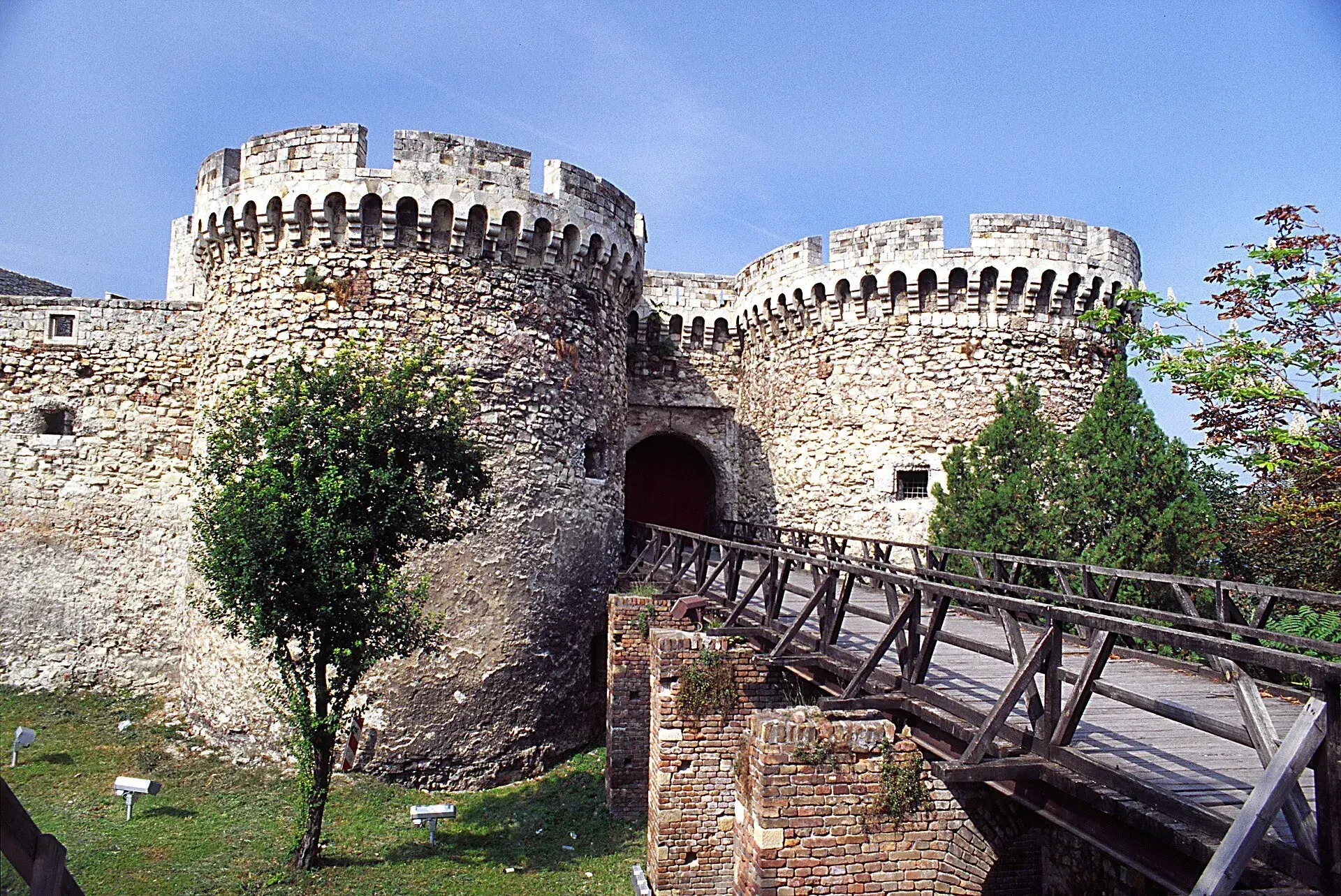
Belgrade Fortress stands atop a 125-metre limestone bluff commanding the exact point where the Sava River flows into the Danube. Spanning roughly 66 hectares, the complex is partitioned into the Upper Town, Lower Town, and Kalemegdan Park. Designated a Cultural Monument of Exceptional Importance by the Republic of Serbia, the landmark takes its popular name from the Ottoman Turkish terms kale (fortress) and meydan (battlefield or open plain), designating the cleared military perimeter that once bordered the defensive perimeter.
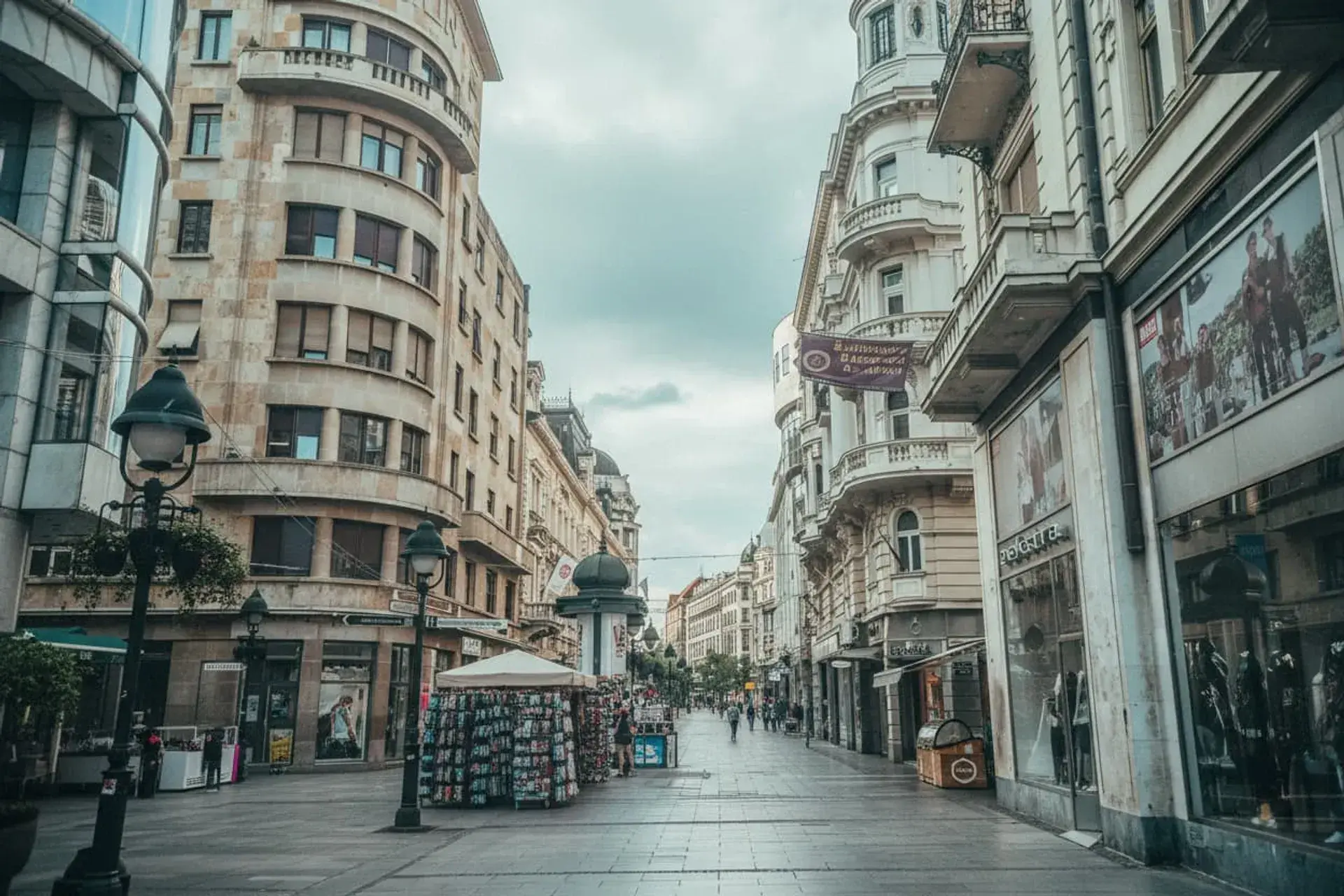
Positioned at the northwestern terminus of the pedestrian Knez Mihailova street, the complex anchors the historic Stari Grad (Old Town) district. Its surviving walls contain a physical chronicle of Belgrade's recurring cycles of conflict and reconstruction, exhibiting distinct building phases that incorporate Roman brickwork, medieval Serbian stone walls, Austrian baroque bastions, and Ottoman gates.
Belgrade walking tour with audio and quizzes: frontier to capital
2 hours8 stopsAudio guideStart any day, at your own paceTicket on your phone · 30-day refundTwo Millennia of Frontier Fortifications
The strategic ridge began as an earthen and timber outpost established by the Romans in the 1st century CE. By the early 2nd century, it had expanded into a stone legionary castrum housing Legio IV Flavia Felix. Over the subsequent centuries of migration and imperial struggle, the fortification was razed and reconstructed under Byzantine, Hunnic, Avar, Bulgarian, and Hungarian forces.
In 1404, Despot Stefan Lazarević elevated the stronghold into the capital of the medieval Serbian state, erecting fortified ramparts, defensive towers, and a royal castle. Ottoman Sultan Suleiman the Magnificent seized the fortress in 1521, inaugurating a prolonged era of Ottoman-Habsburg warfare. During Austrian occupations in the 18th century, engineer Nicolas Doxat de Démoret modernized the site into a Baroque artillery fortress, though key bastions were demolished in compliance with the 1739 Treaty of Belgrade.
Active military administration ceased on April 6, 1867, when the Ottoman garrison relinquished the citadel keys to Prince Mihailo Obrenović. Beginning in 1869, urban planner Emilijan Josimović directed the transformation of the military glacis into an expansive landscaped public park.
Subterranean Chambers and the Roman Well
Among the complex's prominent engineering relics is the underground structure known as the Roman Well (Rimski bunar). Despite its traditional name, the installation is neither Roman in origin nor a standard spring-fed water well. Early 18th-century Austrian military engineers excavated the shaft between 51 and 60 metres down into the bedrock to function as a rainwater cistern.
A double-spiral staircase composed of more than 200 stone steps descends around the central shaft. Entering the subterranean chamber brings a sharp drop in ambient temperature, accompanied by the scent of damp limestone and resonant enclosed acoustics. The deep, foreboding geometry of the shaft caught the attention of film director Alfred Hitchcock, who toured the chamber in 1964 and noted its suitability as a suspense film setting.
Monumental Curiosities and Cultural Artifacts
Belgrade Fortress contains several unusual historical landmarks that reflect the social and military upheavals of the region:
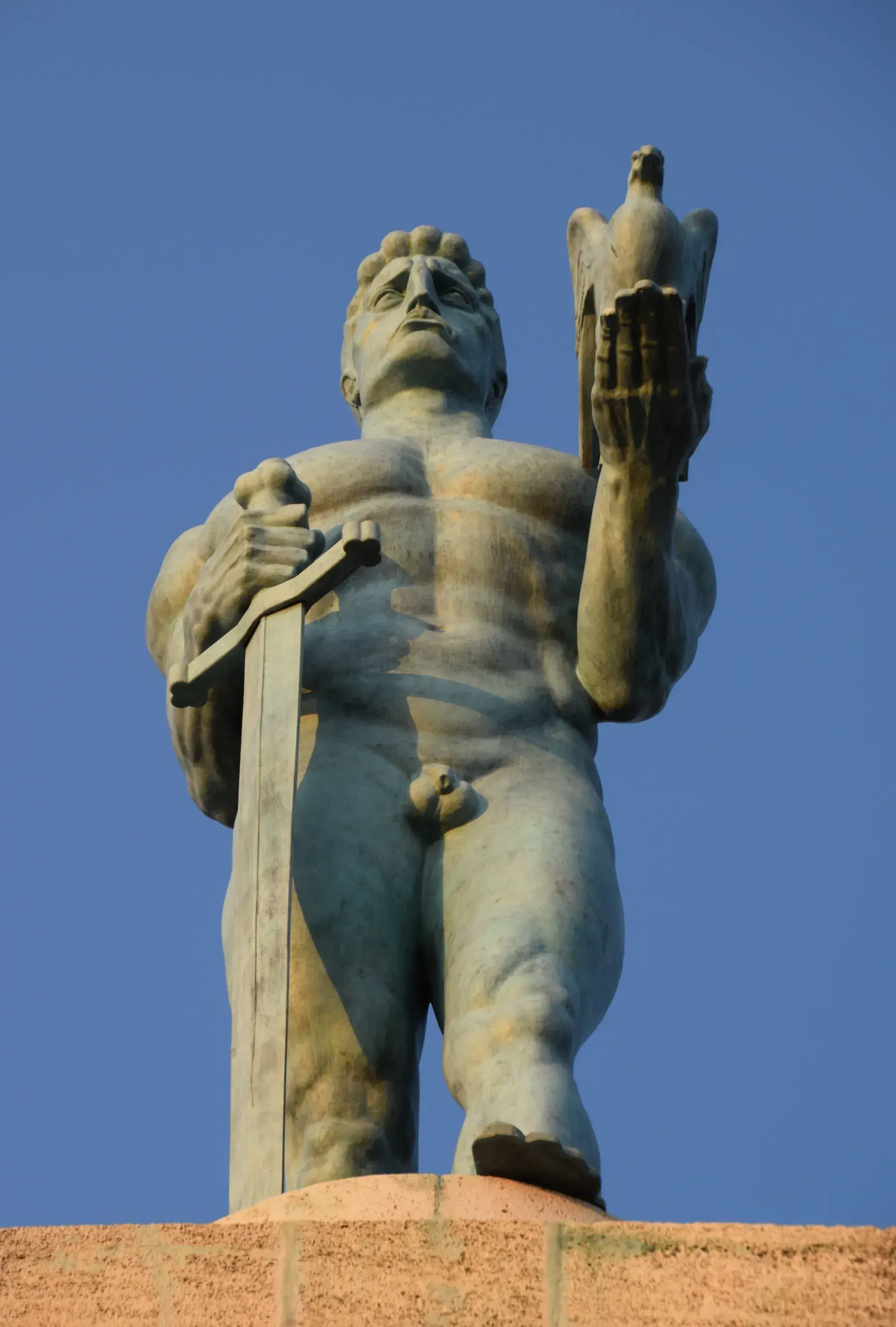
- The Victor Monument (Pobednik): Designed by sculptor Ivan Meštrović in 1913, this bronze monument depicts an athletic male nude clutching a sword and a falcon. Originally planned for central Terazije Square, the statue provoked fierce public protests from civic groups over public nudity. In 1928, city authorities resolved the controversy by positioning the statue atop a tall rampart facing outward toward the river confluence.
- Ružica Church: Located within the fortifications, this historic sanctuary features interior chandeliers crafted by soldiers from spent World War I artillery shell casings, rifle ammunition, pistol bullets, and sabres.
Public Access and Operating Structure
The open grounds, ramparts, and walking pathways of Kalemegdan Park are maintained by the public enterprise JP Beogradska Tvrđava and are accessible to the public free of charge, twenty-four hours a day.
Several enclosed historical structures operate on seasonal ticketing schedules, including the Clock Tower (Sahat Kula), the Roman Well, the Cold War military bunker, the Great Powder Magazine, and Nebojša Tower. In addition, the dry defensive moats of the Upper Town display an extensive open-air collection of decommissioned tanks, cannons, and heavy artillery curated by the Military Museum.
FAQ
What does the name Kalemegdan mean?
The name comes from two Ottoman Turkish words: 'kale' (fortress) and 'meydan' (open ground or battlefield), referring to the cleared defensive area outside the fortress walls.
Is the Roman Well at Belgrade Fortress actually Roman?
No. The Roman Well was built in the early 18th century by Austrian military engineers as a rainwater cistern and extends between 51 and 60 metres into the limestone bluff.
Why was the Victor Monument relocated to the fortress ramparts?
Originally commissioned in 1913 for downtown Terazije Square, the bronze statue caused public outrage over its male nudity. The city relocated it to the fortress ramparts overlooking the rivers in 1928.
Do visitors need tickets to enter Belgrade Fortress and Kalemegdan Park?
Access to the park grounds and ramparts is free and open continuously. Specific enclosed historic structures, such as the Roman Well, Clock Tower, and military bunker, require admission tickets.