Knez Mihailova Street: Belgrade's Grand Promenade
The Historic Artery of Belgrade
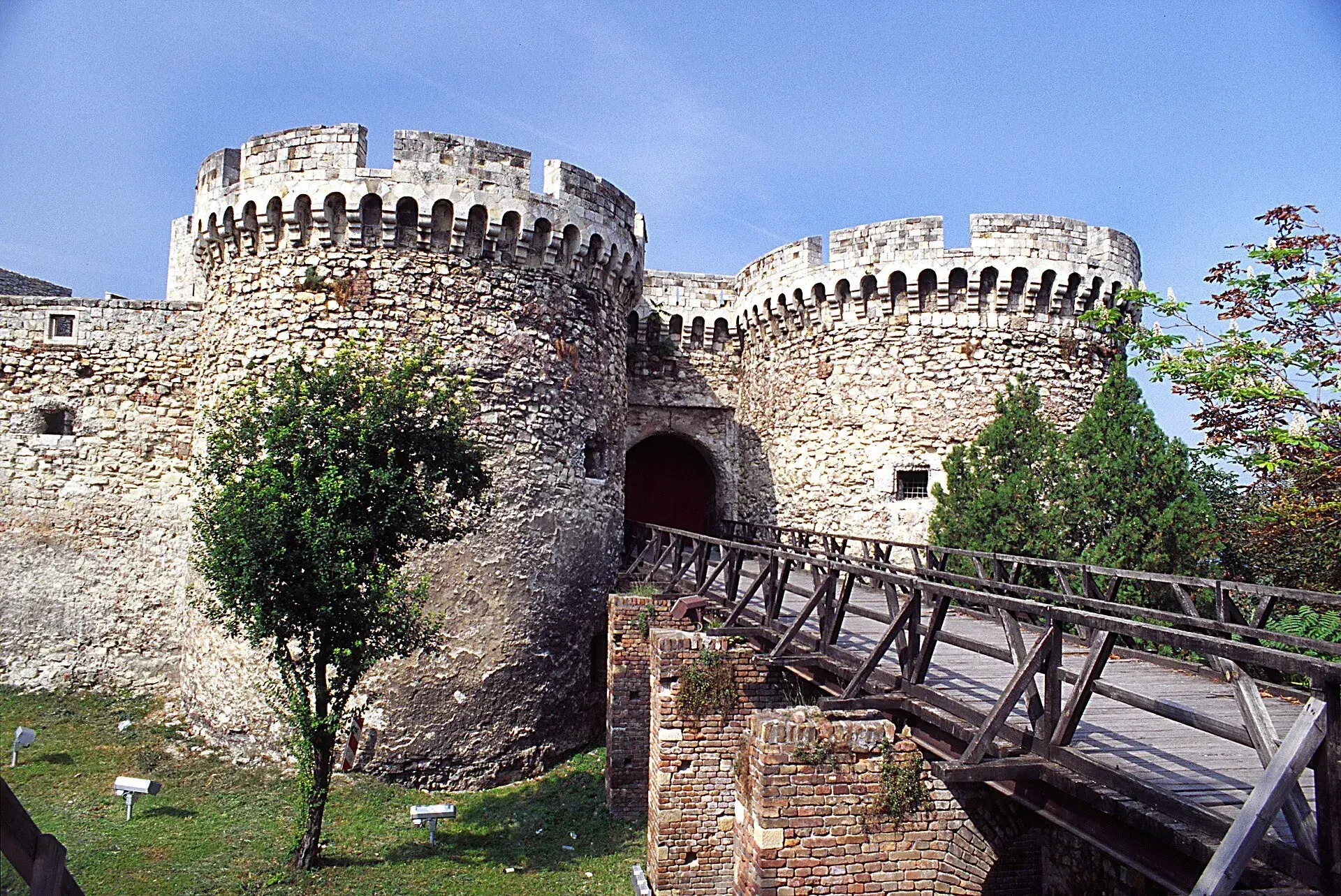
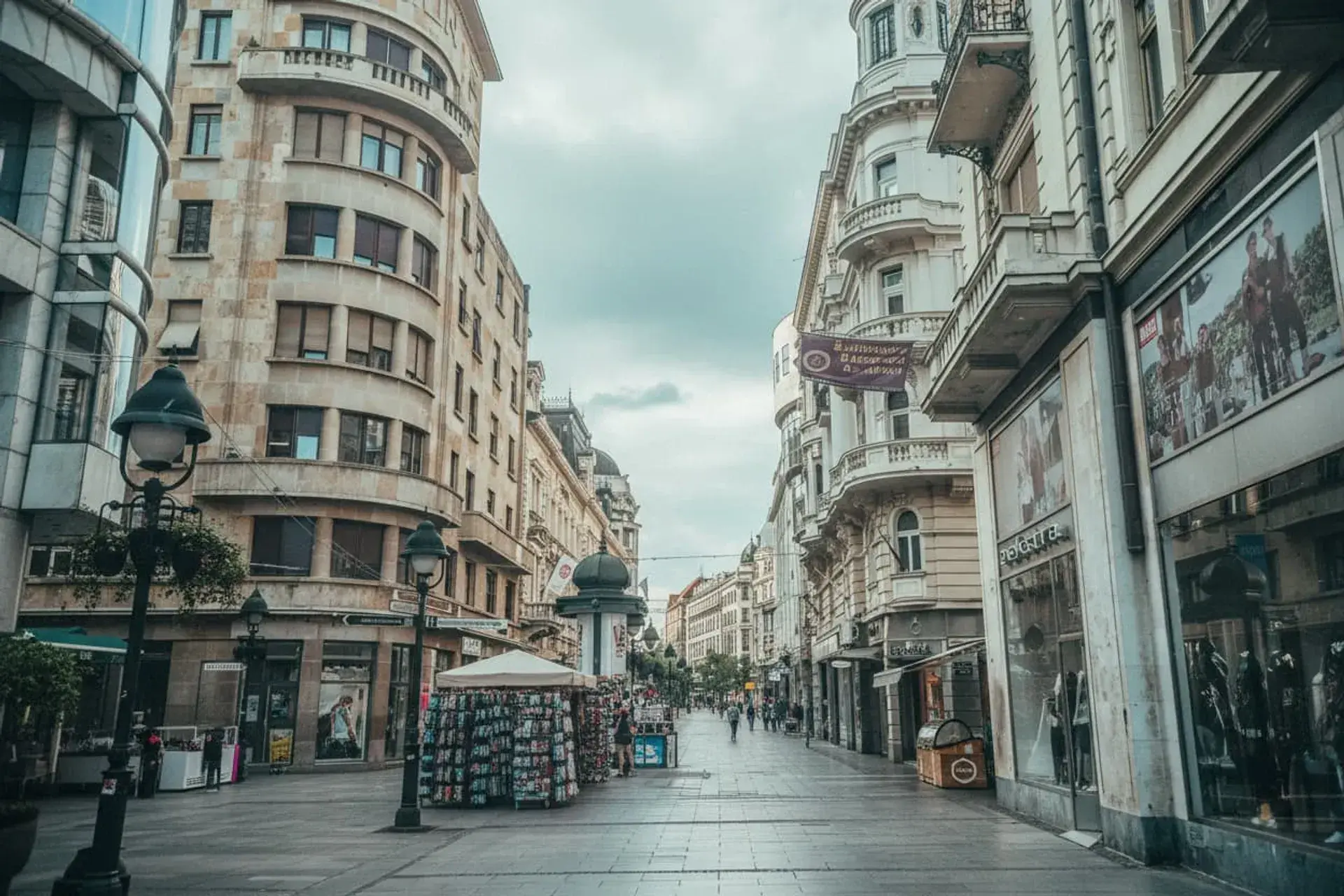
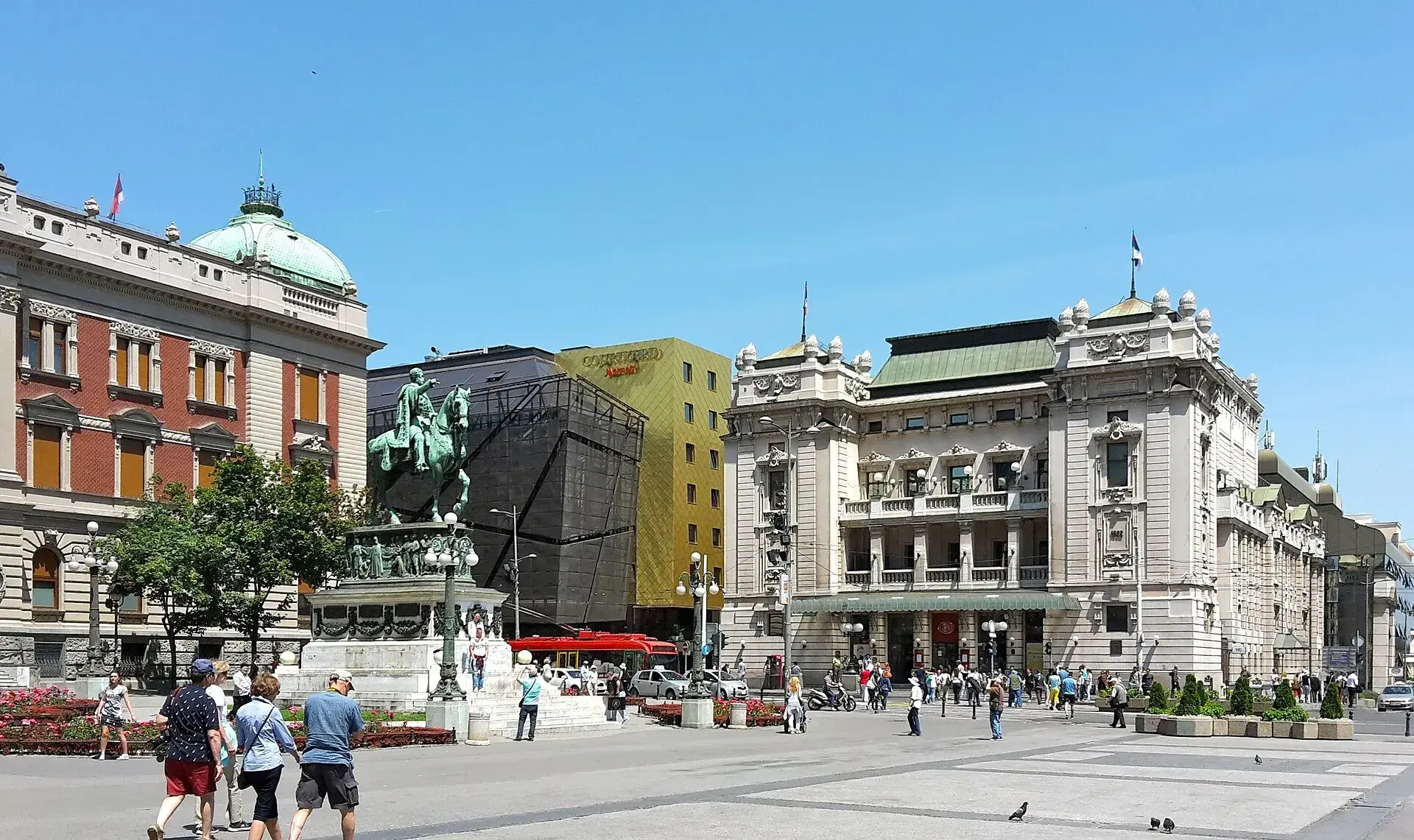
Ulica kneza Mihaila, officially Prince Michael Street and named after Prince Mihailo Obrenović III, is the primary pedestrian thoroughfare of Belgrade. Spanning between 800 meters and one kilometer through the Stari Grad municipality, it links Republic Square and Terazije directly with Kalemegdan Park and the Belgrade Fortress.
The street follows an ancient urban alignment, roughly corresponding to the via cardo of the Roman settlement Singidunum, which led directly to the military castrum. Due to its architectural and historical value, the corridor was protected in 1964 and designated a Spatial Cultural-Historical Unit of Exceptional Importance in 1979.
Belgrade walking tour with audio and quizzes: frontier to capital
2 hours8 stopsAudio guideStart any day, at your own paceTicket on your phone · 30-day refundEmilijan Josimović’s Master Plan
During the Ottoman period, the area comprised an irregular network of narrow lanes, gardens, water supply structures, and mosques, with only a short stretch known as Delijska Street serving as an organized roadway. Following the departure of the Ottoman garrison in 1867, civil engineer Emilijan Josimović developed Belgrade’s first comprehensive urban regulation master plan.
Josimović's plan replaced the winding Ottoman layout with a straight, Western European-style boulevard. Throughout the late 1860s and 1870s, the street developed rapidly as prominent merchants and civic leaders commissioned private residences, banking palaces, and hotels designed to reflect modern European architectural styles.
Architectural Heritage and Cultural Landmarks
Knez Mihailova is lined with late 19th- and early 20th-century buildings executed in Neoclassical, Neo-Renaissance, Romantic, and Secessionist styles. While ground levels feature modern retail shopfronts, the upper levels retain historic masonry reliefs, wrought-iron balconies, floral stucco ornamentation, and corner domes.
Prominent heritage buildings along the avenue include the Serbian Academy of Sciences and Arts (SANU), the Nikola Spasić Endowment, and the former Srpska Kruna Hotel, which now serves as the Belgrade City Library. The street also accommodates key international institutions, including the Goethe-Institut, Institut Français, and Instituto Cervantes.
Scientific Milestones and Preserved Heritage
Several distinct monuments stand along the thoroughfare. Directly on the pavement outside the Serbian Academy of Sciences and Arts sits a polished stone pyramid installed in 1995. Rather than serving as a memorial, this installation acts as an exact scientific marker recording Belgrade's geographic coordinates (44° 49' 49" N, 20° 27' 44" E), an altitude of 116.75 meters above sea level, and the local acceleration of gravity.
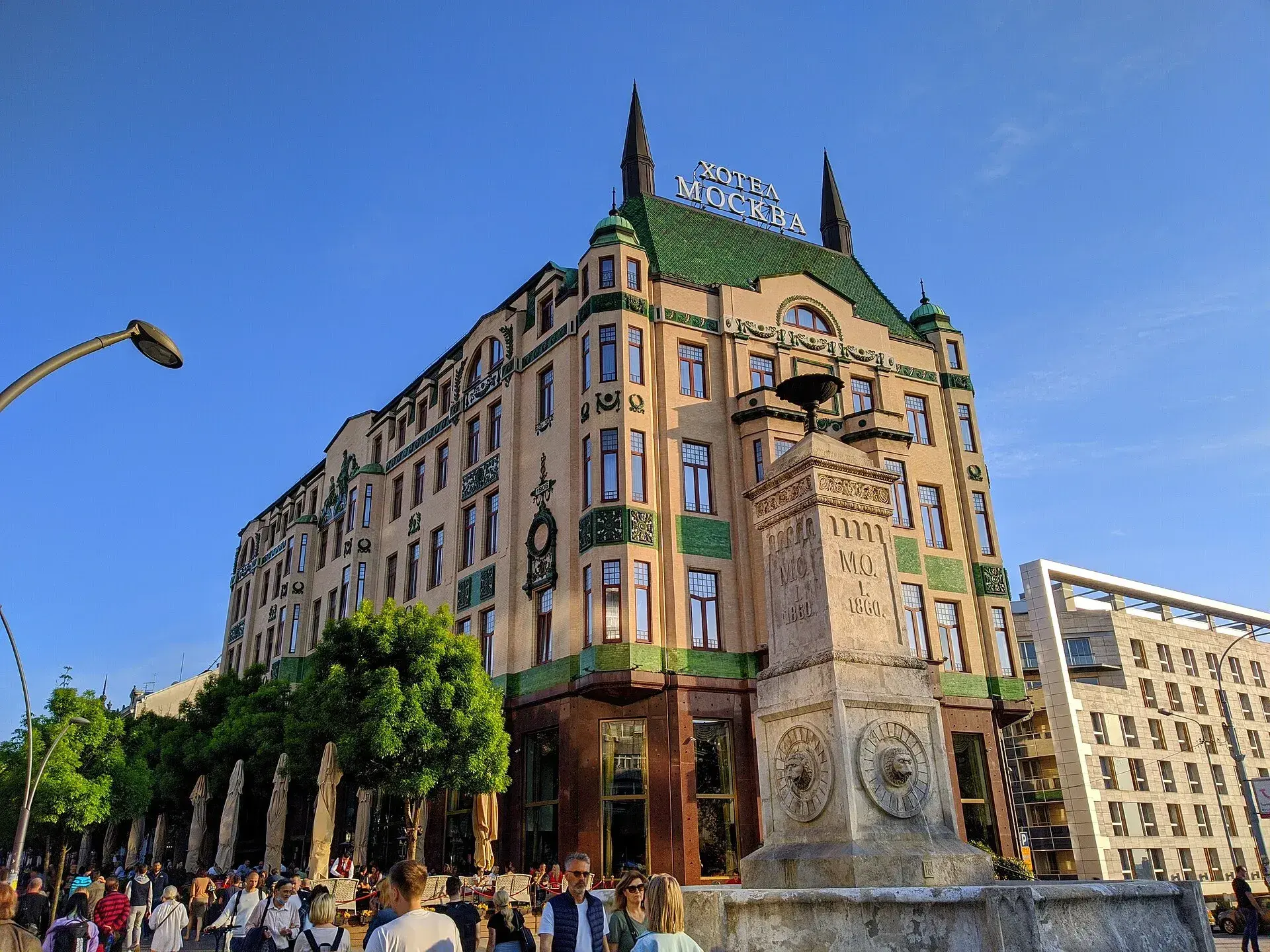
Further down the street stands the Delijska Fountain, installed in 1987. This structure represents the fourth historical iteration of a public drinking fountain originally introduced to the vicinity under Prince Alexander Karađorđević. At Knez Mihailova 12, the Geca Kon bookstore represents another legally protected landmark. Founded in the early 20th century by the prominent publisher and declared a cultural monument in 2009, the property is subject to strict protection mandates requiring it to operate permanently as a functioning bookshop.
The Promenade and Urban Character
In 1987, Knez Mihailova Street was permanently closed to automotive traffic and resurfaced with stone paving. Since then, it has functioned as Belgrade’s central public promenade (korzo), commercial spine, and gathering place.
The absence of motor vehicles establishes a distinctive soundscape dominated by footsteps against stone paving, open-air café terraces, and street performers ranging from acoustic guitarists to classical string players and brass ensembles.
FAQ
When was Knez Mihailova Street turned into a pedestrian zone?
Knez Mihailova was permanently closed to vehicular traffic and repaved in stone in 1987.
What is the stone pyramid outside the Serbian Academy of Sciences and Arts?
Erected in 1995, the polished stone pyramid is a scientific milestone marking Belgrade's geographic coordinates (44° 49' 49" N, 20° 27' 44" E), elevation of 116.75 meters, and local gravitational acceleration.
Why is the Geca Kon bookstore legally protected?
Established in the early 20th century and declared an individual cultural monument in 2009, the Geca Kon bookstore is legally mandated to remain an operating bookstore to preserve its cultural role rather than being converted into generic retail.