Victor Monument: History of Belgrade's Pobednik
Origins and the Terazije Controversy
The Victor (Pobednik), recognized as the visual emblem of Belgrade, was originally commissioned by the Belgrade City Council in 1913. Sculpted by Ivan Meštrović, the statue was conceived as the crowning centerpiece of an elaborate victory fountain intended for Terazije Square, the city's commercial core. The proposed fountain included a basin supported by four lions and a column divided into five segments representing five centuries of Ottoman rule. Work was halted by the outbreak of World War I, and the completed bronze figure was hidden inside a house in the Senjak neighborhood to prevent Austro-Hungarian forces from melting it down for metal.
When municipal authorities revived the project in May 1927, plans to place the monument in Terazije Square triggered intense opposition. Conservative writers, clergy, and women's organizations protested against displaying a fully nude male figure in the center of the capital, arguing it would compromise public morality and lacked traditional Serbian attire. To resolve the scandal, the city reached a compromise in 1928, transferring the memorial to the Upper Town of the Belgrade Fortress in Kalemegdan. Mounting the statue on a high column at the fortress edge served the practical aim of raising the nudity far above eye level.
Belgrade walking tour with audio and quizzes: frontier to capital
2 hours8 stopsAudio guideStart any day, at your own paceTicket on your phone · 30-day refundArchitecture and Symbolism
Unveiled on October 7, 1928, to commemorate the 10th anniversary of the Salonika Front breakthrough, the monument honors Serbian victories in the Balkan Wars and World War I. Rising approximately 14 meters in total height, the structure pairs Meštrović's five-meter cast-bronze figure with a Doric column and cubic pedestal designed by Serbian architect Petar Bajalović. In 1992, the Victor was officially designated a cultural heritage property.
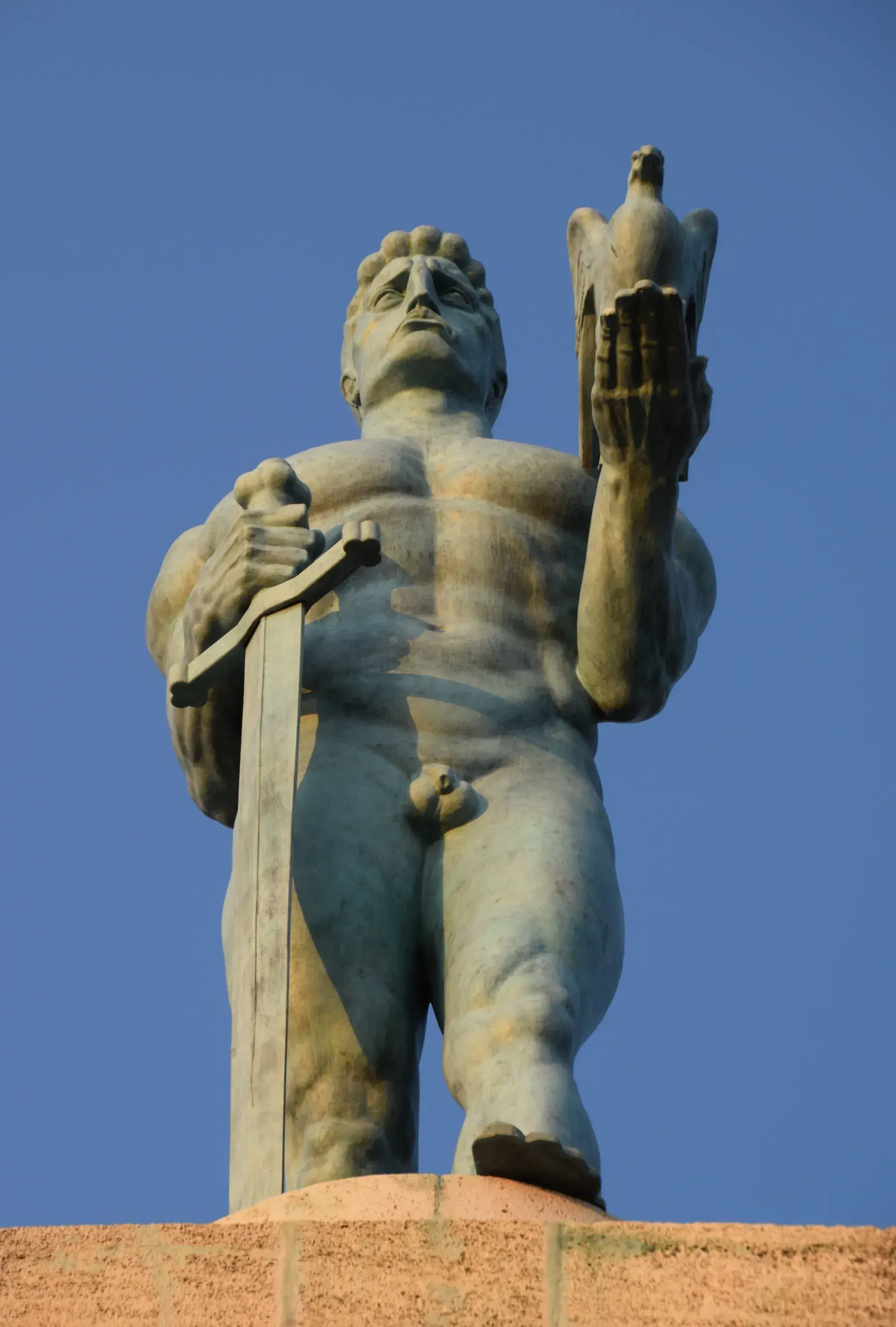
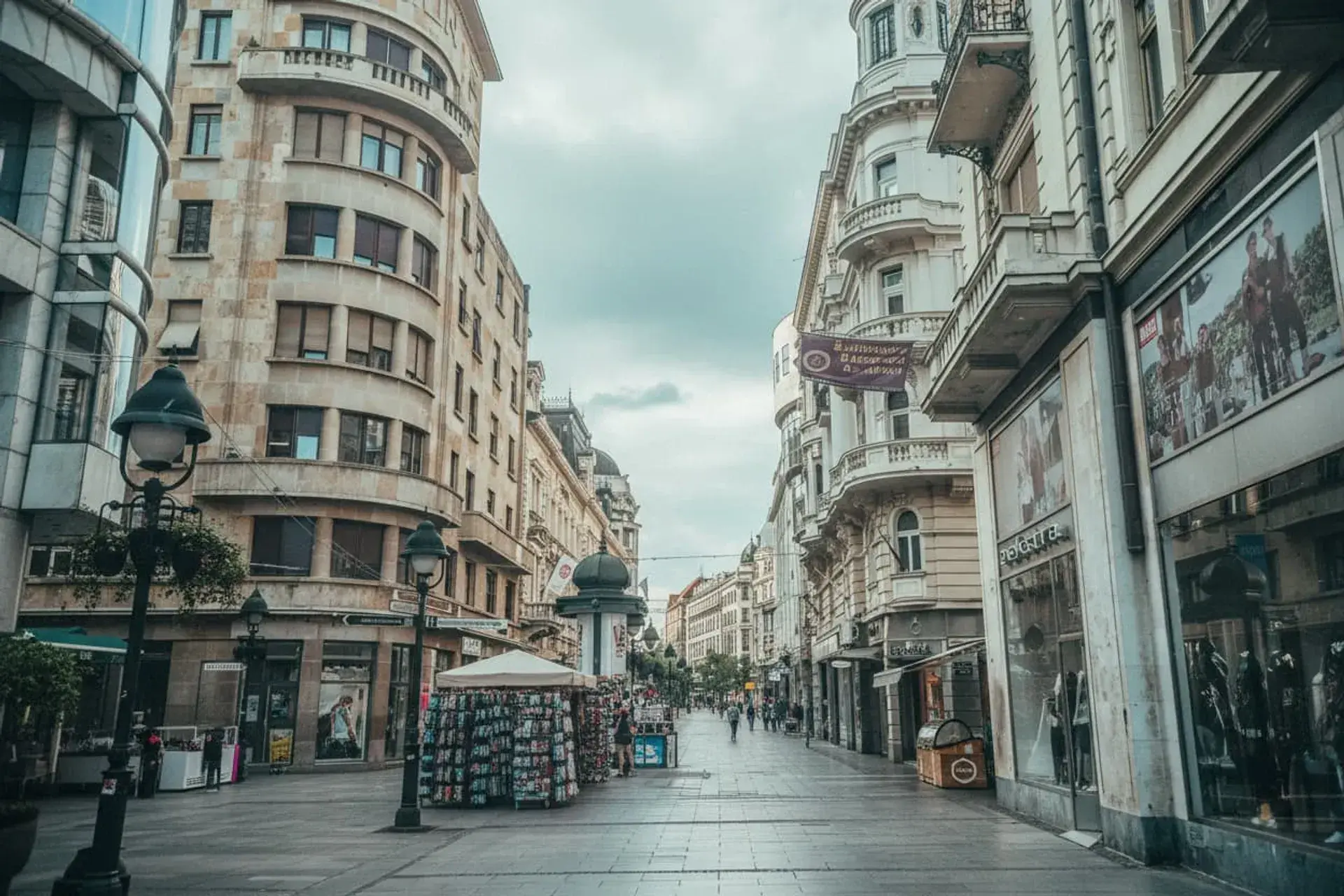
The statue portrays an athletic warrior standing in a posture of vigilance. In his right hand, he holds a downward-pointing sword symbolizing readiness and armed conflict, while his left hand supports a falcon signifying peace and watchful alert. Anchoring the historic terminus of the walking corridor that runs from Trg Republike through Knez Mihailova Street, the statue bridges Belgrade's civilian pedestrian center with its defensive ramparts.
Defiance and Historic Scars
The positioning of the Victor carries distinct geopolitical significance. Elevated above the meeting point of the Danube and Sava rivers, the figure faces northwest toward the plains of Vojvodina and Fruška Gora. Because these territories were held by the Austro-Hungarian Empire until 1918, the monument's stance serves as a permanent architectural statement of defiance toward the former imperial power.
The physical surface of the bronze also preserves records of subsequent conflicts. During a major conservation assessment, experts discovered dozens of bullet holes and shrapnel marks dating to World War II. Rather than filling or patching these structural scars, conservators elected to keep them visible as authentic historical records.
Restoration and Current Setting
Decades of weather exposure on the fortress bluff, where winds sweep in from the open Pannonian Basin, eventually caused the column to lean and the statue to develop cracks. In October 2019, the bronze figure was taken down and sent to Smederevo, where sculptor Zoran Kuzmanović led its comprehensive restoration. The repaired figure was returned to its pedestal on February 14, 2020.
Today, the surrounding plateau in Kalemegdan serves as a scenic promenade and open lookout. From the edge of the stone bluff, visitors view the stark divide where the murky Danube meets the greener waters of the Sava, set against panoramic vistas extending across New Belgrade and Zemun.
FAQ
Why was the Victor Monument moved to the Belgrade Fortress?
The statue was originally slated for Terazije Square, but strong public outcry from clergy, conservative commentators, and women's groups against displaying a nude male figure in the city center forced a compromise. Moving it to the fortress and atop a tall column in 1928 lifted the nudity high above eye level.
What do the sword and falcon represent?
The downward-pointing sword held in the figure's right hand symbolizes war and vigilance, while the falcon resting in his left hand represents peace and alertness.
Why does the Victor face northwest?
The statue looks across the rivers toward Vojvodina and Fruška Gora, lands held by the Austro-Hungarian Empire until 1918, creating a lasting posture of defiance against the former empire.
Who designed the Victor Monument?
The bronze sculpture was modeled and cast by Ivan Meštrović, and the supporting Doric column and pedestal were designed by architect Petar Bajalović.