Cathedral Church of St. Michael the Archangel Guide
Architectural Overview and Location
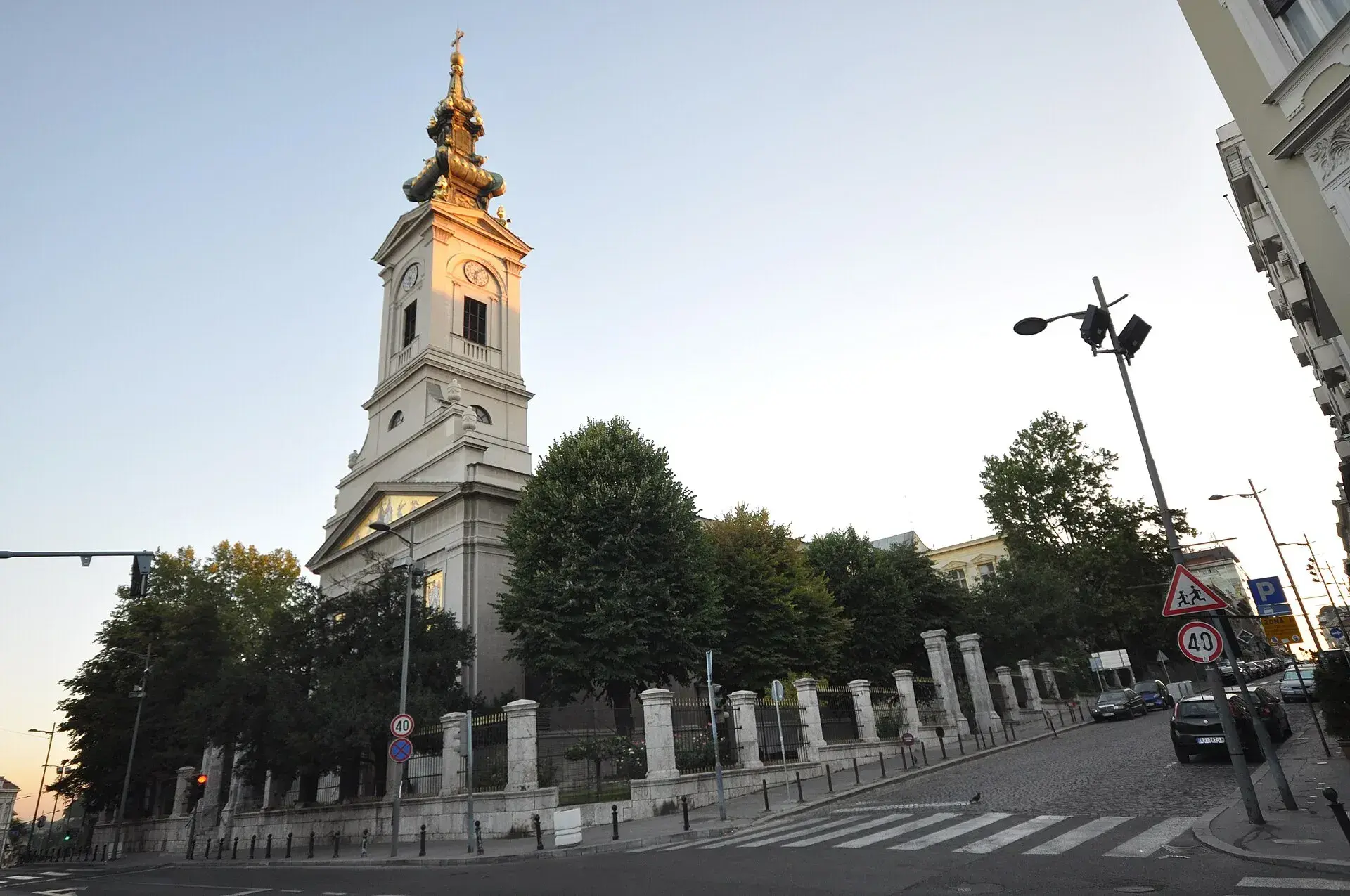
The Cathedral Church of St. Michael the Archangel, widely known to Belgrade residents as Saborna crkva, sits in the Kosančićev Venac neighborhood at the junction of Kneza Sime Markovića and Kralja Petra streets. Built between 1837 and 1840 following the directives of Prince Miloš Obrenović, the cathedral was officially consecrated on November 8, 1845.
Designed by architect Adam Friedrich Kwerfeld (also documented as Franz Janke) and erected by artisans from Zemun and Pančevo, the building combines Neoclassical architecture with Late Baroque characteristics. The exterior marks the historical urban shift in Belgrade, transitioning from the defensive perimeter of Kalemegdan Fortress into the modern civic streetscapes of Kralja Petra and Knez Mihailova. In 1979, the Republic of Serbia designated the cathedral an Immovable Cultural Monument of Exceptional Importance.
Belgrade walking tour with audio and quizzes: frontier to capital
2 hours8 stopsAudio guideStart any day, at your own paceTicket on your phone · 30-day refundHistory and Milestones of Autonomy
Sacred Christian foundations honoring the Archangel Michael have existed on this river-ridge location since at least the 1570s, when the presence of a church was noted by traveler Stephan Gerlach. An 18th-century Austrian-built stone church deteriorated over time and was razed in 1763, making way for modest wooden and stone replacements.
The location played a pivotal role during Serbia's nineteenth-century transition toward self-governance. On February 16, 1830, the first church bell allowed under Ottoman administration was rung on the site, audibly affirming Serbian autonomy. Six years later, in 1836, Prince Miloš commanded the dismantling of the existing structure to erect a permanent civic cathedral. Decades later, on September 21, 1904, the cathedral was the setting for the coronation of King Peter I Karađorđević, which was the last royal coronation conducted in Serbia.
Interior Art and Royal Tombs
The interior of the cathedral houses significant decorative artistry, centered on a wood-carved, gilded iconostasis sculpted by Dimitrije Petrović. From 1841 to 1845, painter Dimitrije Avramović created over 60 wall paintings and icons that adorn the nave.
The cathedral is also a resting place for prominent Serbian rulers and religious figures. Inside lie the crypts of the Obrenović dynasty, containing the remains of Prince Miloš Obrenović and Prince Mihailo Obrenović. In addition, the church holds the sacred relics of medieval Serbian monarchs, including Tsar Stefan Uroš V and Despot Stefan Štiljanović.
The Churchyard and Surrounding Heritage
Flanking the western entrance inside the church courtyard are the burial sites of two key figures in Serbia's Enlightenment and cultural modernization. Linguistic reformer Vuk Stefanović Karadžić, who standardized the Cyrillic alphabet and modern Serbian vernacular, is buried here alongside Dositej Obradović, the Enlightenment philosopher, author, and Serbia's first minister of education.
Directly across the street stands the Building of the Patriarchate of the Serbian Orthodox Church, an administrative complex designed by Viktor Lukomski and constructed between 1934 and 1935. The immediate area is also home to Belgrade's oldest tavern, established in 1823. In 1892, its owner attempted to rename the business "Kod Saborne crkve" ("By the Cathedral Church"). Church officials objected to linking the religious landmark to an alcohol-serving establishment, leading the owner to paint a question mark above the entrance as a temporary marker, creating its enduring official name, Kafana "?".
Current Status and Visiting Guidelines
Saborna crkva serves as an active place of worship and the principal cathedral of the Archbishopric of Belgrade and Karlovci. Regular liturgies and ecclesiastical services are conducted throughout the week.
The cathedral is open daily to worshippers and visitors between 7:00 am and 8:00 pm. Entry is subject to traditional Orthodox modesty rules, which require visitors to ensure their shoulders and knees remain covered.
FAQ
What are the visiting hours for the Cathedral Church of St. Michael the Archangel?
The cathedral is open daily to worshippers and visitors from 7:00 am to 8:00 pm.
Is there a dress code for entering Saborna crkva?
Yes. Visitors are required to follow customary Orthodox dress standards, which require both shoulders and knees to be covered.
Who is buried at the cathedral?
The interior contains the tombs of Prince Miloš Obrenović and Prince Mihailo Obrenović, as well as the relics of Tsar Stefan Uroš V and Despot Stefan Štiljanović. The courtyard holds the graves of language reformer Vuk Stefanović Karadžić and philosopher Dositej Obradović.
What architectural styles define the cathedral?
The cathedral was designed by architect Adam Friedrich Kwerfeld in a Neoclassical style featuring Late Baroque elements.