Republic Square: Belgrade's Central Landmark
Republic Square (Trg republike) is the primary civic gathering point in Belgrade. Situated in the Stari Grad municipality, it forms the eastern gateway to Knez Mihailova Street, anchoring the pedestrian corridor that connects downtown Belgrade to Kalemegdan Park and the Belgrade Fortress. Formerly known as Theatre Square (Pozorišni trg), the space serves as both a cultural hub and a central meeting ground.
Ancient Necropolis to Ottoman Frontier
Centuries of defensive works and burials lie beneath the modern paving of Republic Square. In 1882, excavations at the site unearthed first-century Roman circular well-tombs reaching depths of more than 10 meters, part of the ancient Singidunum necropolis.
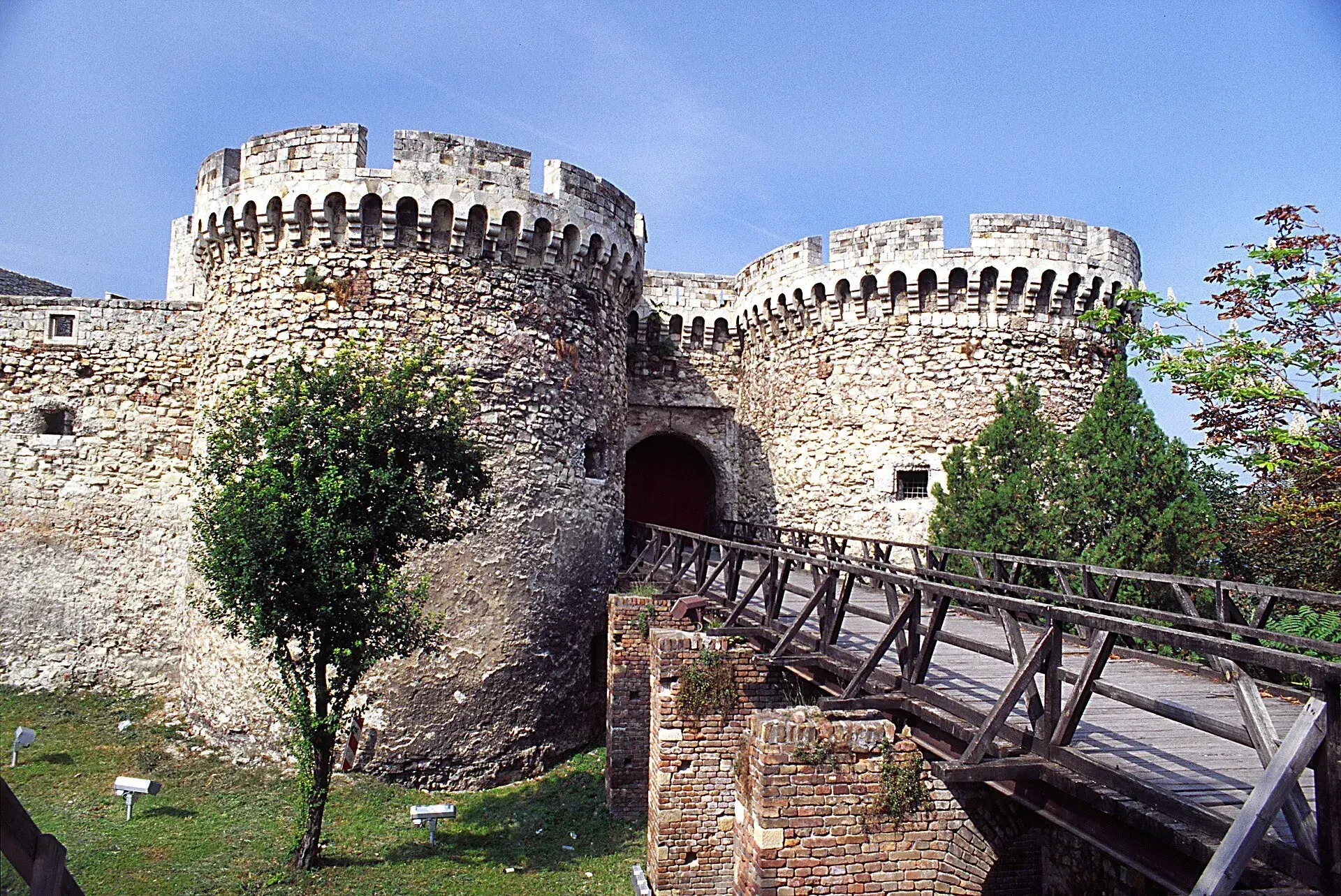
By the 18th and early 19th centuries, the location was occupied by military fortifications, starting with the Austrian Württemberg Gate and followed by the Ottoman Stambol Gate. Marking the beginning of the overland highway to Istanbul, the Stambol Gate was historically associated with public executions. In 1866, Prince Mihailo Obrenović ordered the gate leveled to modernize the city. The dismantled masonry was not discarded; between 1868 and 1869, stones salvaged from the demolished Ottoman gate were repurposed into the foundation walls of the new National Theatre.
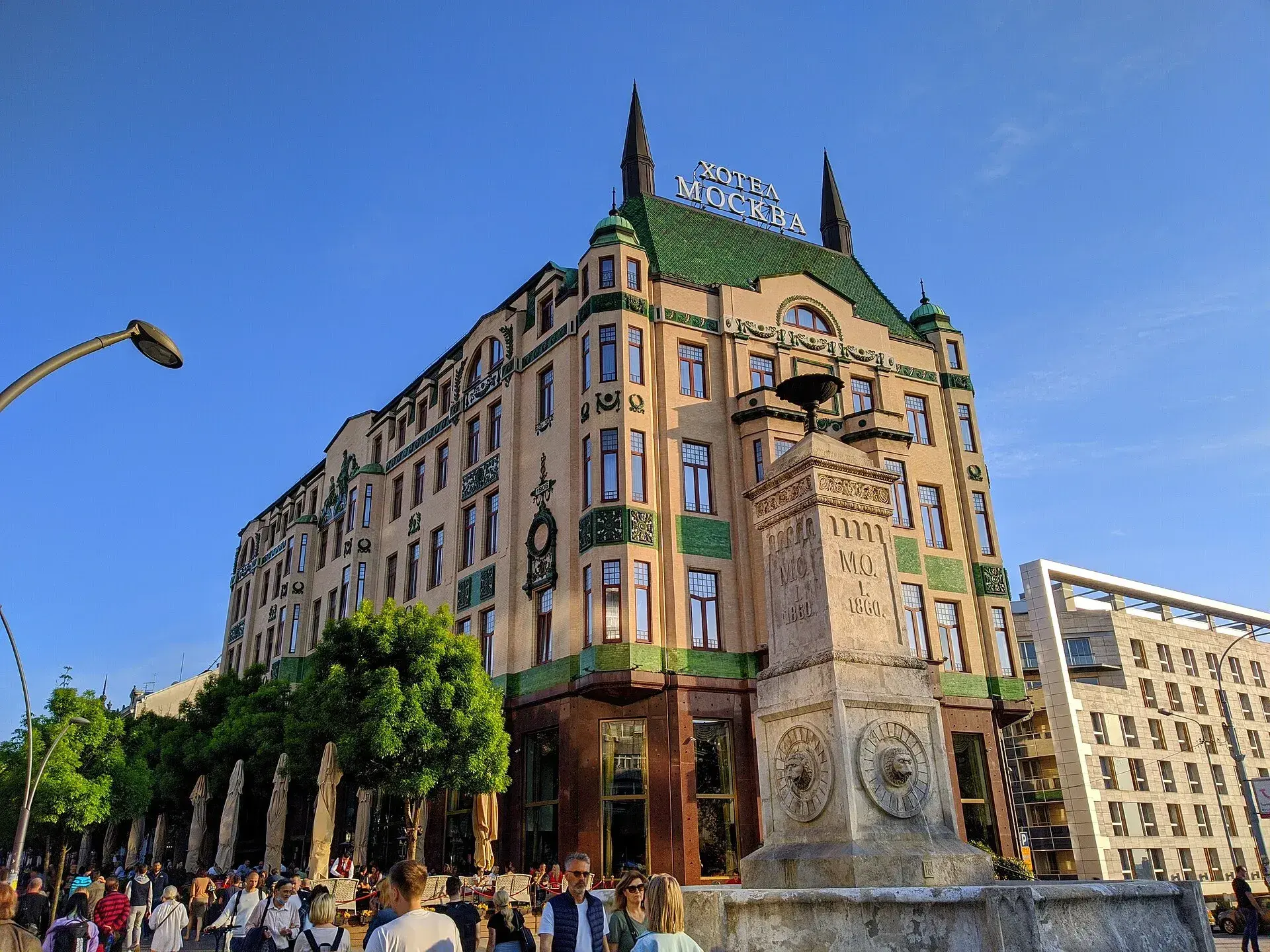
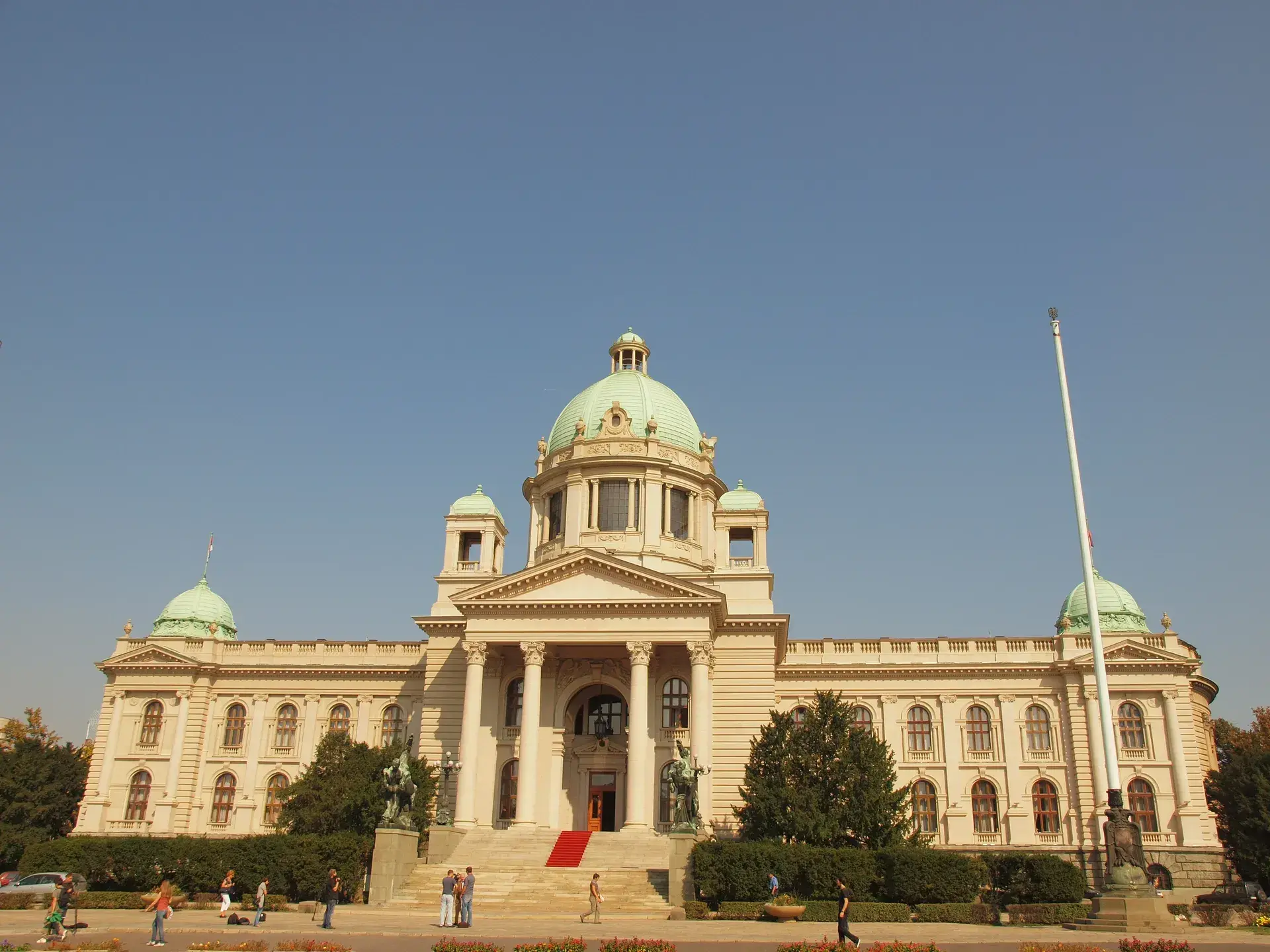
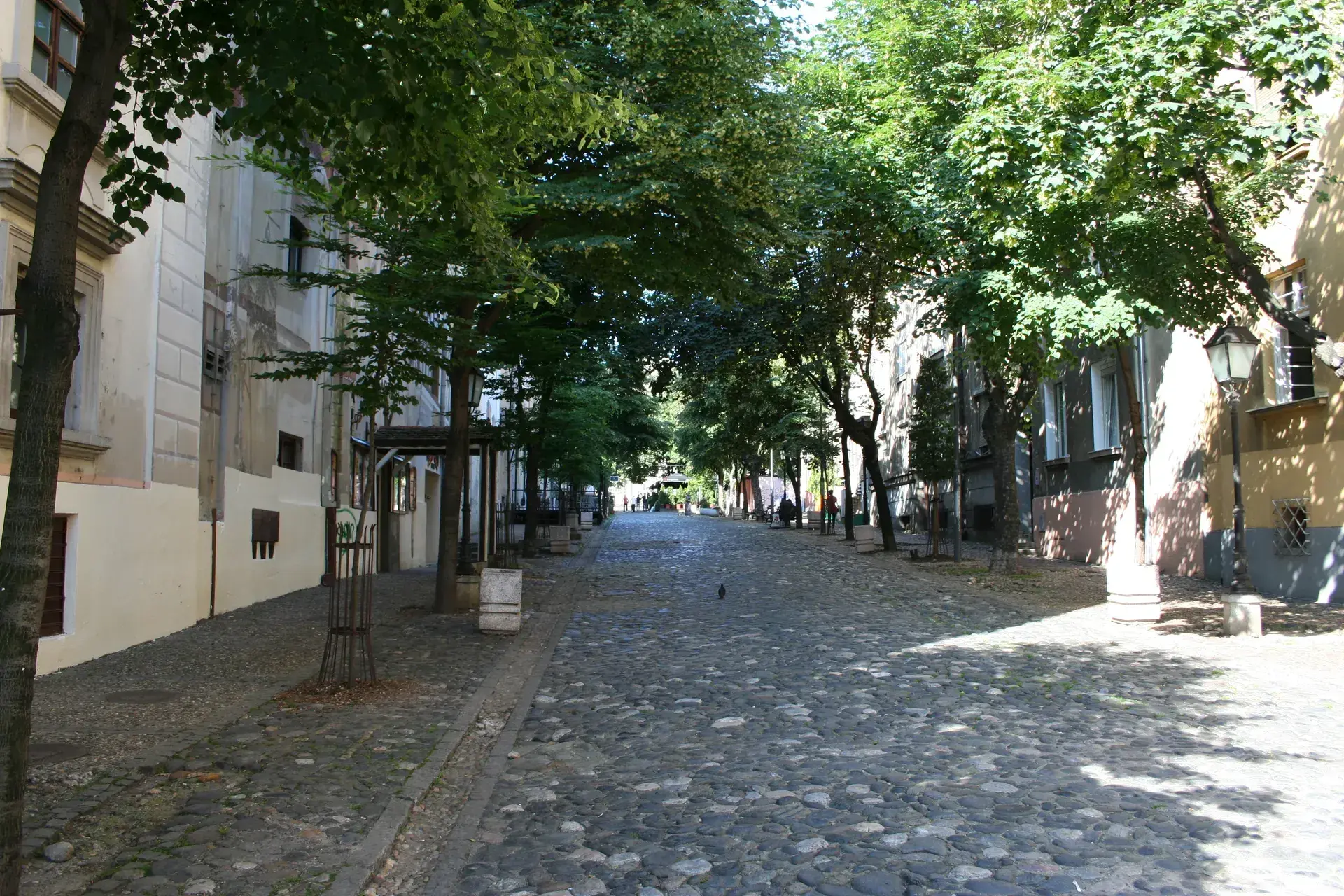
Belgrade walking tour with audio and quizzes: frontier to capital
2 hours8 stopsAudio guideStart any day, at your own paceTicket on your phone · 30-day refundThe Prince Mihailo Monument and Local Lore
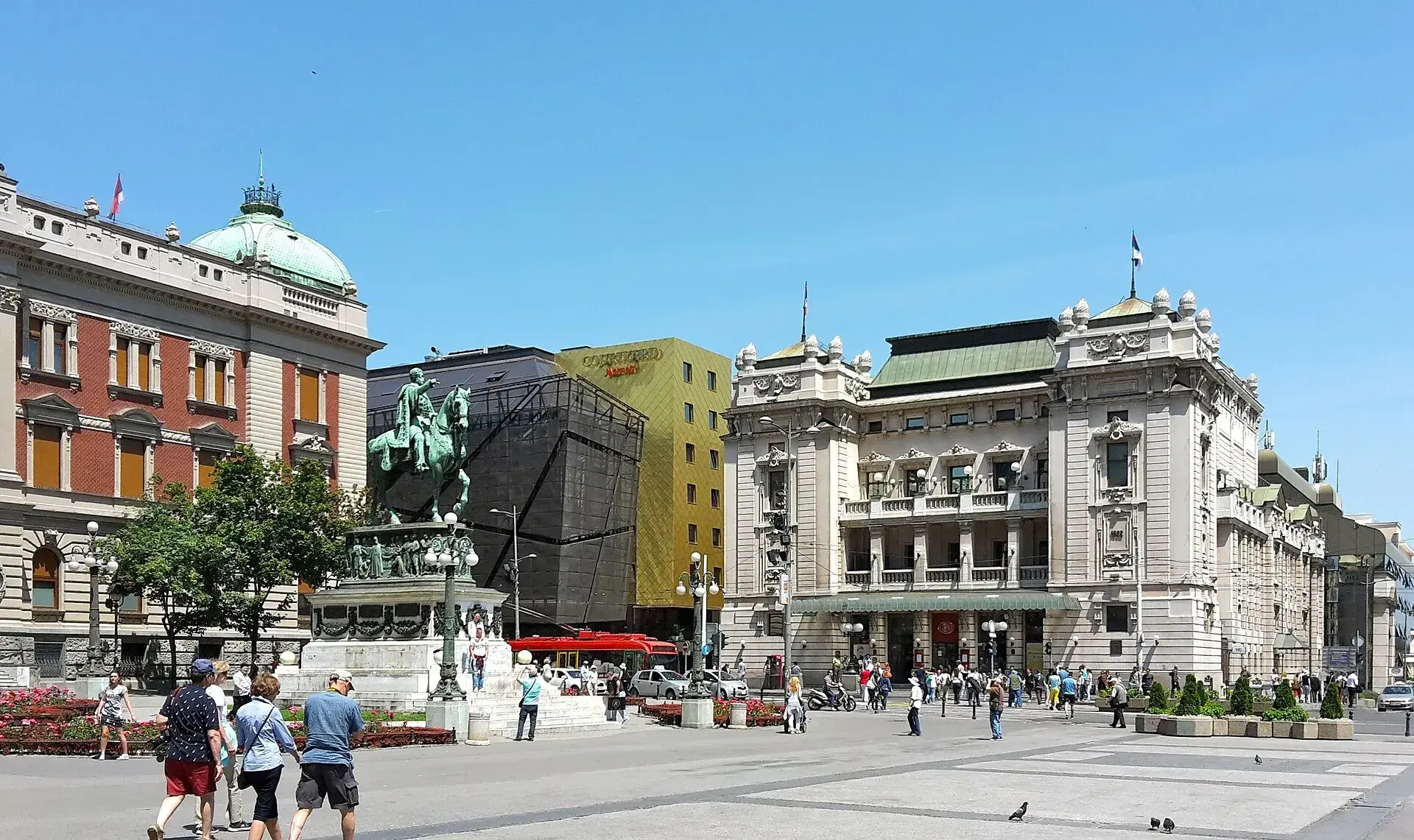
At the center of Republic Square stands the Prince Mihailo Monument, unveiled in 1882. Created by Florentine sculptor Enrico Pazzi, it was the first monumental public equestrian statue erected in Serbia. The statue was commissioned following Prince Mihailo's assassination in 1868 to honor his role in securing the 1867 handover of key Serbian fortifications from Ottoman garrisons. Prince Mihailo is depicted bareheaded, with his right arm outstretched toward the southeast, indicating regions that remained under Ottoman rule when the statue was designed. Inscribed on the pedestal are the names of the six surrendered fortress towns: Belgrade, Smederevo, Kladovo, Soko, Užice, and Šabac.
The monument has fostered distinctive local lore. Despite honoring Prince Mihailo, residents almost universally refer to the spot simply as "kod konja" ("at the horse") when arranging meetings. A long-standing urban legend also maintained that sculptor Enrico Pazzi died by suicide out of regret for omitting the prince's hat, as riding bareheaded breached 19th-century etiquette. In reality, archival records confirm Pazzi returned to Florence and died of old age.
Cultural Anchors: The Theatre and Museum
Republic Square is framed by two of the country's most prominent cultural institutions. Anchoring one side is the National Theatre, designed by Aleksandar Bugarski and opened in 1869, showcasing architectural elements inspired by Milan's La Scala opera house. Dominating the adjacent side is the National Museum of Serbia, constructed upon the plot formerly occupied by the historic Dardaneli tavern. These institutions cemented the square's original identity as Theatre Square prior to its post-World War II renaming.
Civic Space and Modern Discovery
Following World War II, the square was renamed Republic Square and established itself as an arena for major political and social movements, notably serving as the focal point for the anti-Milošević demonstrations on March 9, 1991.
Between 2018 and 2020, Republic Square underwent extensive renovations, converting asphalt traffic lanes into an open granite plateau. During these repaving works, archaeologists uncovered the buried stone foundations of the 18th-century gate defenses. Following documentation, the historical structures were re-covered, and their subterranean footprint was marked directly onto the surface using contrasting granite pavers.
Today, the square functions as an active pedestrian plaza hosting outdoor concerts, civic rallies, winter ice rinks, and seasonal markets. Visitors and residents frequently gather on the marble and bronze steps of the central monument, where the music of street performers resonates across the open stone against the surrounding city transit.
FAQ
Why do locals refer to Republic Square as "kod konja"?
Although the central monument commemorates Prince Mihailo Obrenović, Belgraders informally refer to the landmark as "kod konja" ("at the horse") when arranging a meeting.
Did sculptor Enrico Pazzi commit suicide after designing the Prince Mihailo Monument?
No. Despite a persistent urban legend claiming Pazzi committed suicide because he forgot to sculpt Prince Mihailo wearing a hat, historical records confirm he returned to Florence and died of old age.
What is the historical significance of the contrasting paving stones on Republic Square?
During the 2018–2019 renovations, archaeologists uncovered the buried stone foundations of the 18th-century gate fortifications. Once surveyed and re-covered, their subterranean outline was traced on the square's surface with contrasting granite stones.
Which cities are listed on the Prince Mihailo Monument pedestal?
The pedestal lists the six Serbian fortress cities surrendered by Ottoman garrisons in 1867: Belgrade, Smederevo, Kladovo, Soko, Užice, and Šabac.