Danube Park: Novi Sad's Historic Green Oasis
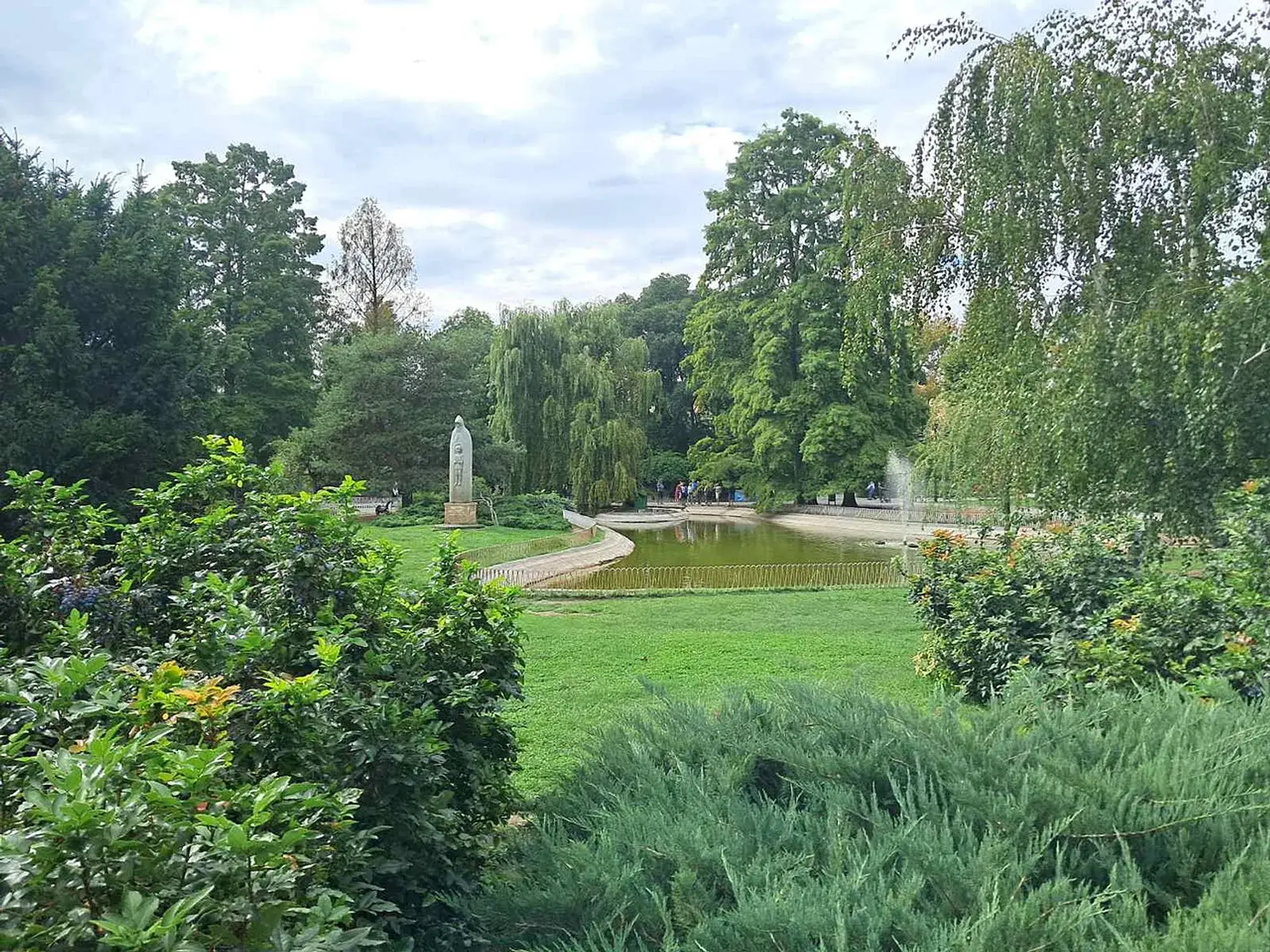
Before it became the serene green corridor linking the old town to the river, this space was a muddy bog hollowed out to build river defenses. Today, Danube Park is a Category II Natural Monument spanning approximately 3.96 hectares in the Stari Grad (Old Town) district of Novi Sad. Serving as a vital transition point, it connects Liberty Square and the historic Dunavska Street with the Danube quay, Varadin Bridge, and Petrovaradin Fortress across the water.
From Swamp to Urban Oasis
In the 19th century, the site was a swampy arm of the Danube River covered with reeds. After soil was extracted to construct a river embankment opposite the Petrovaradin Fortress, the area was left as a muddy bog. In 1895, municipal authorities began filling the marsh to establish an urban park, laying the first promenade in front of the Palace of Justice, which now houses the Museum of Vojvodina.
The central watery depression was enclosed with brickwork to form an artificial lake, leaving a small island in the center. The swampland filling concluded in the mid-1930s, and the grounds were formally designated Danube Park. Despite its proximity to the water, the park was named directly after the adjacent Dunavska Street (Danube Street) rather than the river itself. The current landscape architecture was designed by Ratibor Đorđević during a major renovation between 1958 and 1962.
Flora and the Eržebet Islet
The park houses over 250 plant species and approximately 750 individual trees, including poplars, birches, chestnuts, and a protected historic English oak. This dense overhead canopy creates a cool microclimate along the unpaved walking paths.
At the center of the artificial lake sits the islet of Eržebet. Official records indicate it was named after Empress Elisabeth of Austria-Hungary, who was commemorated with a weeping willow tree planted on the island following her assassination in 1898. Conversely, local lore claims the island was actually named after a young local girl who loved visiting the park. The lake itself became nationally famous as the home of Isa and Bisa, a pair of white swans that became popular symbols of Novi Sad.
Public Art and Civic Culture
Danube Park is a hub for civic life and public art. Scattered throughout the green space are several notable sculptures, including the 1912 "Nymph" statue by Đorđe Jovanović. The park also features busts of renowned Serbian poets like Miroslav Antić and Branko Radičević, a bronze statue of poet Đura Jakšić, and a monument to Saint Sergius of Radonezh.
A central white wooden pavilion, known locally as a saletla, frequently hosts acoustic music performances, literary readings, and art exhibitions, serving as a popular backdrop for wedding photography. During the colder winter months, the park grounds undergo a seasonal transformation to host the "Icy Forest" festival, complete with an open-air ice rink.
FAQ
Why is the central island in Danube Park called Eržebet?
Official records state the islet was named after Empress Elisabeth of Austria-Hungary, commemorated with a weeping willow after her assassination in 1898. However, a local tradition suggests it was actually named after a young girl who frequented the park.
Who were Isa and Bisa?
Isa and Bisa were a pair of white swans that lived in the park's central artificial lake. They became nationally famous and were considered popular symbols of Novi Sad.
What events happen in Danube Park?
The park's central white wooden pavilion hosts acoustic music performances, literary readings, and art exhibitions. During colder months, the park transforms into the 'Icy Forest' winter festival, featuring an open-air ice rink.