Petrovaradin Clock Tower: Novi Sad's Historic Landmark
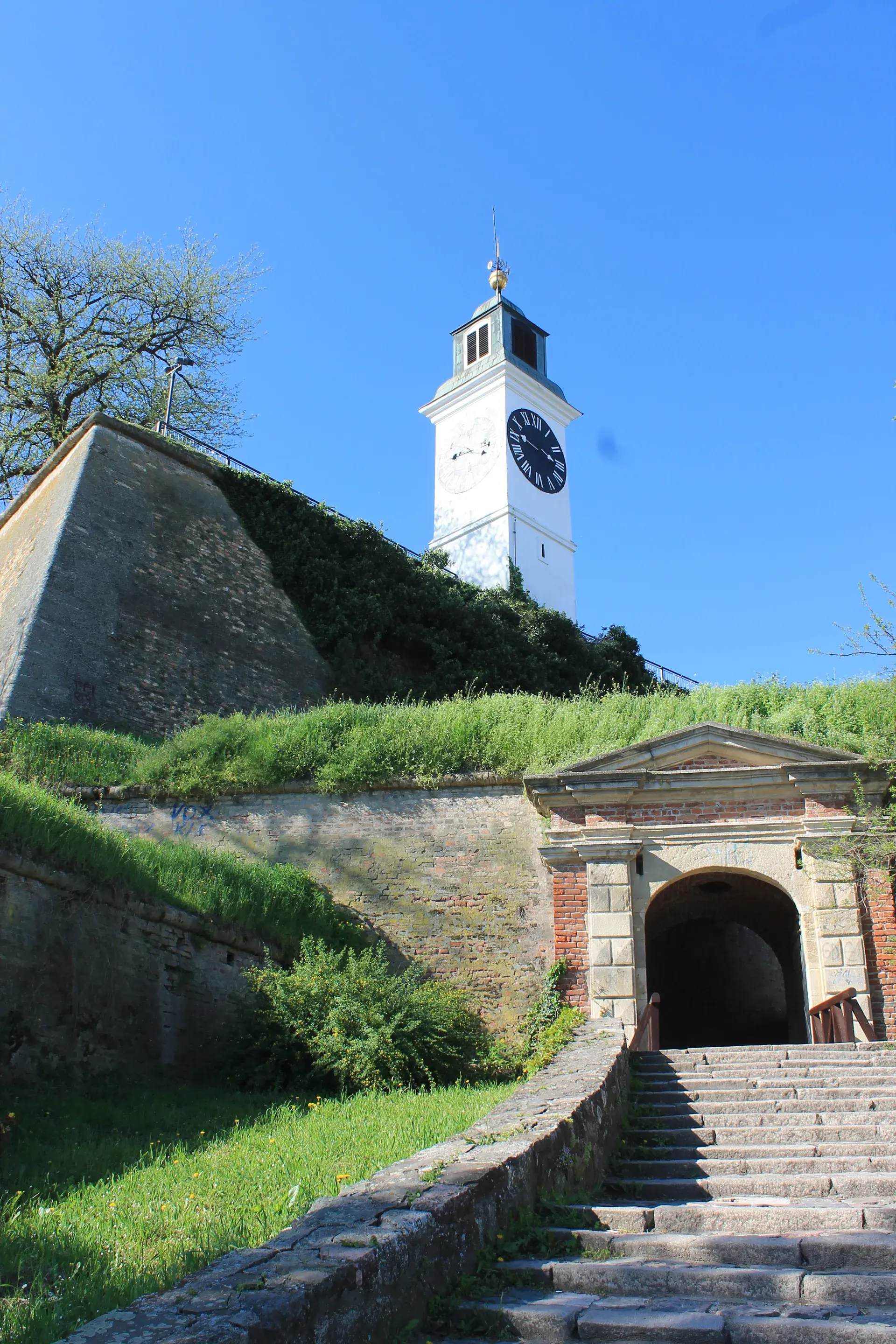
Discover a baroque fortress clock where the long hand points to the hour, designed so sailors and soldiers could read the time from the Danube below. Standing prominently on the Ludwig Bastion, the Petrovaradin Clock Tower is the most recognizable landmark of Novi Sad, visually linking the historic lower town and the fortress complex with the city center across the river.
A Timepiece Designed for the Distance
Constructed around 1750 on the site of an earlier structure, the baroque tower features four black dials, each over two meters in diameter. Its most defining characteristic is its reversed clock hands. The long hand indicates the hours, while the short hand points to the minutes.
This unconventional design was implemented by the Austrian Habsburg Monarchy, who built the surrounding Petrovaradin Fortress between 1692 and 1780. The larger hour hand ensured that boatmen, fishermen, and sailors navigating the Danube River, alongside soldiers stationed at distant guard posts, could easily read the hour from afar. Historically, local residents paid a specific "clock toll" tax to fund the maintenance of this essential timepiece.
The Drunk Clock of Novi Sad
Locals affectionately refer to the landmark as the "Drunk Clock" ("Pijani sat"). The nickname stems from the mechanism's sensitivity to weather conditions. During cold temperatures, the clock runs slow by a few minutes, while summer heat causes it to run fast.
Despite its meteorological quirks, the original weight-driven pendulum mechanism remains in continuous operation. The military maintained the clock for nearly 250 years until 1952, when the fortress transitioned to civilian management. Today, an appointed caretaker manually winds the antique mechanism every single day. Visitors nearby can hear the rhythmic mechanical ticking and the striking bell that chimes exactly on the hour.
Gibraltar on the Danube
The clock tower sits within the massive Petrovaradin Fortress, historically nicknamed the "Gibraltar on the Danube" due to its strategic rocky position and sheer scale. Local tradition claims the name Petrovaradin translates to "the city on a rock strong as faith."
Look closely at the very top of the tower's mast. Instead of a traditional military spearhead, the weather vane and compass are uniquely decorated with a heart motif, adding a touch of romance to the formidable military structure.
A Cultural Viewpoint
Today, the Petrovaradin Clock Tower operates as an open-access public landmark. It provides the primary panoramic viewpoint for Novi Sad, offering sweeping sights of the Danube River, the city's red-roofed townscape, and its connecting bridges.
The tower continues to serve as a central backdrop for both casual visitors and major regional events, most notably standing watch over the annual EXIT music festival held within the fortress grounds.
FAQ
Why are the hands on the Petrovaradin Clock Tower reversed?
The long hand points to the hour and the short hand points to the minutes. This was designed so that sailors, fishermen on the Danube, and distant fortress guards could easily read the hour from afar.
Why is the Petrovaradin Clock Tower called the Drunk Clock?
Locals call it the "Drunk Clock" ("Pijani sat") because the antique mechanism is sensitive to the weather. It tends to run slow in cold temperatures and fast in the heat.
How is the Petrovaradin Clock powered?
The clock relies on its original weight-driven pendulum mechanism. An appointed caretaker manually winds the clock every day to keep it ticking and chiming on the hour.