Bratislava Main Square: Old Town Hall & Roland Fountain
The Historic Center of Pressburg
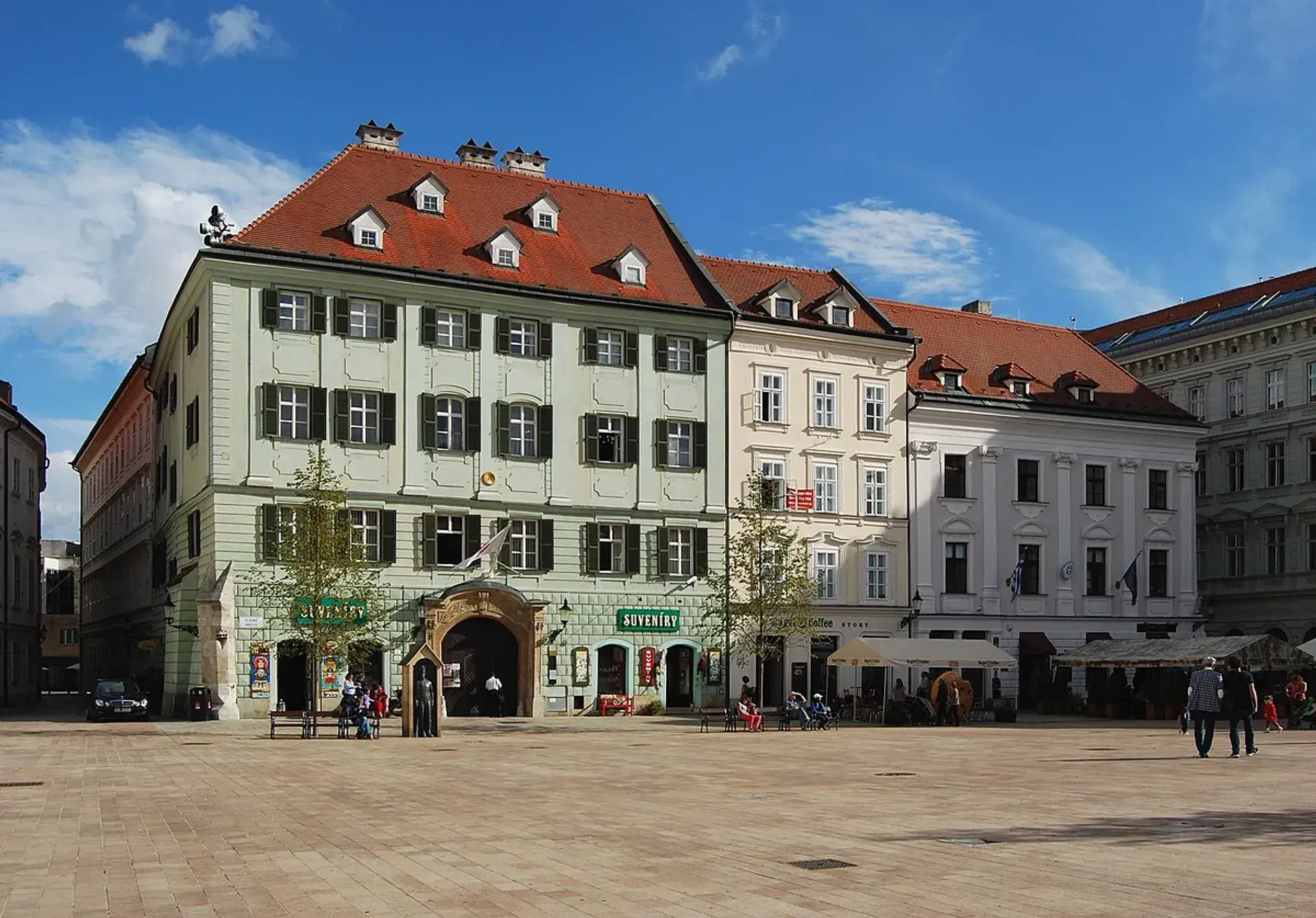
Hlavné námestie, or Main Square, forms the historic and civic core of Bratislava’s Old Town. First documented in the 14th century as a medieval marketplace (Forum), the cobblestone plaza long operated as the commercial, administrative, and judicial center of the city, historically known as Pressburg.
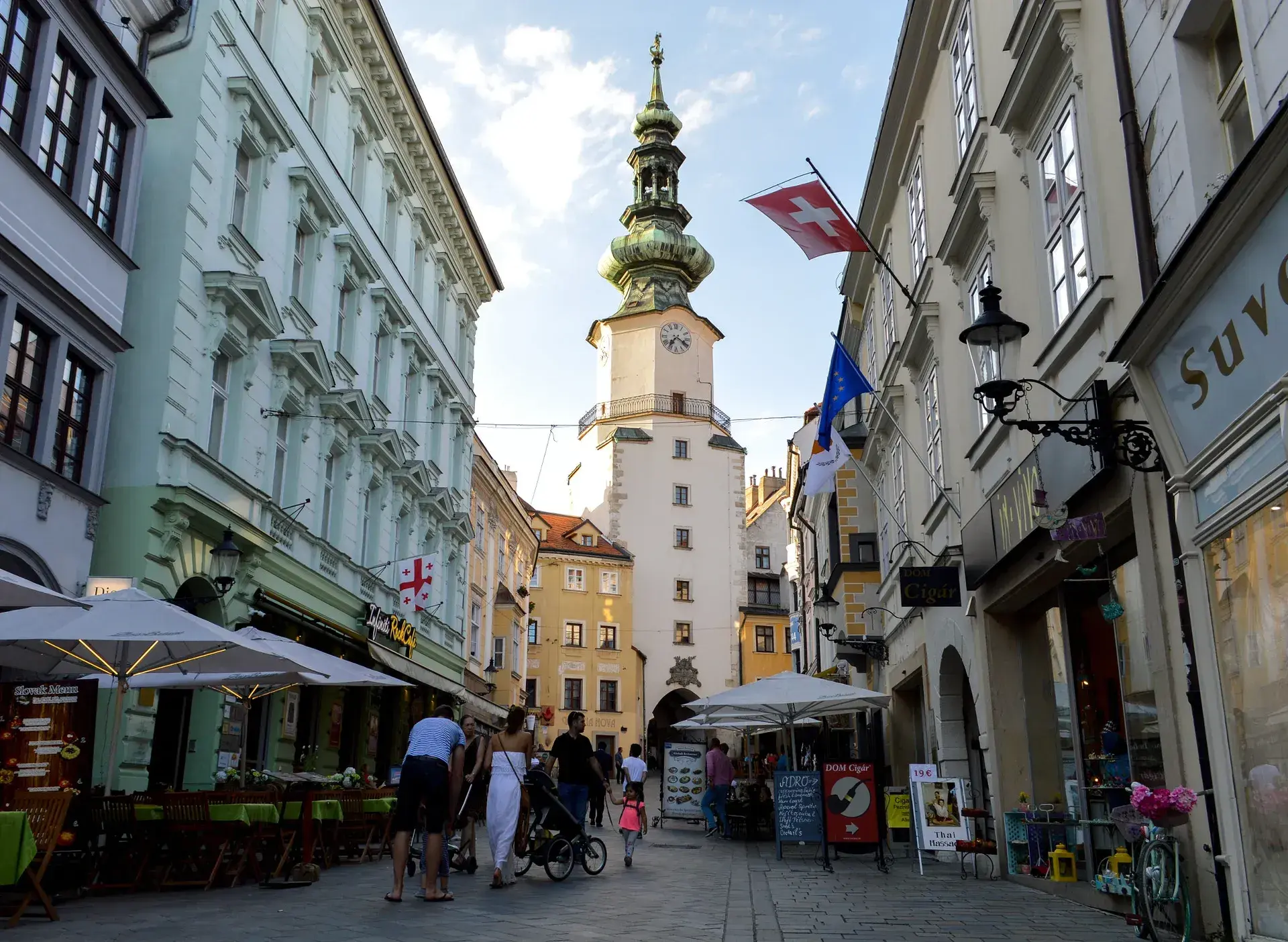
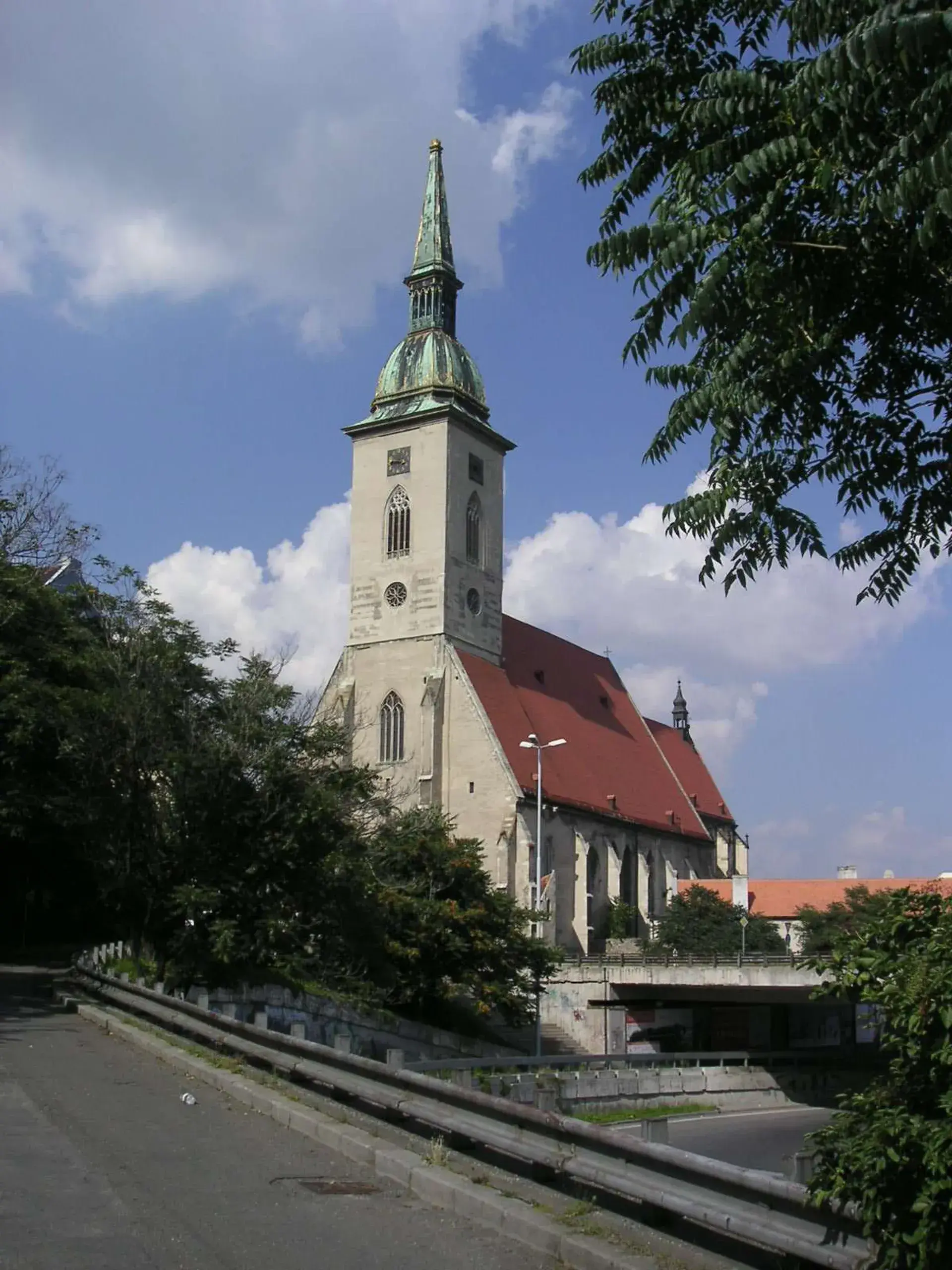
Between 1563 and 1830, Bratislava served as the coronation capital of the Kingdom of Hungary. After formal investiture ceremonies at St. Martin’s Cathedral, newly crowned monarchs processed through the square to take civic oaths and greet assemblies of burghers. Today, small brass crowns embedded directly into the stone pavers trace the historic coronation path running between St. Martin's Cathedral and Michael's Gate.
Bratislava walking tour with audio and quizzes: Hungary’s coronation city
2 hours8 stopsAudio guideStart any day, at your own paceTicket on your phone · 30-day refundThe Old Town Hall and Its Physical Scars
Dominating the eastern perimeter of the square is the Old Town Hall (Stará radnica), the oldest municipal hall complex in Slovakia. The structure developed through the gradual unification of adjoining medieval burgher homes, including the 14th-century towered residence of Mayor Jacobus. Following significant structural damage from an earthquake in 1599, the complex underwent extensive Renaissance reconstruction, culminating in the Gothic-to-Baroque clock tower that stands today.
The exterior walls of the complex carry physical markers of Bratislava's past upheavals. High on the tower facade, situated directly to the left of a Gothic window, an authentic iron cannonball remains embedded in the stone masonry—a lasting relic from the 1809 bombardment carried out by Napoleon’s artillery across the Danube River. Near the building’s base, an engraved metal plaque marks the high-water line reached when the Danube flooded the town center in February 1850. High on the exterior wall, a painted fresco depicting an enigmatic figure survives, tied to local folklore claiming the image was placed by the devil to shame a corrupt municipal councillor.
Today, the Old Town Hall serves as the headquarters of the Bratislava City Museum, established in 1868. The museum provides access to historic council chambers, subterranean dungeons, and an elevated observation gallery atop the clock tower.
The Maximilian Fountain and Roland Legend
At the center of Hlavné námestie stands the Maximilian Fountain (Maximiliánova fontána), often referred to as the Roland Fountain. Its construction was prompted by a devastating municipal fire that erupted during the coronation celebrations of King Maximilian II in 1563. Recognizing the urgent necessity for a dependable water reserve inside the market core, the monarch ordered the creation of a public reservoir in 1572.
Carved by stonemason Andreas Lutringer, the Renaissance monument comprises a nine-meter circular stone basin and a central pillar crowned by a standing knight in full plate armor. While archival documentation confirms the statue was erected in honor of Emperor Maximilian II, local burghers adopted the figure as Roland, the legendary protector of civic privileges and municipal independence. The fountain remains an enduring focal point of the plaza, filling the square with the sound of cascading water against the stone paving.
Surrounding Architecture and Civic Life
The perimeter of Main Square presents an architectural cross-section of Pressburg's development, featuring Gothic, Renaissance, Baroque, and Art Nouveau townhouses. Notable structures include the neo-Baroque Palugyay Palace, the Art Nouveau Roland Palace, and Kutscherfeld Palace, which accommodates the Embassy of France. On the western side of the square, a 1997 bronze sculpture by Slovak artist Juraj Meliš portrays a Napoleonic soldier in a bicorne hat casually resting his hands against the back of an open park bench.
Over centuries of political change, the plaza has mirrored regional history through multiple redesignations, having been officially named Forum civitatis, Franz Joseph-Platz, Masarykovo námestie, Hitlerovo námestie during the Second World War, and Námestie 4. apríla during the Communist era, before reverting to Hlavné námestie. In the present day, the square functions as a lively pedestrian venue, hosting seasonal events like the Bratislava Christmas and Easter markets alongside open-air cafés and cultural gatherings.
FAQ
Why does the Maximilian Fountain also carry the name Roland Fountain?
Although Holy Roman Emperor Maximilian II commissioned the fountain in 1572 to provide a public water source, local burghers came to view the armored knight on the central pillar as Roland, the legendary defender of city rights and municipal autonomy.
What is the origin of the cannonball lodged in the Old Town Hall wall?
The iron cannonball embedded into the masonry of the Old Town Hall tower was fired in 1809 during Napoleon Bonaparte's artillery bombardment of Bratislava from positions across the Danube River.
What do the brass crowns in the square's cobblestones signify?
The brass crowns embedded into the pavement trace the coronation trail used by Hungarian kings and queens between 1563 and 1830, marking the ceremonial route between St. Martin's Cathedral and Michael's Gate.