Augusteum & Decumanus: Roman Cartagena's Heart
The Center of Roman Cartagena
In the heart of modern Cartagena, Spain, lie the remnants of its Roman past as Carthago Nova. The Augusteum temple and the Decumanus Maximus road offer a dual perspective on this ancient port city, showcasing both its political and religious devotion to the Roman Empire and the practical, everyday life of its inhabitants.
The Augusteum: A Temple for an Emperor
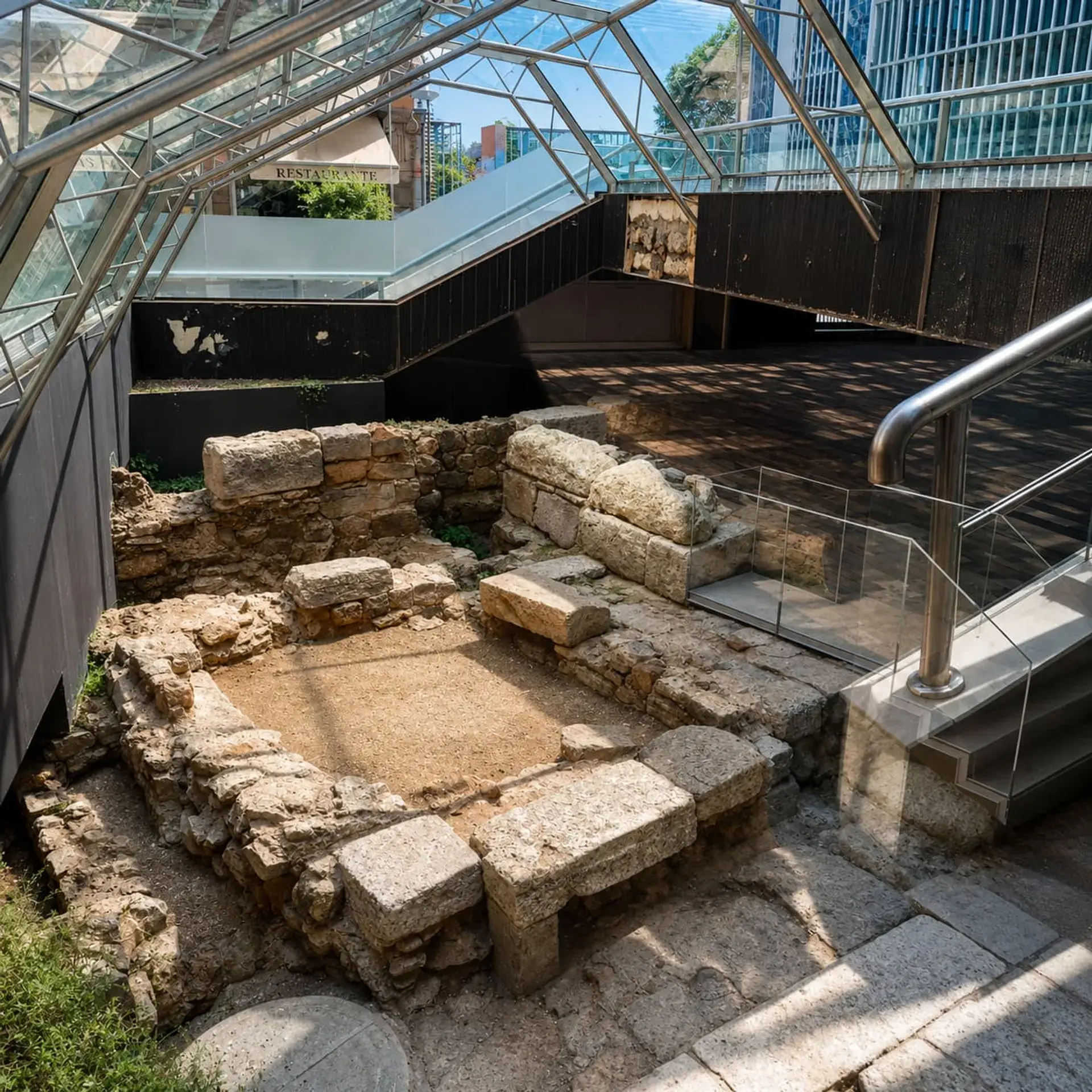
The Augusteum was a Roman temple dedicated to the deified Emperor Augustus. Constructed in the latter half of the 1st century AD, it served as a collegiate site for the Augustales, priests who administered the imperial cult. This institution was crucial for spreading the ideology of imperial rule through religious ceremonies and impressive architecture, which included marble pavements and terracotta antefixes. The temple was an integral part of the Roman Forum district, the city's central hub, which now lies beneath the modern Plaza de San Francisco. The Augusteum remained in use until the 3rd century AD before it was abandoned.
The Decumanus Maximus: A City's Main Artery
Serving as the primary east-west artery of Carthago Nova, the Decumanus Maximus was built between the 1st century BC and the 1st century AD. This was not a ceremonial avenue but a bustling "working street" essential for daily commerce and movement. Constructed with large polygonal stone slabs, it featured advanced Roman engineering, including a sophisticated sewer system built beneath the road to manage wastewater and rainwater. Archaeological evidence on the preserved stones includes visible wheel ruts, known as orbitae, which were intentionally carved to guide carts along the busy street. Remnants of sidewalks and former shops also point to the street's vibrant commercial life.
Rediscovery and Modern Preservation
A significant portion of the Decumanus Maximus was rediscovered in 1968 after the demolition of a barracks building. Today, sections of this ancient road are preserved as an accessible archaeological site, allowing visitors to walk on the original paving stones. The Augusteum's remains are housed in an underground museum, integrated into the larger Roman Forum Museum complex. The museum is accessible, with features like ramps for wheelchair users. Recent urban improvements have pedestrianized the surrounding area, enhancing the experience of visiting these historic sites.
FAQ
What was the Augusteum in Cartagena?
The Augusteum was a Roman temple in ancient Carthago Nova (modern Cartagena) dedicated to the cult of Emperor Augustus. It served as a collegiate site for priests known as the Augustales and was part of the city's Roman Forum district.
What is the significance of the Decumanus Maximus?
The Decumanus Maximus was the main east-west street in Roman Cartagena. It was a vital artery for daily commerce and movement, featuring advanced engineering like an underground sewer system and deep wheel ruts carved into the stone to guide carts.
When were the Augusteum and Decumanus built?
The Decumanus Maximus was constructed between the 1st century BC and the 1st century AD. The Augusteum was built later, during the second half of the 1st century AD, a date revised from earlier estimates.
Can you visit the Augusteum and Decumanus today?
Yes, the Augusteum is an underground museum within the Roman Forum Museum complex. Portions of the Decumanus Maximus are preserved as an accessible archaeological site where visitors can see the original paving stones.