The Roman Theatre of Cartagena: A Buried Treasure
The Roman Theatre of Cartagena is a remarkable testament to the city's ancient past as Carthago Nova. For centuries, this grand structure lay forgotten, buried directly beneath the city's Old Cathedral, Santa María la Vieja. Its accidental rediscovery has since transformed it into a cornerstone of Cartagena's cultural identity and a major attraction.
Augustan Origins and Construction
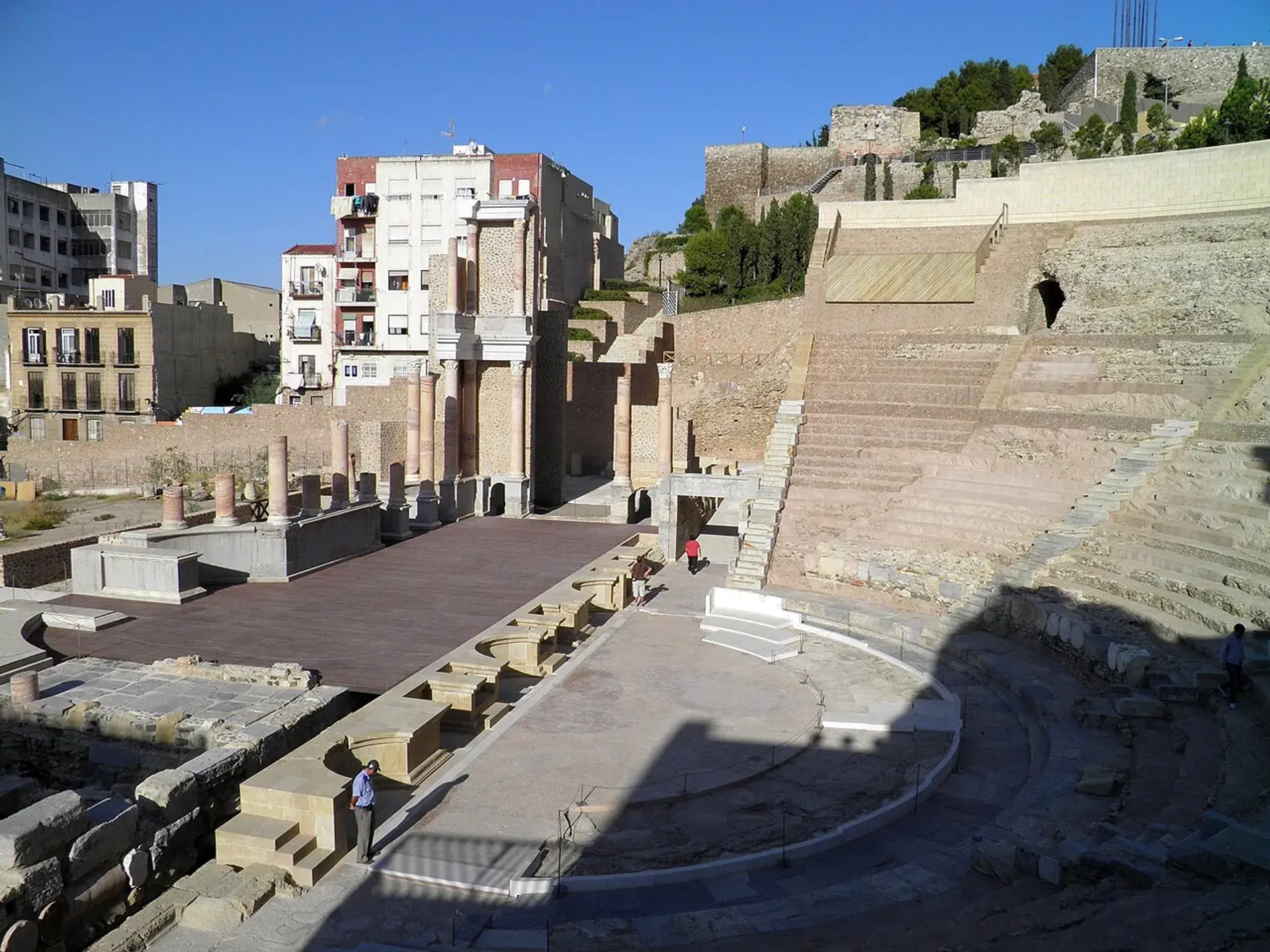
Construction of the Roman Theatre took place between 5 and 1 BCE, during the reign of Emperor Augustus as part of a significant urban renewal project. The theatre was a symbol of the city's importance as a Roman colony, dedicated to Gaius and Lucius Caesar, the grandsons of Augustus. Adhering to Vitruvian architectural principles, it could accommodate between 6,000 and 7,000 spectators.
The builders utilized a variety of high-quality materials. The structure was built with local limestone, marble from Cabezo Gordo, and red travertine from La Mula. For its decorative elements, elegant white Pentelic marble was imported from Greece. The stage, or proscaenium, measured an impressive 43.6 meters in length.
A History of Transformation and Concealment
After serving as a venue for theatrical performances for about two centuries, the theatre's purpose shifted dramatically. In the 3rd century CE, it was repurposed into a market and commercial space, with many of its fine materials stripped and reused in other buildings. The Vandal invasion of 425 CE caused significant damage, leading to the market's abandonment.
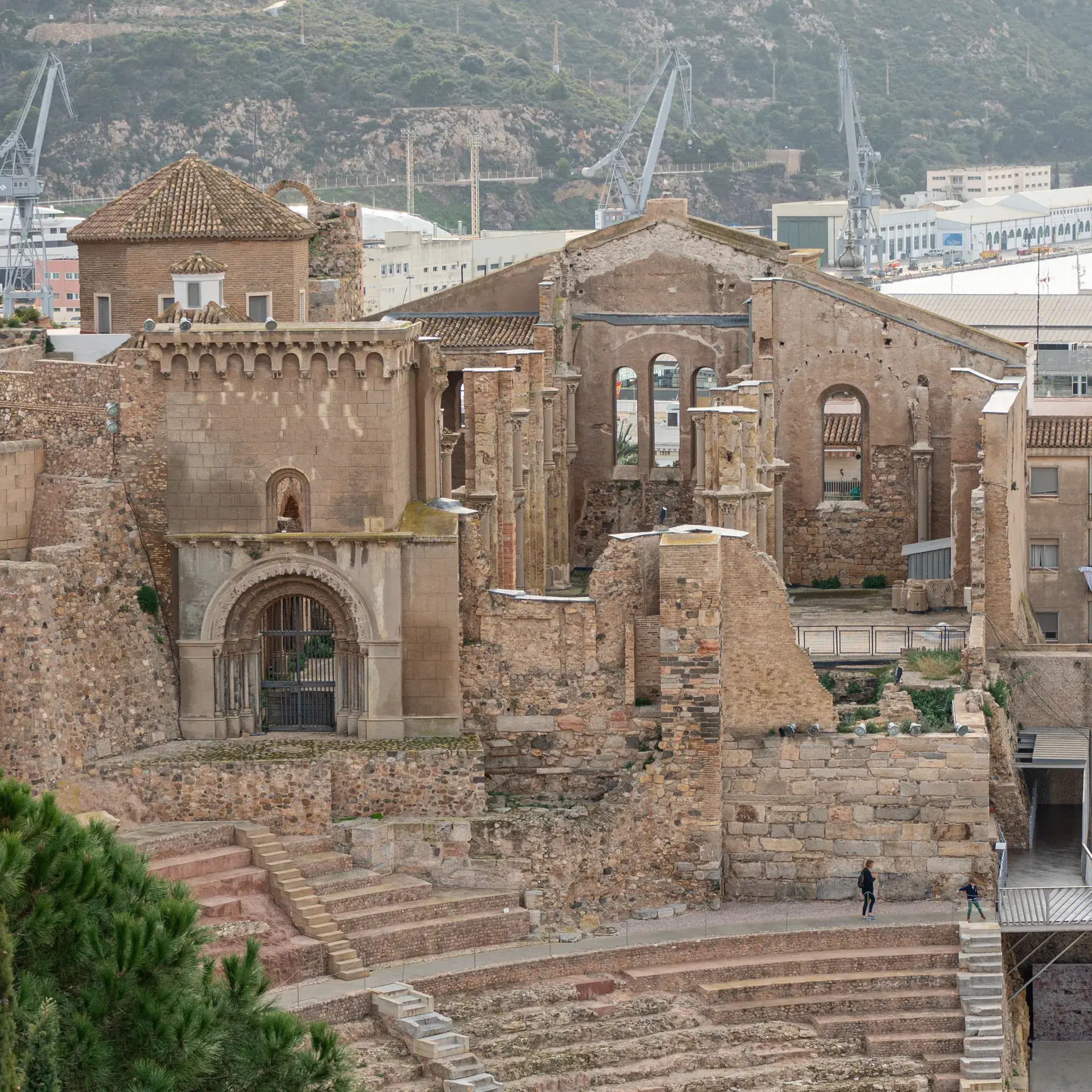
Over the following centuries, the site saw further change, including the establishment of a Byzantine-era commercial district. By the 13th century, the theatre's existence was completely obscured when the Old Cathedral of Santa María la Vieja was constructed directly over its upper seating area, using the ancient Roman structure as its foundation. This act effectively buried the theatre for hundreds of years.
Accidental Rediscovery and Restoration
The theatre remained unknown until 1988. Its rediscovery was accidental, occurring during preliminary archaeological excavations for a planned regional craft center. The team, led by archaeologist Sebastián Ramallo Asensio, unearthed the monumental ruins, initiating a new chapter in the site's history.
Remarkably, about 60% of the theatre's original materials remained in situ, allowing for a significant restoration. In 2003, architect Rafael Moneo was commissioned to design the Museum of the Roman Theatre. The museum, which opened in 2008, masterfully integrates the ancient ruins into the modern urban fabric, creating a journey through the city's historical layers.
The Theatre Today
Today, the Roman Theatre is the centerpiece of the Museum of the Roman Theatre, which has become the most visited museum in the Murcia Region. It stands as a major cultural and educational landmark, attracting visitors from around the world. The museum provides an underground passage that leads visitors directly into the restored theatre.
The site is not just a static monument; it is a living part of the city. The theatre occasionally hosts concerts, plays, and other cultural performances. Its rediscovery and restoration have been a key catalyst for the regeneration of Cartagena's old town, transforming the area into a vibrant cultural hub.
FAQ
When was the Roman Theatre of Cartagena built?
The Roman Theatre of Cartagena was constructed between the years 5 and 1 BCE, during the reign of Emperor Augustus.
How was the Roman Theatre discovered?
It was discovered by accident in 1988. Archaeologist Sebastián Ramallo Asensio and his team found the ruins during excavations for a new craft center. The theatre had been buried for centuries, with the city's old cathedral built directly on top of it.
What is the Roman Theatre used for today?
It is the main attraction of the Museum of the Roman Theatre, the most visited museum in the Murcia Region. The site also occasionally hosts concerts, plays, and other cultural events.
Who was the Roman Theatre of Cartagena dedicated to?
The theatre was dedicated to Gaius and Lucius Caesar, the grandsons of Emperor Augustus.
Discover Cartagena like never before
Dive into Cartagena hidden stories and secret spots with Ciceru interactive tours.
Explore tour
Audioguide
Quizzes
Maps
Solo
Couples
Groups & families

© Carole Raddato from FRANKFURT, Germany | CC BY-SA 2.0