Roman Amphitheatre & Bullring in Cartagena: A Buried Past
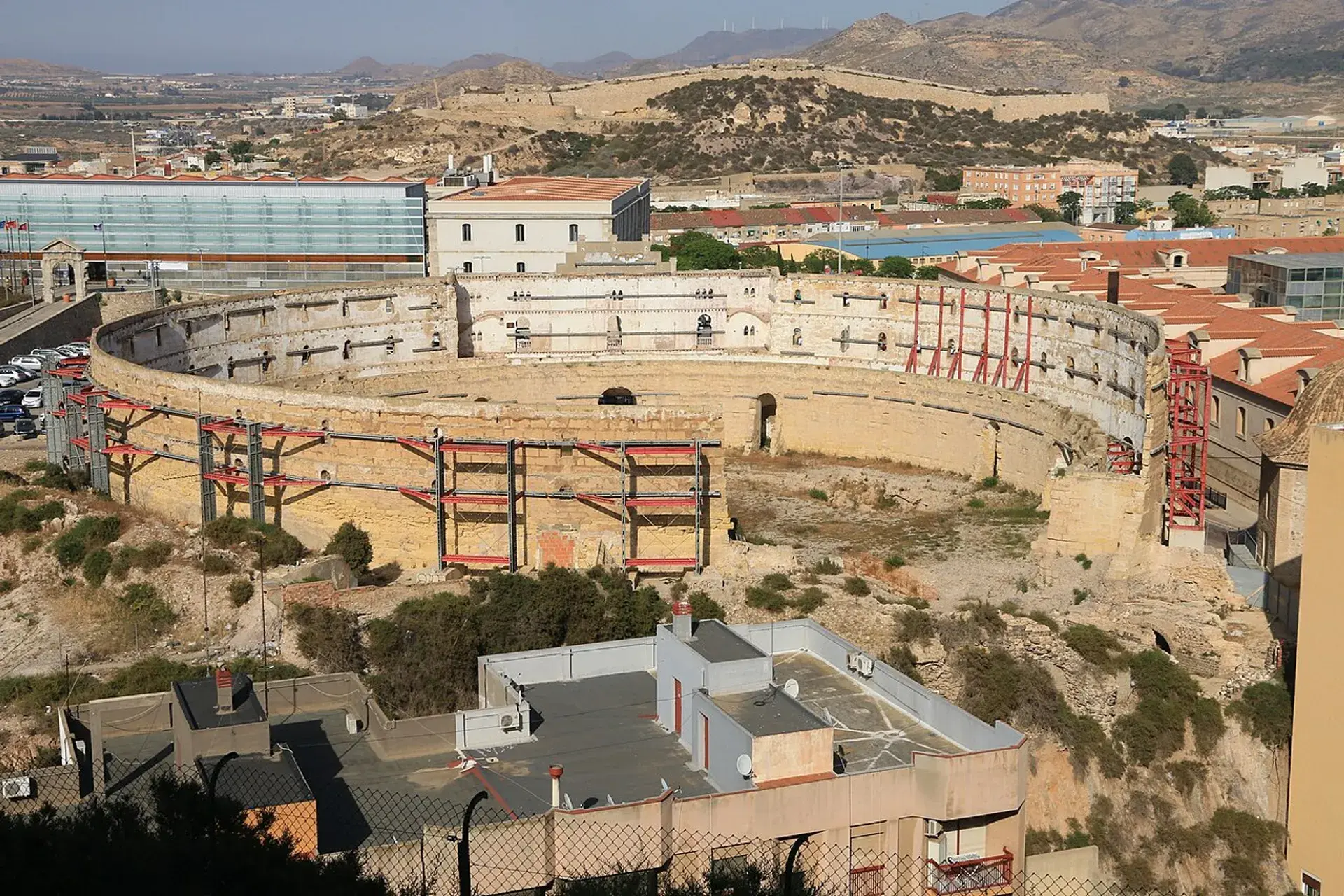
In a remarkable display of layered history, Cartagena's 19th-century bullring was constructed directly over the ruins of a massive Roman Amphitheatre. This act unintentionally buried and preserved the ancient structure for nearly two centuries, creating a unique archaeological site where two distinct eras of public spectacle overlap.
The Roman Amphitheatre of Carthago Nova
Dating back to the 1st century AD, the Roman Amphitheatre of Carthago Nova was a grand venue designed for an audience of 10,000 to 11,000 spectators. It hosted a variety of public spectacles, including gladiatorial contests and animal fights. The discovery of channels on the site suggests it may have even been flooded for naval recreations.
The amphitheater's existence was known to scholars from the 16th to 19th centuries. Its structures were visible until the construction of the bullring. In 1577, military engineer Juan Bautista Antonelli even proposed demolishing the visible remains to build the city wall, a plan documented in 1598.
The Plaza de Toros
In 1853, construction began on the Plaza de Toros, a new bullring built directly on top of the ancient amphitheater. Designed by architect Gerónimo Ros Giménez and built with local tabaire sandstone, the project also involved labor from inmates of the local prison. The bullring officially opened on August 5, 1854.
For over a century, the three-tiered structure was a major entertainment hub in Cartagena, hosting not only bullfights but also flamenco shows, boxing matches, and comedic bullfighting displays. Regular events at the bullring ceased in 1986, leading to its abandonment.
Rediscovery and Current Excavations
The disuse of the bullring paved the way for archaeological investigations. Excavations beginning in 2008 started to bring the Roman structure back to light. More recently, ground-penetrating radar surveys have revealed previously unknown underground corridors, entrances, and boundaries, suggesting the amphitheater may be larger than first thought.
Today, the site is undergoing extensive archaeological work with a €2 million investment to complete the project. The effort is led by a team including Professor Jose Miguel Noguera, María del Carmen Berrocal, and archaeologist Francisco Fernández Matallana. While the bullring has been partially demolished to facilitate this work, a portion of its structure is being preserved as a historical element alongside the Roman ruins.
Local authorities intend to open the amphitheater to the public permanently, allowing visitors to observe live archaeological work. It is anticipated that a portion of the site could be open to visitors by summer 2024, even as restoration continues.
FAQ
Why was the Roman Amphitheatre in Cartagena hidden?
The Roman Amphitheatre was hidden because the 19th-century bullring, Plaza de Toros, was built directly over its remains. This unintentionally preserved the ancient structure until the bullring was abandoned in 1986 and excavations began.
When was the Roman Amphitheatre built?
The Roman Amphitheatre was built in the 1st century AD. It was a large venue capable of holding an estimated 10,000 to 11,000 spectators for events like gladiatorial contests.
Can you visit the Roman Amphitheatre and bullring?
The site is an active archaeological excavation. The bullring is no longer accessible, but authorities plan to open the amphitheater to the public, with an initial section potentially opening in summer 2024 while work continues.
What happened to the bullring in Cartagena?
Regular bullfighting events ceased in 1986. The structure has since been partially demolished to allow for the excavation of the Roman amphitheater below, although part of the bullring is being preserved for its historical value.