Cristo de los Faroles: Córdoba's Lantern-Lit Crucifix
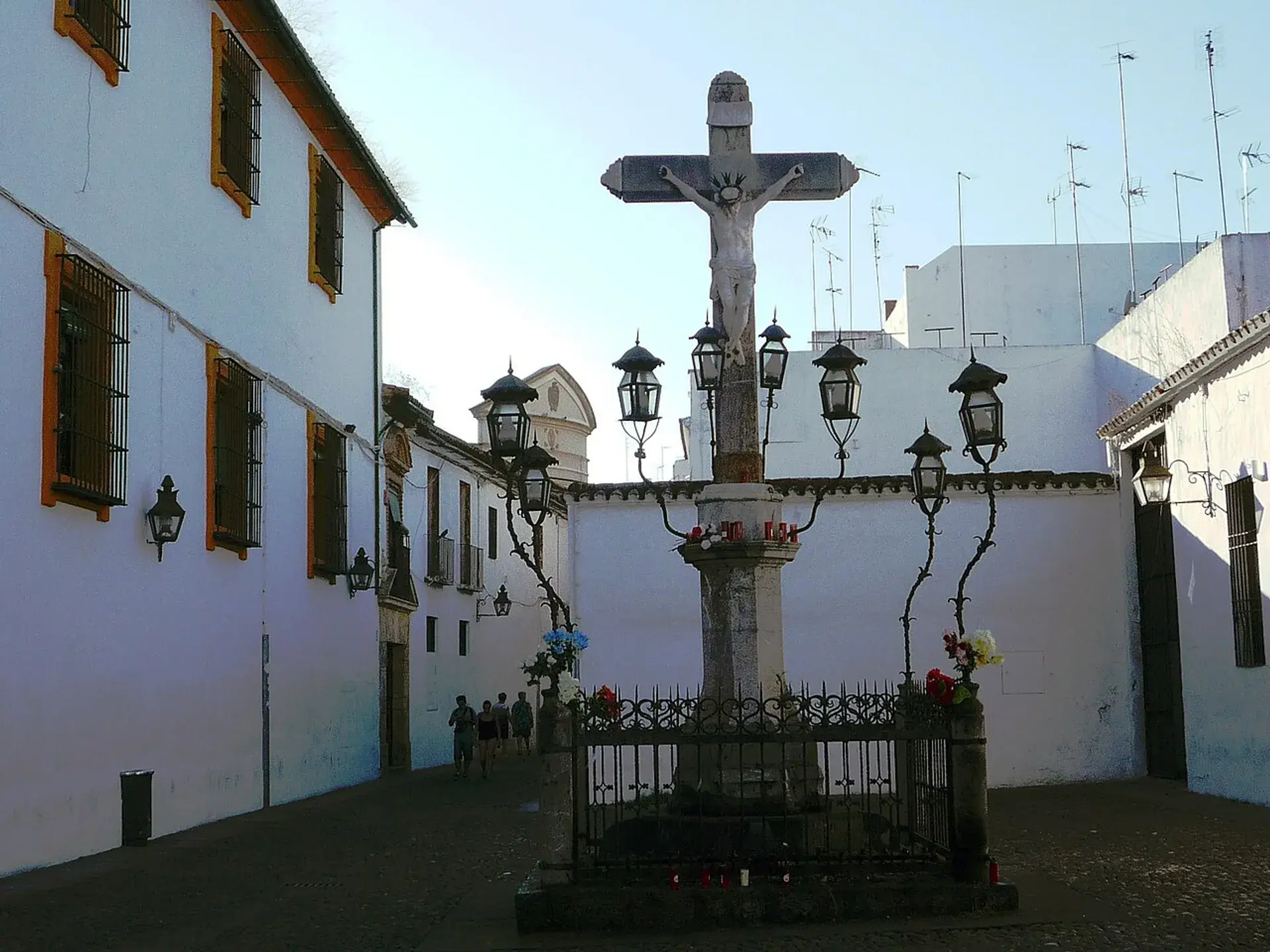
In the quiet, white-walled Plaza de Capuchinos in Córdoba stands the Cristo de los Faroles, a revered monument officially named the Cristo de los Desagravios y Misericordia. This stark, Baroque-style crucifix, dramatically lit by eight iconic lanterns, has been a symbol of local devotion since its creation in 1794.
History of the Sculpture
The creation of the monument was promoted by the Capuchin friar Fray Diego José de Cádiz, who envisioned an image in the plaza that would inspire prayer and contemplation. The project was financed by the Marqueses de Ariza and other donors, and the sculpture was carved by Cordoban artist Juan Navarro León in 1794. The sculpture is located in the Plaza de Capuchinos, a space that was originally the patio of the Santo Ángel convent before becoming public in the 18th century. The iron railings that enclose the monument today were added by an anonymous neighbor in 1924.
A Center of Devotion and Culture
The Cristo de los Faroles is more than just a sculpture; it is a focal point for popular religiosity in Córdoba. The site is a place for quiet reflection for locals and visitors alike. Its significance is especially profound during Holy Week, when three venerated brotherhoods—Hermandad de la Sangre, Hermandad de la Paz, and Cofradía de Los Dolores—hold solemn processions through the plaza. The monument's fame grew nationally after it was featured in the 1958 film 'El Cristo de los Faroles.' It has also been immortalized in songs, on a national lottery ticket, and on a postage stamp, cementing its place in Spanish popular culture.
Unique Artistic Details
The sculpture holds several unique details. The eight lanterns that give the monument its popular name are said to symbolize the eight provinces of Andalusia. A notable iconographic feature is that the Christ figure is depicted with four nails—one for each hand and one for each foot—which contrasts with the more common representation of a three-nail crucifixion. Near the base, an octagonal plaque from 1794 states that the faithful could gain 370 days of indulgence for devoutly praying a Credo before the image.
The Plaza Today
Today, the Cristo de los Faroles and the Plaza de Capuchinos remain a significant point of interest. The austere environment and the illuminated Christ create a unique, peaceful atmosphere, particularly after dark. This ambiance makes it a highly photographed landmark and a popular stop on guided night tours. The site continues to serve as a tranquil retreat from the bustle of the city, attracting both believers and tourists seeking a moment of contemplation.
FAQ
When was the Cristo de los Faroles built?
The Cristo de los Faroles was sculpted in 1794 by the Cordoban artist Juan Navarro León. The project was initiated by the Capuchin friar Fray Diego José de Cádiz.
Why is it called the Christ of the Lanterns?
Its popular name, Cristo de los Faroles (Christ of the Lanterns), comes from the eight iron lanterns that surround the crucifix. It is said that these eight lanterns symbolize the eight provinces of Andalusia.
What is unusual about the Cristo de los Faroles sculpture?
The Christ figure is depicted with four nails, one for each hand and one for each foot. This is an uncommon artistic choice, as the more typical iconographic representation of the crucifixion shows Christ's feet pierced by a single nail.
Where is the Cristo de los Faroles located?
The monument is located in the Plaza de Capuchinos in Córdoba, Spain. This tranquil public square was originally the patio of the Santo Ángel (Capuchinos) convent.