Plaza del Potro: Córdoba's Historic Square
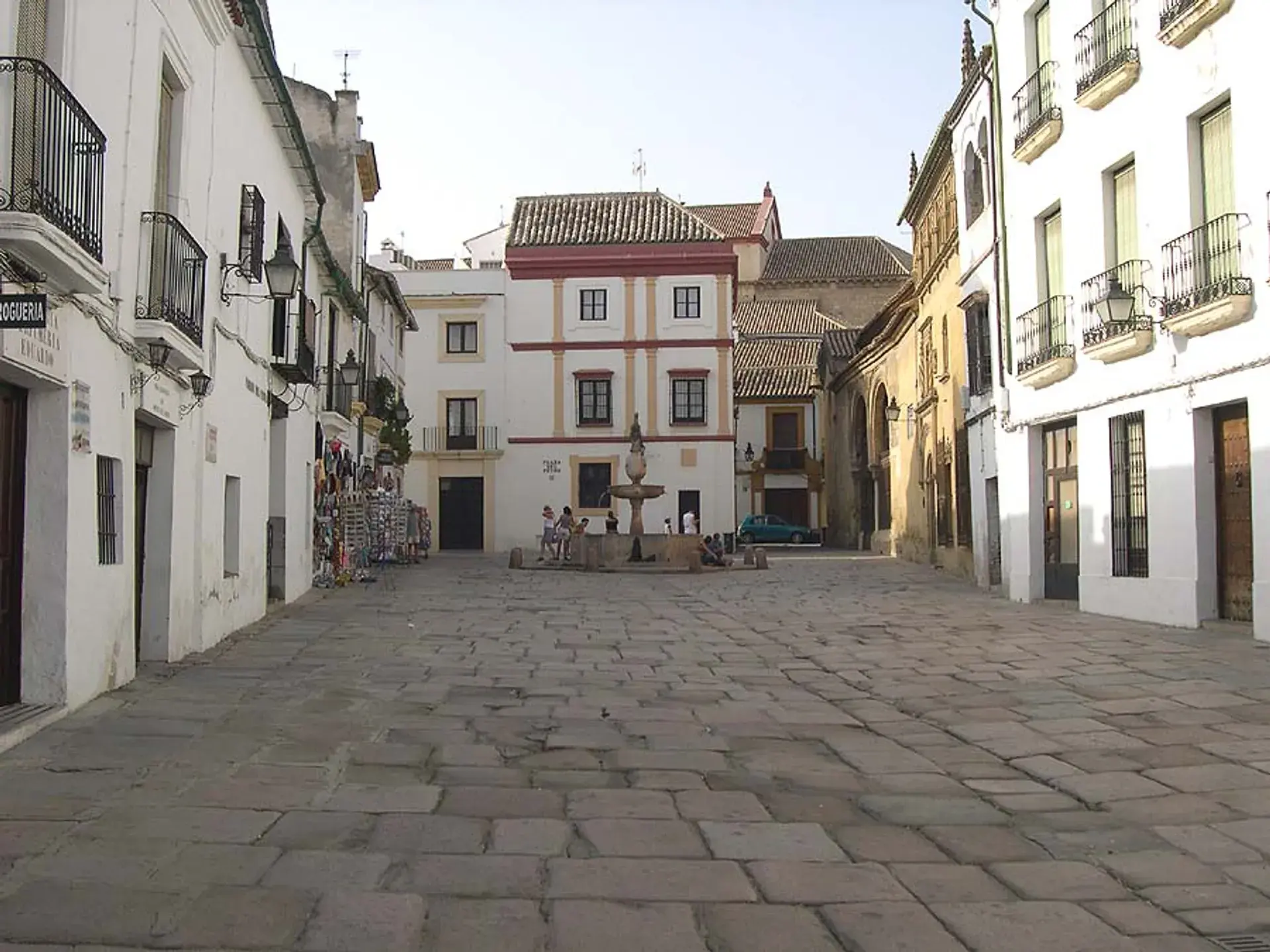
Plaza del Potro is a historic public square in Córdoba, Spain, located in the Axerquia district. Its most iconic feature is a central Renaissance-style fountain from 1577, which is topped by the colt statue, or 'potro', that gives the square its name. The plaza serves as a microcosm of Córdoba's layered history, from a medieval market to a modern cultural center.
Historical Origins and Evolution
The plaza's history dates back to the Middle Ages when it functioned as a 'corral de vecinos' (neighbor's courtyard) and a lively hub for artisans and cattle trading near the Guadalquivir River. The square's original shape was altered in the early 15th century with the construction of the Hospital de la Caridad.
The central fountain was commissioned in 1577 during the reign of Philip II. Interestingly, the colt figure that defines it was not part of the original design but was added about a century later. The entire fountain was moved from the opposite side of the square to its current central position around 1847. At the other end of the plaza stands a monument to the Triumph of the Archangel Raphael, sculpted in the 18th century and relocated here in 1924.
Literary Fame and the Posada del Potro
The Plaza del Potro is immortalized in Spanish literature, thanks to Miguel de Cervantes. Having lived in Córdoba, he mentioned the square and its inn, the Posada del Potro, in his works, including the renowned 'Don Quixote' and 'Rinconete y Cortadillo'. The reference in 'Don Quixote' was a comedic nod to the area's dubious reputation at the time. A personal connection also exists, as Cervantes' father worked as a surgeon at the Hospital de la Caridad.
The Posada del Potro, a 15th-century building, served as a lodging house for merchants and travelers for centuries, only ceasing operations as an inn in 1972.
A Modern Cultural Center
Today, Plaza del Potro remains a popular gathering place for locals and tourists. Its historic buildings have been repurposed for cultural use. The former Hospital de la Caridad now houses two important institutions: the Fine Arts Museum and the Julio Romero de Torres Museum, which was established in 1931 to honor the local painter.
The historic Posada del Potro building was given a new life in 2013 when it opened as the Centro Flamenco Fosforito. This center, the only one of its kind in Andalusia, is dedicated to the promotion, research, and interpretation of flamenco.
FAQ
Why is it called Plaza del Potro?
The plaza is named for the figure of a colt ('potro' in Spanish) that sits atop its central Renaissance fountain. The colt was added about a century after the fountain was first built in 1577.
What is the Plaza del Potro's connection to Don Quixote?
Author Miguel de Cervantes, who lived in Córdoba, mentioned the Plaza del Potro and its inn, the Posada del Potro, in his famous novel 'Don Quixote'.
What is in the Plaza del Potro today?
Today, the plaza features its historic fountain, the Posada del Potro (now a flamenco center), the Fine Arts Museum, and the Julio Romero de Torres Museum.
What was the Posada del Potro?
The Posada del Potro was a 15th-century inn that provided lodging for travelers and merchants. It operated continuously until 1972 and is now home to a flamenco center.