Casas Colgadas: Cuenca's Medieval Cliff Houses
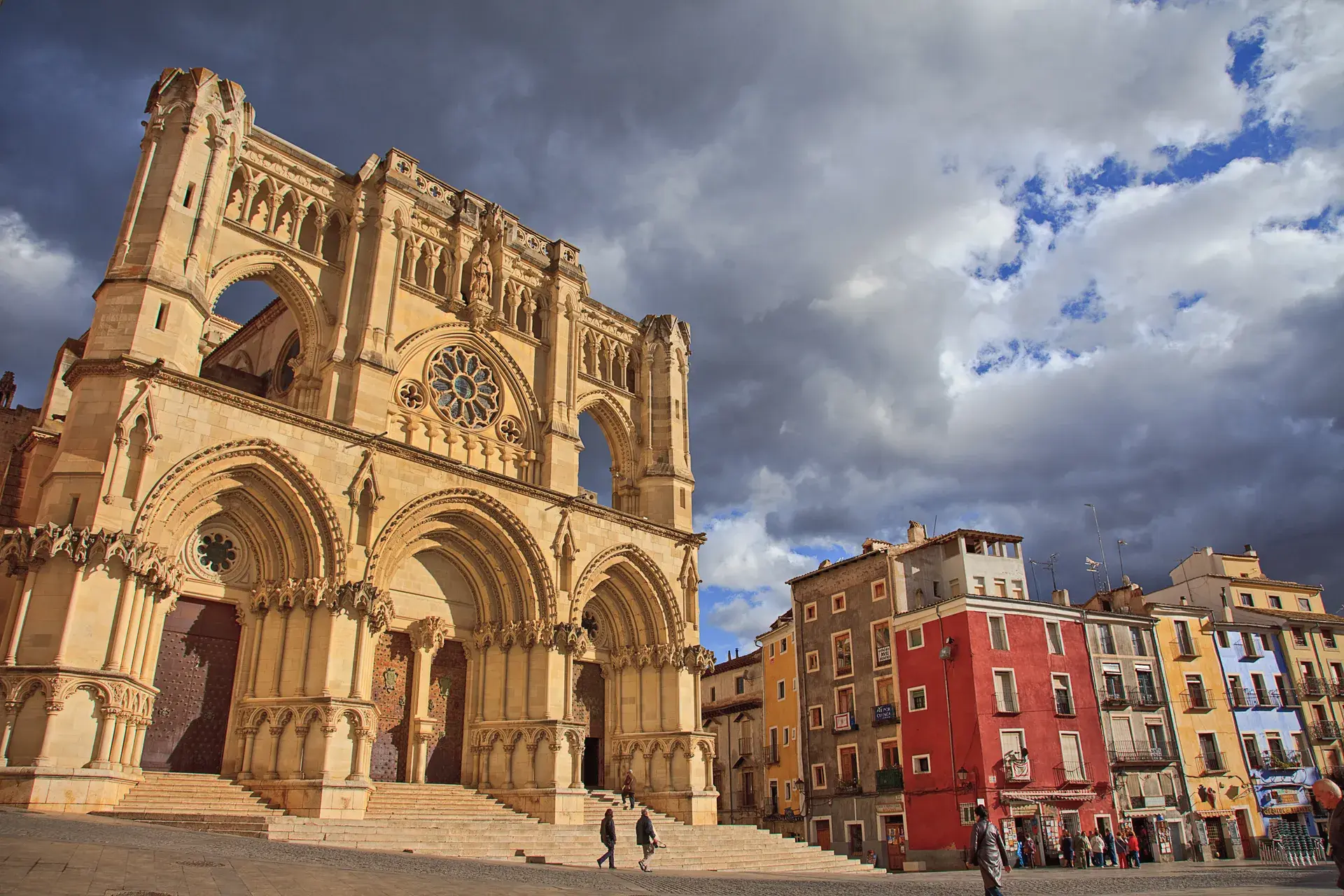
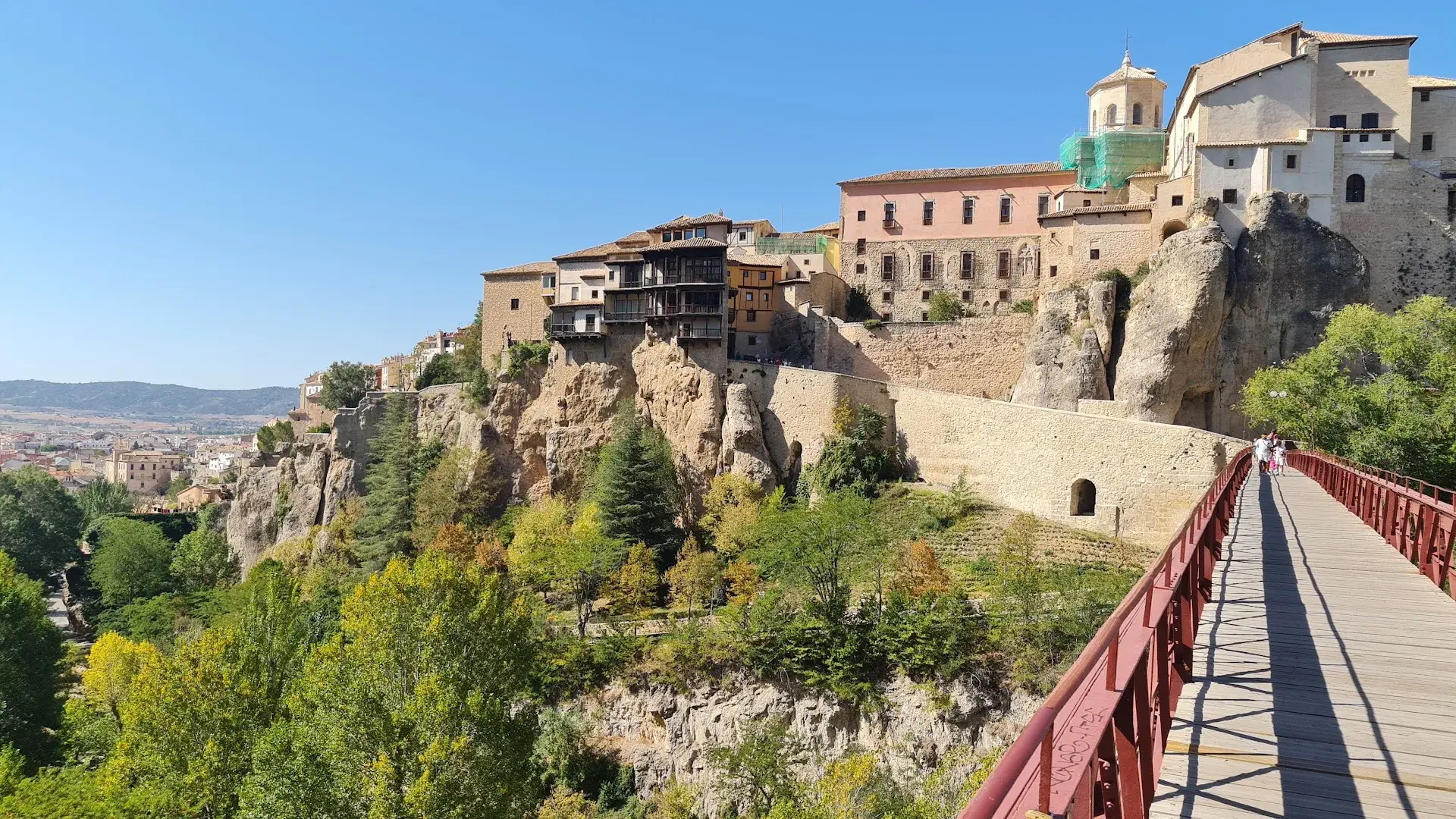
Cuenca's most famous monument is neither a fortress nor a cathedral, but a cluster of three medieval houses anchored directly over a sheer limestone drop. Situated on the eastern edge of the historic upper quarter, the Casas Colgadas perch over the gorge of the Huécar River (Hoz del Huécar). Recognized as a foundational element of the UNESCO World Heritage Site "Historic Walled Town of Cuenca" in 1996 and declared an individual Asset of Cultural Interest (Bien de Interés Cultural) in 2016, the complex serves as a primary visual landmark linking the Plaza Mayor and the Cathedral of Santa María y San Julián to the iron Puente de San Pablo across the chasm.
Medieval Origins and Architecture
The surviving complex consists of three interconnected domestic structures dating back to the 14th and 15th centuries: the Casa de la Sirena and the two adjoining Casas del Rey (also known as the Casa Bajada a San Pablo). Built in a vernacular Gothic style, these late-medieval dwellings feature masonry walls reinforced with ashlar corner blocks, plaster finishes, pine timber framing, and dramatic cantilevered wooden balconies suspended high above the valley floor.
Early municipal and ecclesiastical records show that these buildings initially served as private residences for cathedral dignitaries. Documented property transactions mention Archdeacon Gil Ramírez de Villaescusa prior to 1469 and Canon Gonzalo González de Cañamares in 1481.
Evolution and the 1927 Restoration
The three existing buildings are the remnants of an extensive terrace of cliff-hugging houses that once lined the gorge. In 1565, Flemish artist Anton van den Wyngaerde documented a continuous line of these cliffside structures in his panoramic drawing Cuenca desde el este. Over several centuries, cliff erosion, weathering, and neglect led to the demolition or collapse of most of the row. Throughout much of the 18th and 19th centuries, the remaining buildings served as subdivided communal tenements housing impoverished families.
By the 1920s, only three structures remained intact. A major municipal restoration program in 1927 stabilized the facades and added the cantilevered pine balconies that now define the landmark's silhouette. In the early 1960s, municipal architect Francisco León Meler completed comprehensive structural reinforcements to safeguard the buildings for civic and cultural preservation.
Cultural and Modern Use
Today, the Casas Colgadas combine historical preservation with contemporary culture. In 1966, artist and patron Fernando Zóbel—collaborating with artists Gustavo Torner and Gerardo Rueda—founded the Museo de Arte Abstracto Español within the complex. Donated to the Fundación Juan March in 1980–1981, the museum showcases works by prominent 20th-century Spanish artists, including Antoni Tàpies, Antonio Saura, Eduardo Chillida, and Eusebio Sempere. The interior architecture pairs contemporary gallery walls with low medieval ceilings and exposed wooden lintels overlooking the gorge.
In addition to the museum spaces, the complex features a culinary presence. The rehabilitated Casa de la Sirena and Bajada a San Pablo accommodate the Michelin-starred Restaurante Casas Colgadas, operated by chef Jesús Segura.
Local Lore and Terminology
Local tradition draws a clear distinction regarding the monument's name. Cuenca residents insist on the term Casas Colgadas ("hung houses," denoting buildings structurally anchored into the cliff face) rather than casas colgantes ("hanging" or "dangling" houses), a nuance popularized by Cuenca humorist José Luis Coll.
The name of the Casa de la Sirena also derives from local folklore. According to legend, Catalina, a secluded 14th-century mistress of Infante Enrique of Trastámara, lost her child and threw herself from the cliff. Her grief, echoing through the Huécar gorge, was said to resemble the mournful call of a siren.
FAQ
Why are they called Casas Colgadas instead of Casas Colgantes?
Cuenca tradition strictly differentiates between 'Casas Colgadas' ('hung houses') and 'casas colgantes' ('hanging houses'). The phrasing emphasizes that the buildings are solidly anchored to the rock face rather than freely dangling.
When were the iconic wooden balconies built?
Although the masonry buildings date to the 14th and 15th centuries, the exterior cantilevered timber balconies were installed during a municipal restoration campaign in 1927.
What is housed inside the Casas Colgadas today?
The complex houses the Museo de Arte Abstracto Español, operated by the Fundación Juan March with works by Spanish abstract artists such as Antoni Tàpies and Eduardo Chillida, as well as the Michelin-starred Restaurante Casas Colgadas.
Discover Cuenca like never before
Dive into Cuenca hidden stories and secret spots with Ciceru interactive tours.
Explore tour
Audioguide
Quizzes
Maps
Solo
Couples
Groups & families

© Photo by Angelica Rodrigues via Google Maps · Google Places