Torre de Mangana: Cuenca's Historic Clock Tower
The Historic Timepiece of Cuenca
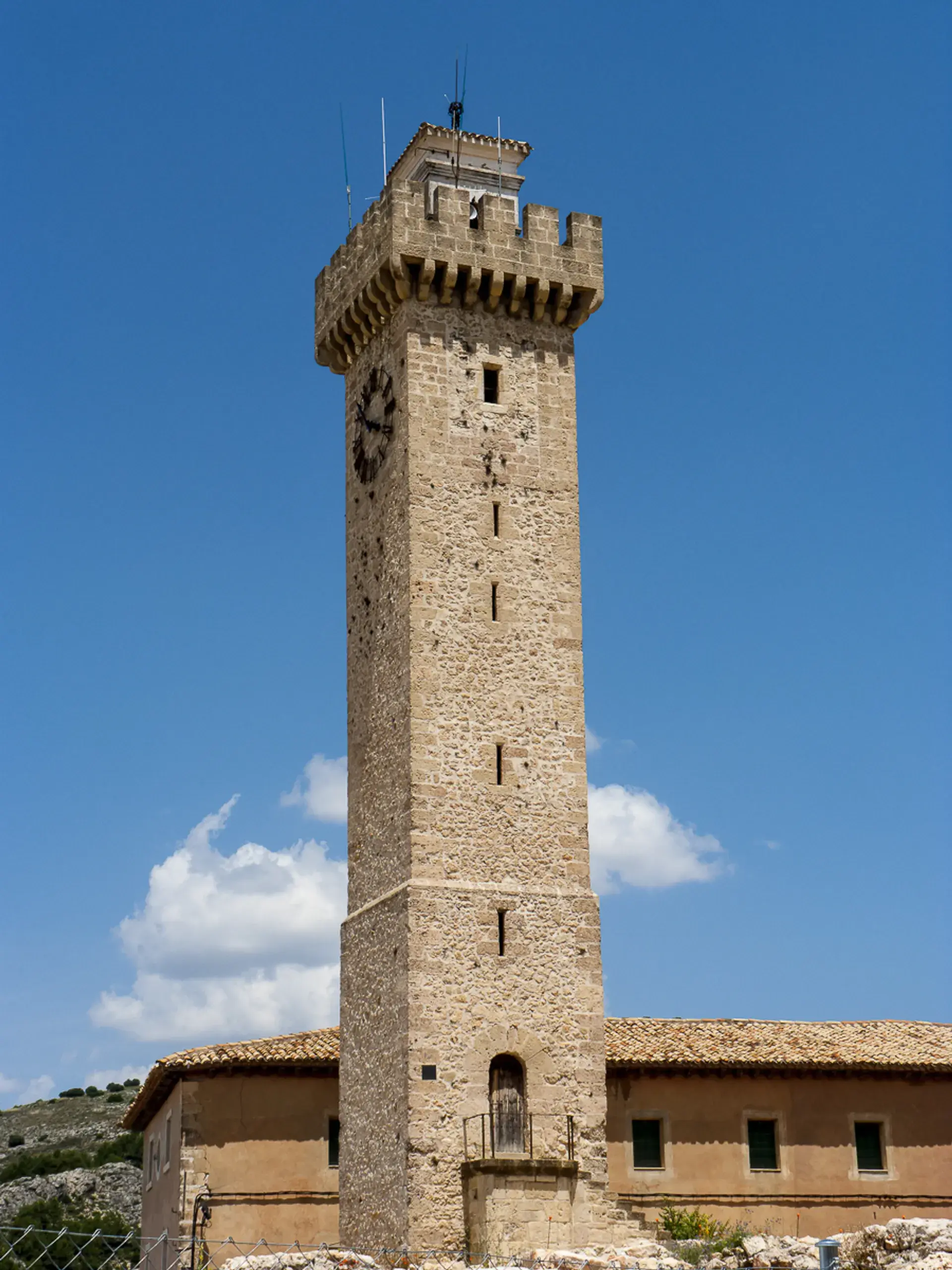
Perched on the western cliffs of Cuenca's upper old town, the Torre de Mangana stands approximately 28 meters high over the Júcar River gorge. Featuring a square plan with three exterior tiers and eight interior floors, the tower serves as the municipal clock tower of the city. Civic timekeeping has been documented on this site since at least 1510, and the structure was officially declared a Bien de Interés Cultural in 2001.
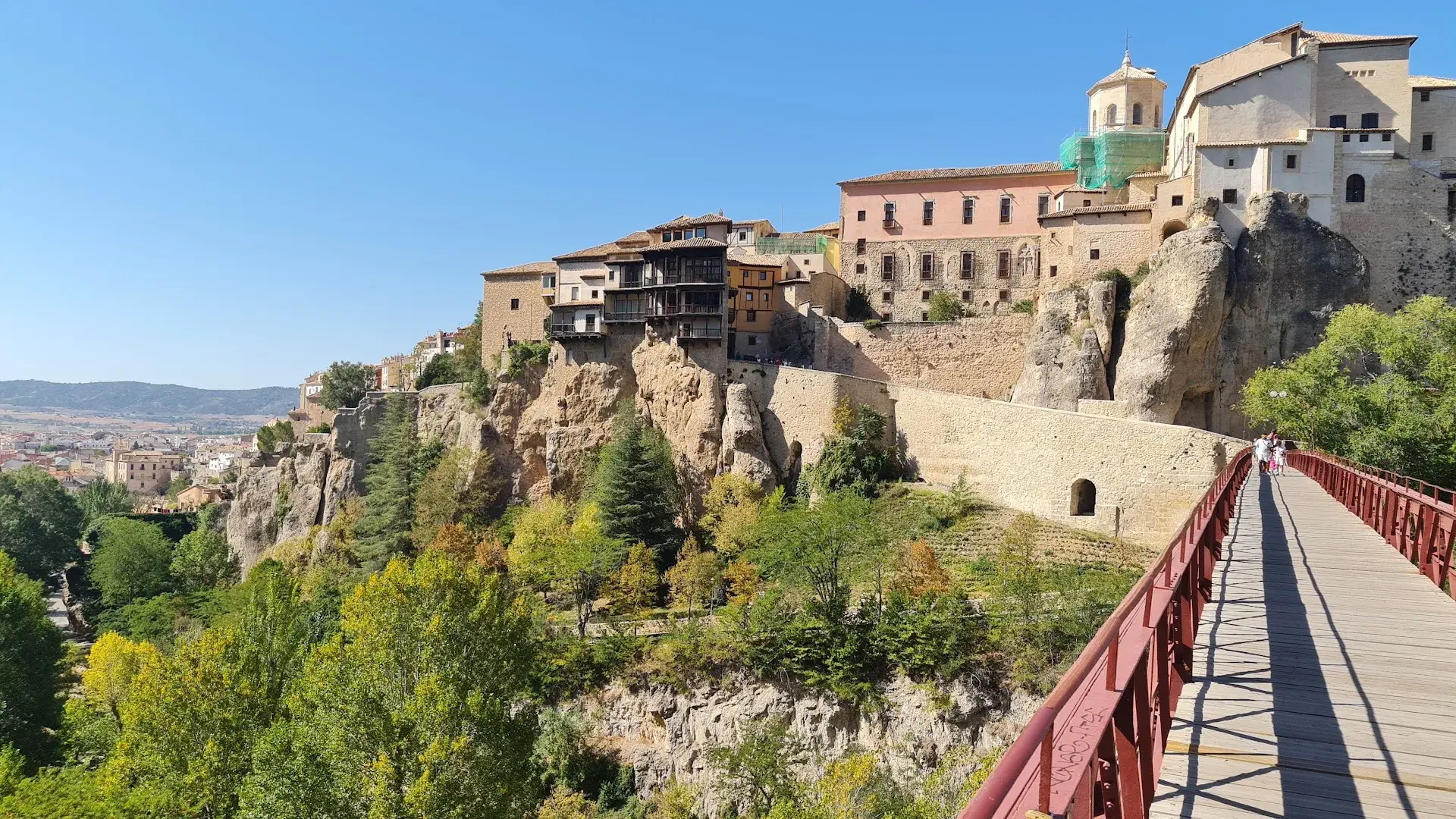
The tower occupies an essential position along the historic ridge. While the eastern cliffs overlook the Huécar gorge and the famous Hanging Houses, the Torre de Mangana anchors the western panorama with wide views over the limestone canyon of the Júcar. The clock's bells still chime across the old quarter and the surrounding valley, marking municipal milestones and New Year celebrations that have earned the landmark the local nickname of Cuenca's "Big Ben."
Centuries of Architectural Transformation
Despite presenting the appearance of a medieval defensive bastion, the tower's rugged stonework, overhanging machicolation, and open battlemented parapet date to the late 20th century. The base of the current structure was erected in the 16th century, receiving an iron weathercock and cross by Esteban Limosín in 1532 and stair and window revisions by Juan Vélez in 1584.
Over the following centuries, the structure suffered substantial damage. It was struck by lightning in the late 18th century and deteriorated further during the French occupation of 1808, prompting repairs directed by Mateo López. In 1926, architect Fernando Alcántara transformed the tower into a colorful Neo-Mudéjar monument, adding North African-style decorative plasterwork, stepped battlements, and a domed bell chamber. This look was entirely replaced in 1970 when architect Víctor Caballero encased the structure in austere, rough-hewn stone to evoke an ancient military watchtower.
A Crossroad of Civilizations
The ground surrounding the tower represents a dense architectural palimpsest. The site originally served as the fortified Islamic alcázar of Cuenca. Following the Christian conquest by King Alfonso VIII in the 12th century, the precinct housed the remaining Muslim population. After the anti-Jewish violence of 1391, the city's Jewish quarter was relocated here.
Major archaeological campaigns conducted between 2000 and 2010 beneath the Plaza de Mangana exposed these deeply layered foundations. Excavations uncovered structural remains of the Muslim citadel, a medieval synagogue, and the later Christian church of Santa María de Gracia, which collapsed during the early 20th century.
The Plaza and Cultural Legacy
Today, the Plaza de Mangana is freely open to the public around the clock as a viewing terrace and integrated archaeological interpretation site. Modern art also shares the space, highlighted by Gustavo Torner's Monumento a la Constitución, an abstract suspended steel cube. While the plaza remains a bustling gathering spot, the interior of the tower itself is closed to regular visits.
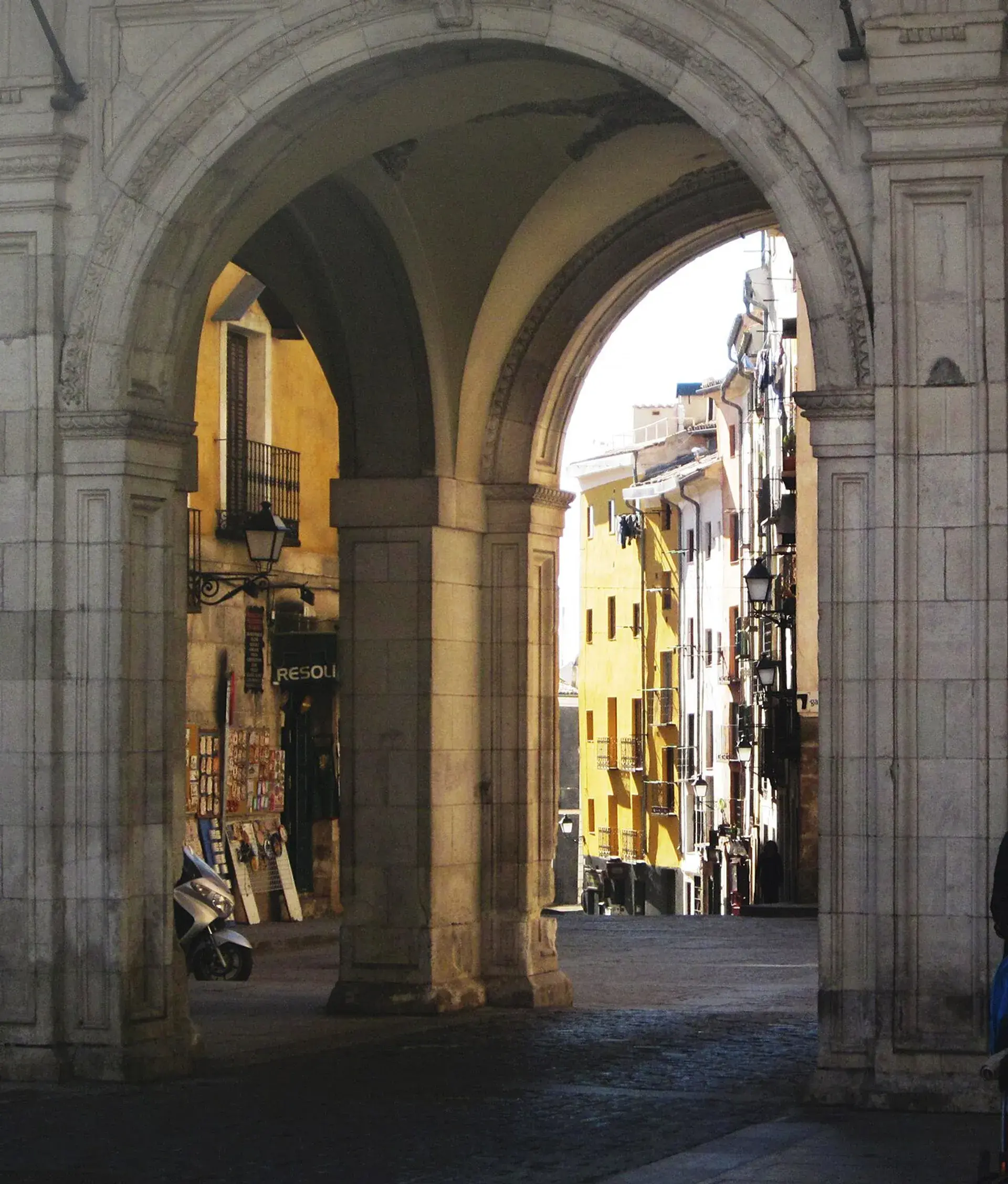
The name Mangana likely originates from the late Latin term manganum—referring to a war engine or catapult—though alternative theories link it to an Arabic term for a mechanical clock. The tower remains deeply rooted in local culture, and its crenellated profile is widely used as the model for ceramic souvenir flasks containing resolí, Cuenca's traditional spiced coffee liqueur.
FAQ
Can visitors enter the interior of Torre de Mangana?
Interior access to the tower is closed to regular public visits, but the surrounding Plaza de Mangana is open freely around the clock as a viewpoint and archaeological area.
Why does Torre de Mangana look like a medieval fortress?
Although the tower's base dates back to the 16th century, its fortified appearance—featuring crenellations and a heavy machicolation—was designed in 1970 by architect Víctor Caballero, replacing an earlier 1926 Neo-Mudéjar design.
What archaeological remains exist beneath Plaza de Mangana?
Excavations carried out between 2000 and 2010 revealed the buried foundations of Cuenca's medieval Islamic citadel, a historic synagogue from the Jewish quarter, and the parish church of Santa María de Gracia.