Cuenca Cathedral: Castile's First Gothic Cathedral
Castile’s Earliest Gothic Monument
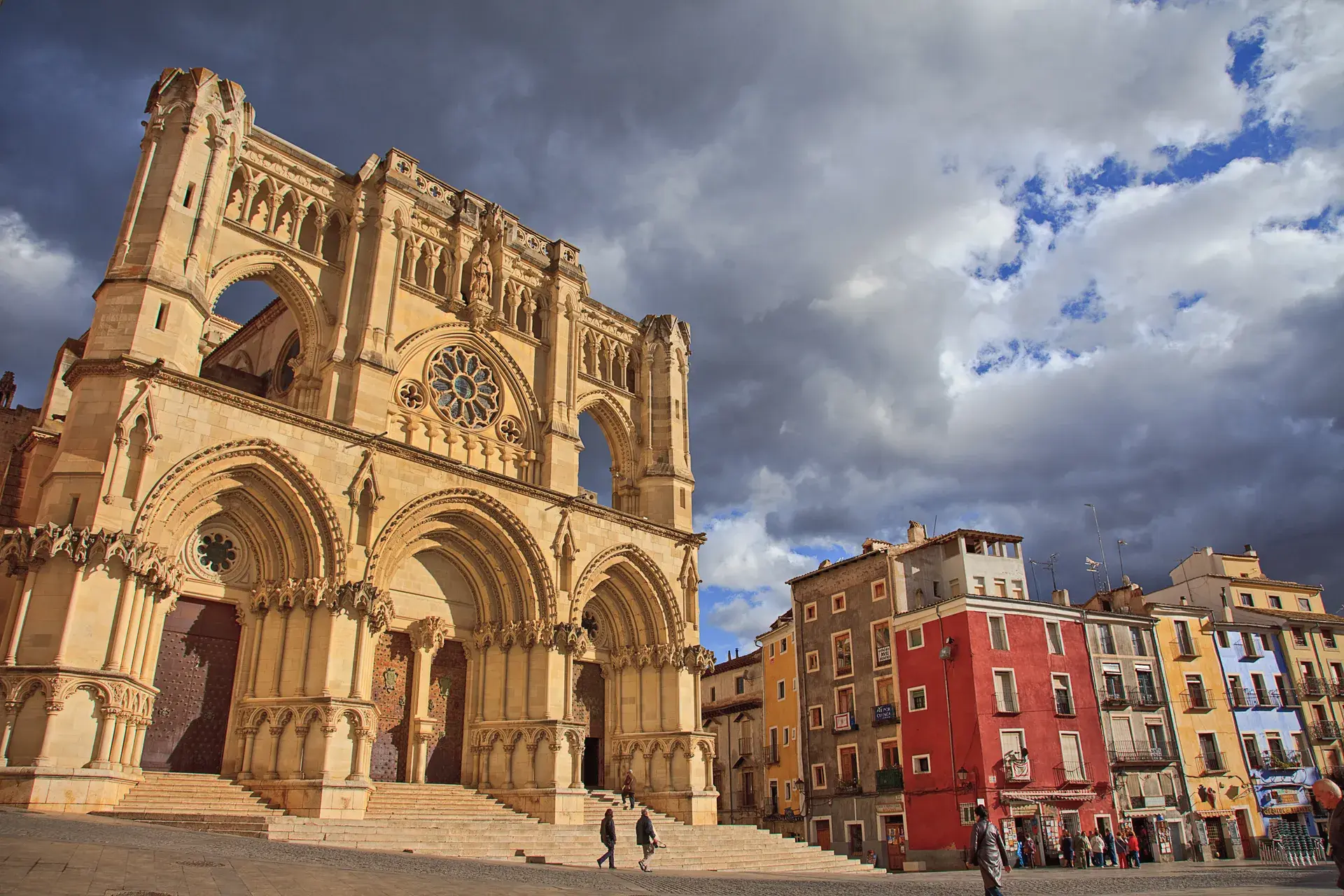
Standing on the Plaza Mayor in Cuenca's Old Town, the Catedral de Santa María y San Julián de Cuenca holds a unique place in Spanish architectural history as Castile's earliest Gothic cathedral. Groundbreaking took place between 1182 and 1189 under King Alfonso VIII following the Christian conquest of the city. The cathedral was consecrated in 1196 by Bishop Julian—the city’s patron saint—and formally dedicated to the Virgin Mary in 1208 by Bishop Rodrigo Ximénez de Rada.
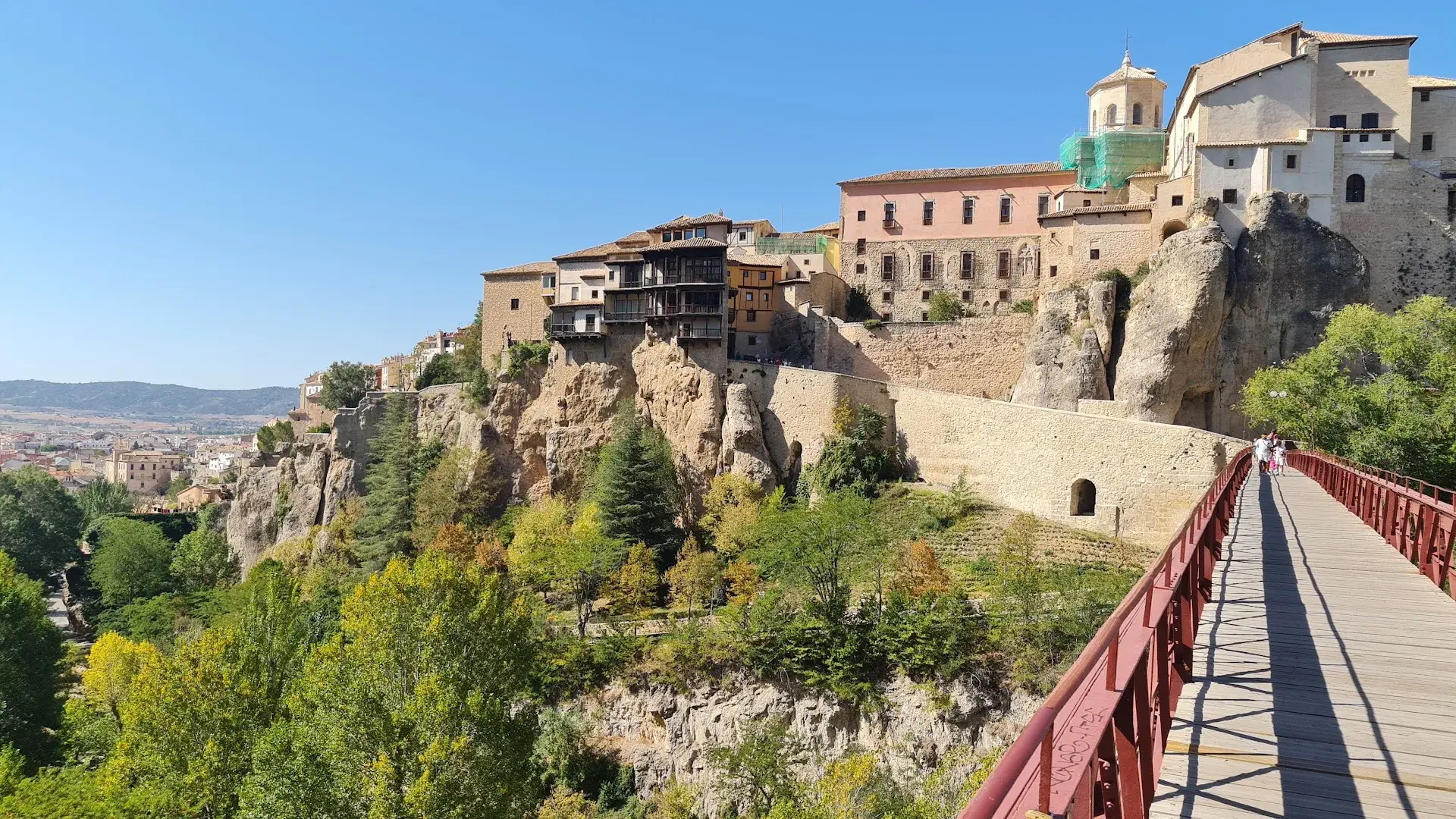
The building anchors the rocky promontory framed by the Júcar and Huécar river gorges, marking the central pivot point between the lower Old Town and the upper castle quarter. Its early design bears distinctive Anglo-Norman influences, stemming from King Alfonso VIII’s marriage to Eleanor Plantagenet. Her entourage brought Norman masons whose craftsmanship introduced early sexpartite rib vaulting, an architectural feature rarely found in medieval Spain.
The 1902 Collapse and Neo-Gothic Facade
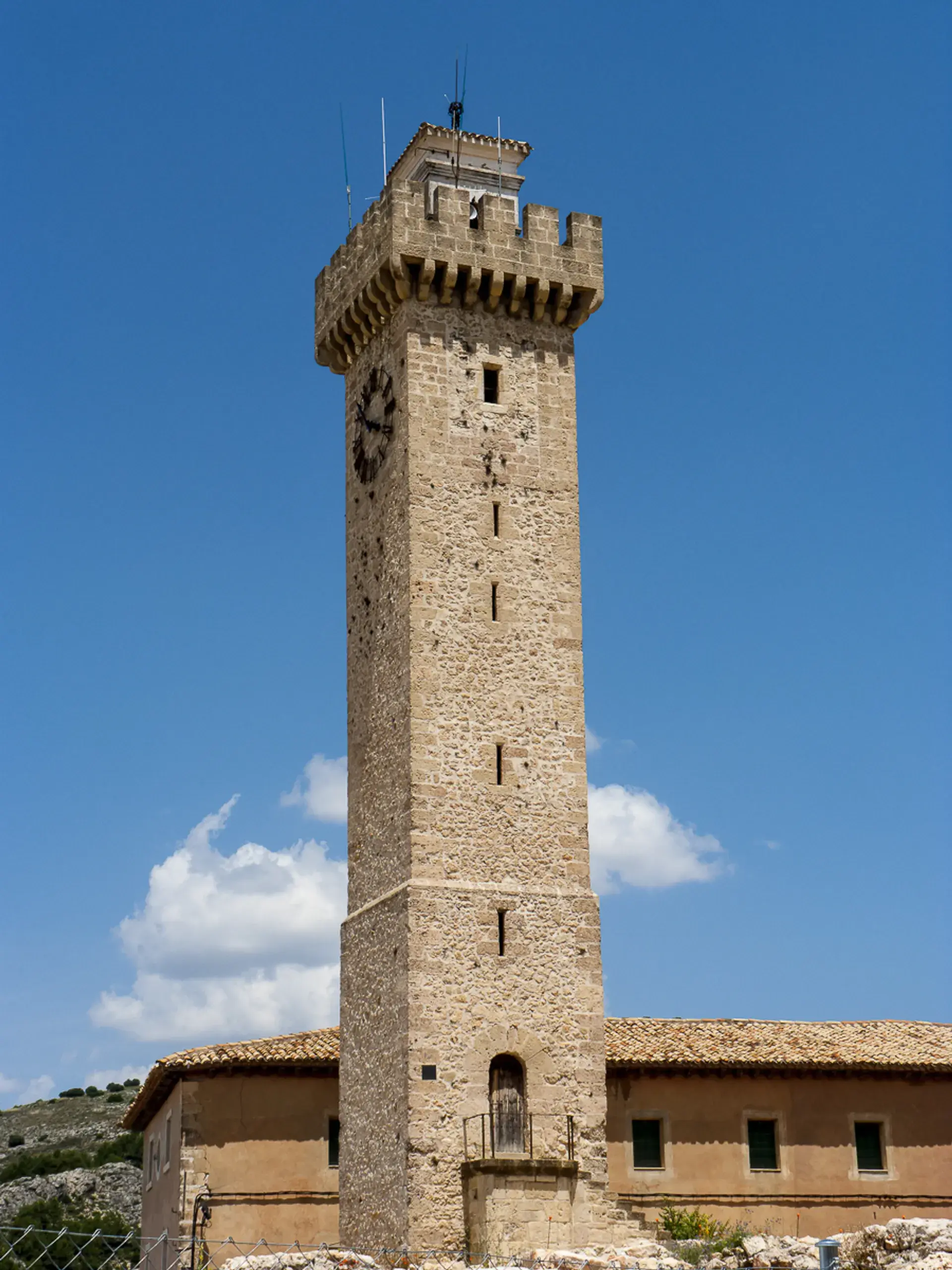
While the cathedral’s exterior appears strictly medieval, its main facade is the result of a 20th-century historicist reconstruction. On 13 April 1902, the cathedral’s bell tower, the Torre del Giraldo, collapsed while bells were being rung for a service. The catastrophe killed several people and damaged portions of the cloister, the 16th-century Jamete arch, and the front exterior.
In response, the Spanish government declared the cathedral a National Monument in August 1902 to fund emergency restoration. Architect Vicente Lampérez took charge of the project, heavily influenced by the purist restoration ideas of Eugène Viollet-le-Duc. Rather than preserving the surviving 18th-century Baroque facade, Lampérez had it demolished to construct what he considered an "ideal" Anglo-Norman neo-Gothic facade. Reconstruction commenced in 1910, but financial shortages and Lampérez's death brought the work to a halt. Consequently, the planned towers and spires were never erected, leaving a conspicuously flat-topped profile where pale, chiseled 20th-century stone ends abruptly against the skyline.
Modern Art in a Historic Sanctuary
Inside, the cathedral blends centuries of history with 20th-century creativity. In the 1990s, the monument integrated Cuenca’s legacy as a center for contemporary Spanish abstract art by commissioning modern stained glass windows for the clerestory. Designed by prominent abstract artists including Gustavo Torner and Gerardo Rueda, the jewel-toned glass casts geometric patterns of colored light across the ancient stone walls and medieval pillars.
Current Status and Visiting
In 1996, the cathedral was inscribed as part of the UNESCO World Heritage Site "Historic Walled Town of Cuenca." Today, it remains an active place of worship, serving as the seat and mother church of the Roman Catholic Diocese of Cuenca with regular daily services.
The complex also welcomes visitors with ticketed admission. Touring the site provides access to the main nave, the ambulatory, the elevated triforium gallery, the Renaissance cloister, and the on-site Diocesan Museum (Museo Tesoro).
FAQ
Why is the facade of Cuenca Cathedral flat and unfinished?
After the Torre del Giraldo bell tower collapsed in 1902, architect Vicente Lampérez began building a new neo-Gothic facade in 1910. Work ceased due to funding problems and the architect's death, leaving the upper spires and towers unbuilt.
What makes the architecture of Cuenca Cathedral unusual for Spain?
King Alfonso VIII was married to Eleanor Plantagenet, whose entourage brought Anglo-Norman masons to Cuenca. These builders introduced early sexpartite rib vaulting, a northern European structural technique that was rare in medieval Spain.
What modern elements can be found inside the cathedral?
During the 1990s, Spanish abstract artists Gustavo Torner and Gerardo Rueda designed contemporary, jewel-toned stained glass windows for the cathedral's clerestory, integrating modern art into the medieval interior.