Mirador del Castillo: Cuenca's Dual Gorge View
The Geography of Two Gorges
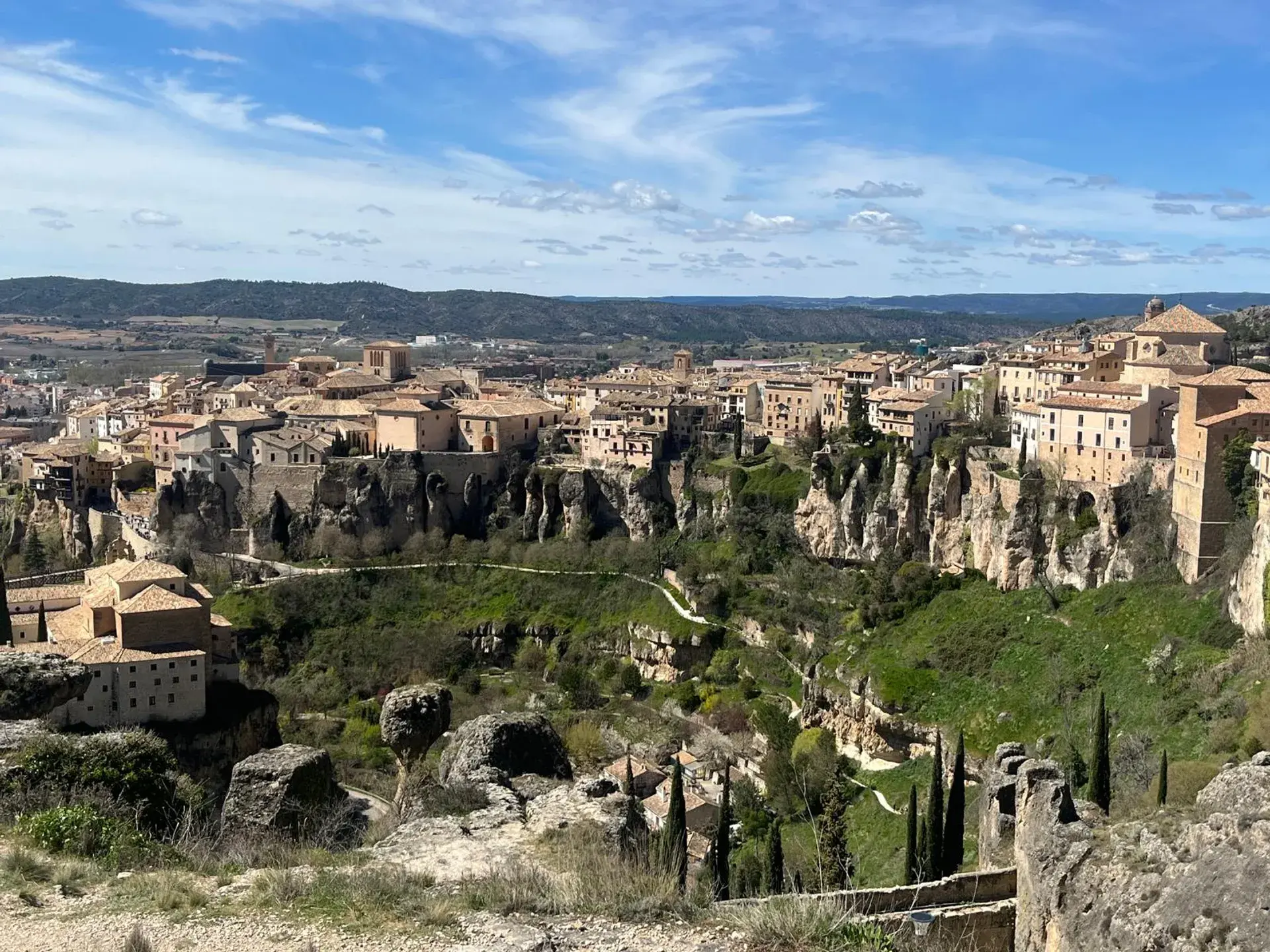
Perched at the highest point of Cuenca’s historic old town, the Mirador del Castillo sits on a narrow limestone crest that defines the city's topography. From this elevated vantage point, visitors encounter simultaneous views over two dramatic river canyons: the Hoz del Huécar to the east and the Hoz del Júcar to the west. This geological isthmus demonstrates the natural erosion that shaped Cuenca, forcing the medieval settlement to build vertically along sheer cliffs rather than spreading outward.
The viewpoint commands vistas of prominent landmarks along the Huécar gorge, such as the famous Hanging Houses (Casas Colgadas), the San Pablo bridge, and the former Convent of San Pablo. Looking west toward the Júcar gorge, the landscape transitions to pine-dotted limestone bluffs. On the opposing cliff face, a painted formation known locally as the Ojos de la Mora (Eyes of the Moorish Girl) remains visible. Funneled between the two deep canyons, winds frequently sweep across the rock, replacing urban street sounds with the rush of air against stone and the distant sound of water far below.
Fortress History and the Arco de Bezudo
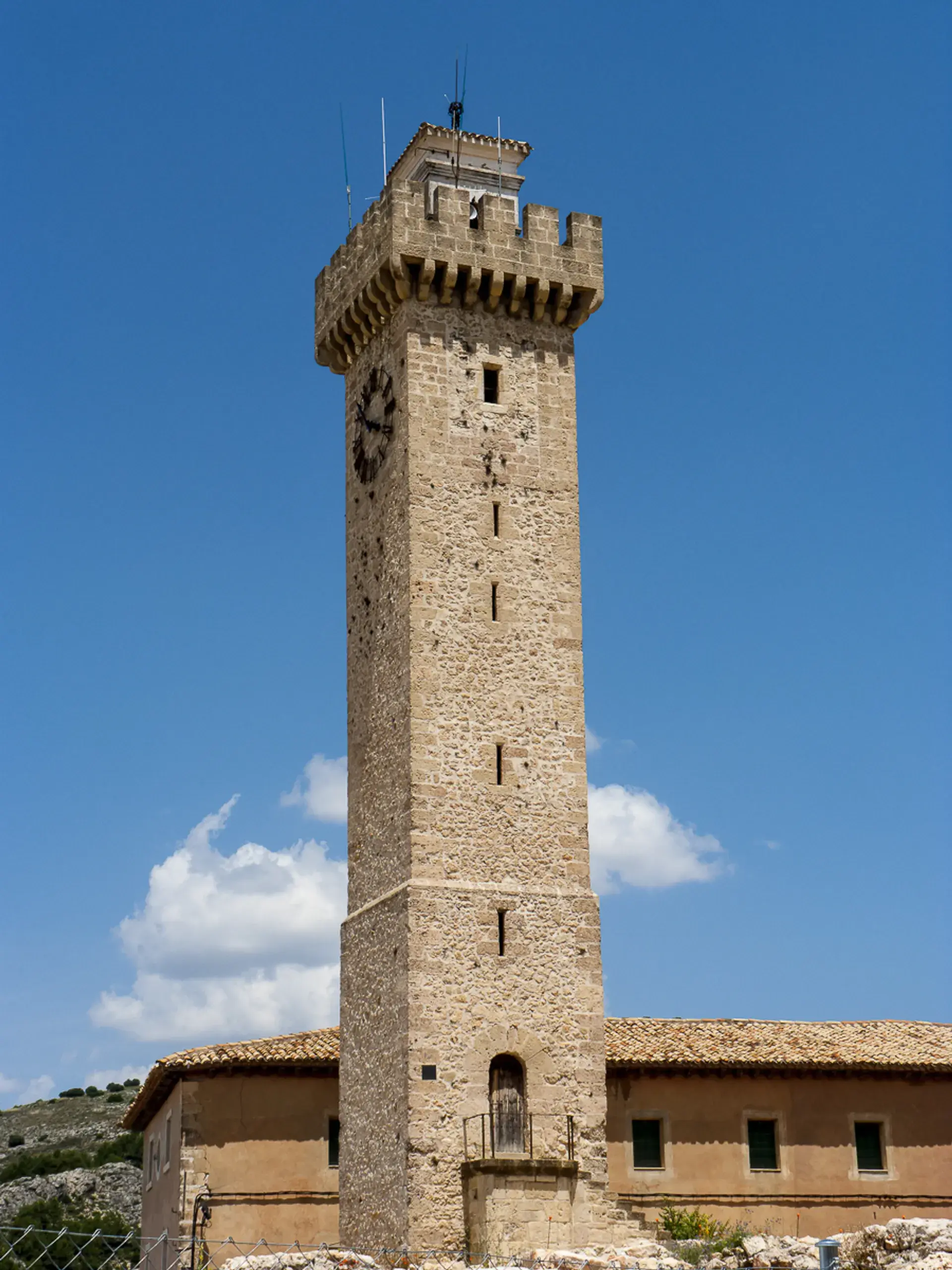
The site preserves remnants of the fortress that once guarded the settlement. Originally established between the 9th and 10th centuries as the Andalusi stronghold of Qunka, the fortification took advantage of the precipitous cliffs for natural defense. In 1177, King Alfonso VIII of Castile conquered the stronghold after a nine-month siege, converting it into a Christian royal fortress.
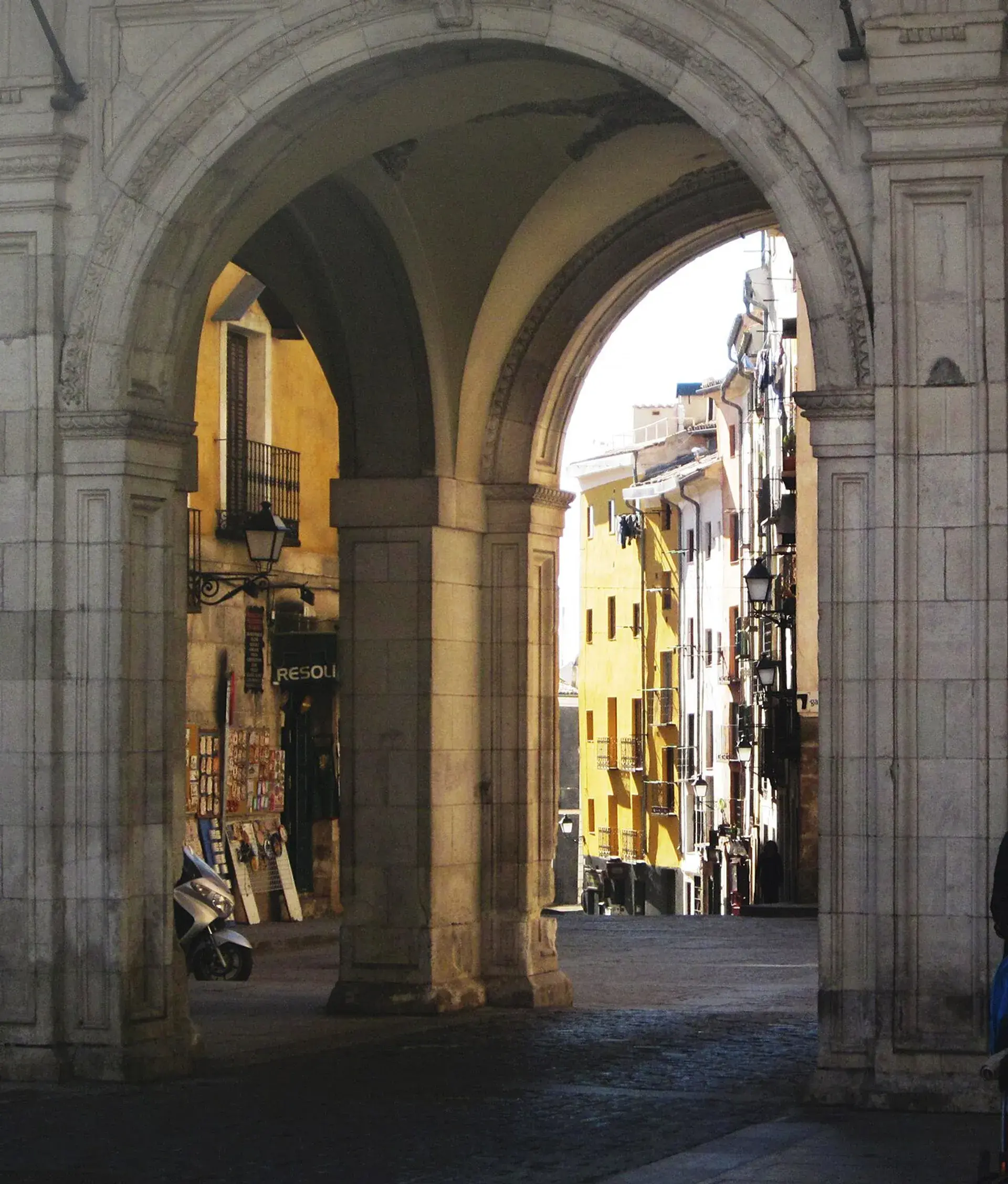
Over the centuries, the defensive complex underwent significant transformation. During the late 15th century, the Catholic Monarchs ordered the partial demolition of the castle to diminish the power of rebellious local nobles from the Hurtado de Mendoza family. In the 16th century, during the reign of Philip II, defensive works were upgraded, and the Arco de Bezudo gateway was reconstructed. Local lore claims the gate commemorates the Rodríguez Bezudo brothers from the 1177 siege, where one brother died during the assault and the other became the city governor. Above the arch rests a sculpted imperial coat of arms encircled by the collar of the Order of the Golden Fleece (Toisón de Oro). The fortress saw its final extensive damage in the early 19th century, when French troops detonated parts of the defensive works during the Peninsular War.
The Inquisition Prison and Provincial Archive
Directly adjacent to the castle ruins stands a historic building that now houses the Archivo Histórico Provincial de Cuenca (Provincial Historical Archive). Originally serving as a royal fortress lodge, the building was adapted in the 16th century to function as the regional Tribunal and Prison of the Spanish Inquisition. In later centuries, the structure served as a provincial civil jail before being repurposed to preserve regional historical records.
Visiting the Viewpoint
Today, the Mirador del Castillo marks the northernmost and highest point of the standard uphill route through Cuenca's UNESCO World Heritage old town. The remains of the fortress—including wall segments and square bastions—are fitted with modern stairs and safety railings that allow pedestrians to traverse the top of the masonry parapets.
The ruins and the lookout are accessible year-round without an entrance fee. Beyond the gateway, the surrounding Barrio del Castillo features a tranquil residential setting alongside outdoor café terraces and restaurants overlooking the surrounding cliffs.
FAQ
Is there an admission fee to visit the Mirador del Castillo?
No, access to the viewpoint and the surviving fortress walls is free to the public year-round.
What landmarks are visible from the viewpoint?
The viewpoint overlooks the Hoz del Huécar—offering views of the Hanging Houses, San Pablo bridge, and the former Convent of San Pablo—as well as the Hoz del Júcar and the painted Ojos de la Mora cliff formation.
What is the historical significance of the Arco de Bezudo?
Rebuilt in the 16th century under Philip II, the Arco de Bezudo features an imperial coat of arms with the Order of the Golden Fleece. Local tradition ties its name to the Rodríguez Bezudo brothers who fought in the 1177 Christian siege of the city.
What was the building next to the fortress used for before housing the Provincial Historical Archive?
The building served as a royal fortress lodge, then became the regional Tribunal and Prison of the Spanish Inquisition during the 16th century, and subsequently functioned as a civil provincial jail.
Discover Cuenca like never before
Dive into Cuenca hidden stories and secret spots with Ciceru interactive tours.
Explore tour
Audioguide
Quizzes
Maps
Solo
Couples
Groups & families

© Photo by Mikel C. via Google Maps · Google Places