Alcazaba of Málaga: History, Architecture & Guide
The Moorish Palace-Fortress of Málaga
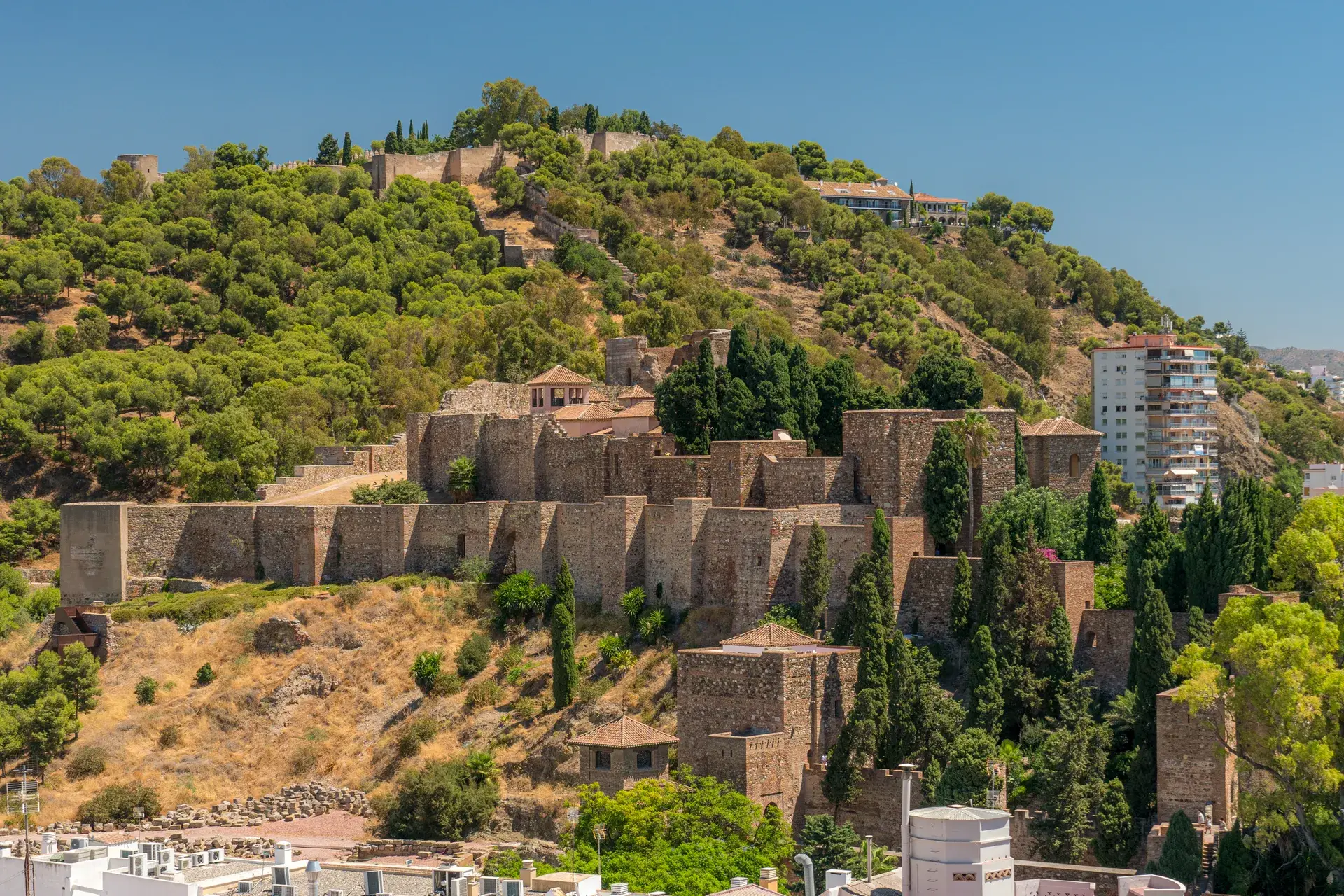
The Alcazaba of Málaga is an 11th-century palatial citadel situated on the lower slopes of Mount Gibralfaro. Overlooking Calle Alcazabilla in the historic center, the monument sits directly above the 1st-century Roman Theatre and opposite the neoclassical Palacio de la Aduana, creating an urban intersection that displays multiple eras of the city's past side by side.
Often described as a smaller cousin of Granada's Alhambra, the Alcazaba served both as an impenetrable military stronghold and a refined royal residence for Islamic rulers. Its strategic hillside position secured control over the historic port, the city, and the coastal approaches.
Origins and History
Substantial construction on the Alcazaba began between 1057 and 1063 under Badis ben Habus, the ruler of the Zirid Taifa of Granada, over earlier Hammudid foundations. The complex underwent subsequent expansions and alterations during the Almoravid, Almohad, and Nasrid periods, the latter of which transformed the residential sector into an intricate complex of palatial halls and courtyards.
In 1487, during the final stages of the Reconquista, the citadel was captured by the Catholic Monarchs following a four-month siege. Over the subsequent centuries, the fortress gradually fell into disrepair, a decline accelerated by an earthquake in 1680 and naval bombardment during the Nine Years' War in 1693.
By the 19th and early 20th centuries, informal civilian housing had grown against and across the ancient ramparts. Extensive restoration efforts in the 20th century, led by architect Leopoldo Torres Balbás, cleared the encroaching structures and restored the palatial quarters and gardens. This preservation work gained further momentum after the 1951 rediscovery of the Roman Theatre buried directly at the base of the fortress walls.
Defensive Design and Roman Spolia
The Alcazaba was engineered with two concentric walled enclosures reinforced by perimeter towers and steep zig-zag entrance gates designed to trap and bottleneck attackers. Prior to the hill's fortification, the area served an industrial Roman purpose; archaeological excavations beneath the lower walls revealed slate-lined vats once used for manufacturing fermented garum fish sauce.
When constructing the fortress, Islamic builders made extensive use of Roman spolia quarried directly from the Roman Theatre below. Column fragments, carved capitals, and squared stones were incorporated throughout the defensive works. Rather than concealing these materials, masons laid salvaged Roman marble column shafts horizontally into the stonework of towers and gate arches, such as the Puerta de las Columnas, serving as structural tie-rods with the round ends left visible on the exterior walls.
Within the lower defensive perimeter lies an underground chamber or silo. Historical accounts identify this subterranean vault as a holding dungeon where captured Christian prisoners were locked overnight after working during the day.
Palatial Courtyards and Mount Gibralfaro
Beyond the fortified outer gates, the upper citadel transitions into the Nasrid royal residence. The design integrates shaded courtyards lined with orange trees and flowering bougainvillea, where central fountains and running stone rills create a cooler microclimate relative to the exposed stone ramps below.
Crowning the crest above the fortress stands Gibralfaro Castle, whose name derives from the Arabic word jabal (mountain) combined with the Greek pharos (lighthouse), referencing a beacon said to have stood on the height. The castle connects to the Alcazaba via La Coracha, a steep, walled defensive corridor running up the ridge.
Practical Information
The Alcazaba is operated as a public monument by the Ayuntamiento de Málaga. The main pedestrian entrance is located on Calle Alcazabilla adjacent to the Roman Theatre, and an elevator provides alternative access from Calle Guillén Sotelo behind the City Hall.
Operating hours are seasonal. Summer hours run from 1 April to 31 October, opening daily from 09:00 to 20:00. Winter hours run from 09:00 to 18:00, with final entry permitted one hour before closing. General admission is 7 euros for an individual ticket, or 10 euros for a combined ticket covering both the Alcazaba and Gibralfaro Castle. Free admission is available every Sunday after 14:00.
The internal passage through La Coracha is closed to visitor circulation, meaning the Alcazaba and Gibralfaro Castle require separate entries. Reaching Gibralfaro Castle from the lower complex involves an optional, steep uphill walk of approximately 20 to 30 minutes.
FAQ
When was the Alcazaba of Málaga built?
Major construction of the fortress began between 1057 and 1063 under Badis ben Habus of the Zirid Taifa of Granada over earlier Hammudid foundations, with later expansions carried out by the Almoravid, Almohad, and Nasrid dynasties.
Why are Roman column shafts embedded in the fortress walls?
Builders repurposed materials taken from the adjacent 1st-century Roman Theatre, laying marble column shafts horizontally into the masonry of towers and gates as structural tie-rods, which left the circular column ends exposed to view.
Can visitors walk between the Alcazaba and Gibralfaro Castle through La Coracha?
No, the interior walkway through the walled corridor of La Coracha is closed to visitor circulation. Access to Gibralfaro Castle requires a separate uphill walk of 20 to 30 minutes or alternative transport.
Is entry to the Alcazaba ever free?
Yes, admission is free for all visitors every Sunday starting at 14:00 until closing.