Palmeral de las Sorpresas: Málaga's Seafront Park
Reconnecting Málaga to the Sea
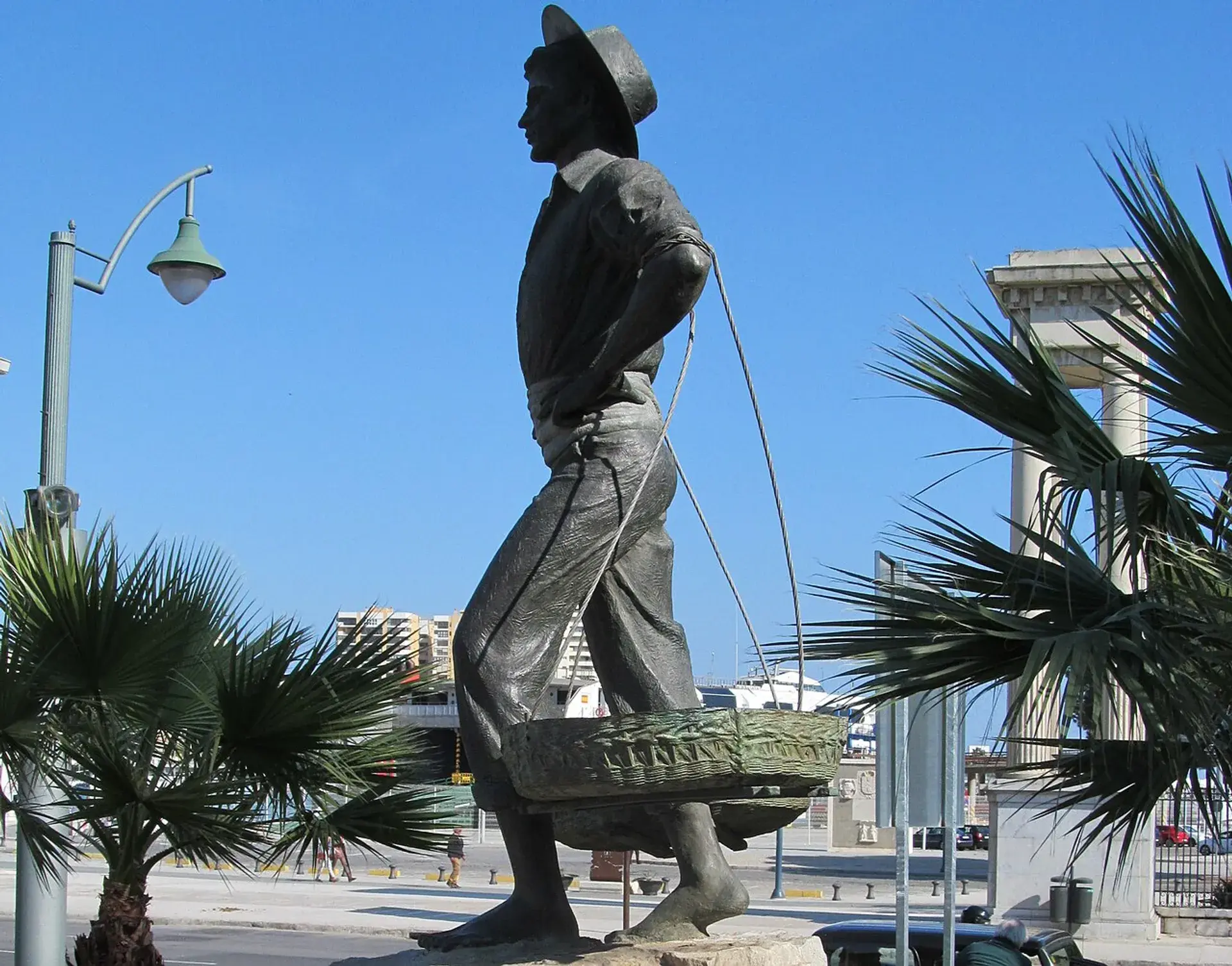
Although Málaga was founded as a port city by the Phoenicians, industrial expansion during the nineteenth and twentieth centuries isolated the urban center from the water. Warehouses, security fences, and grain silos along Quay 2 (Muelle Dos) formed a physical barrier between the city and the Mediterranean.
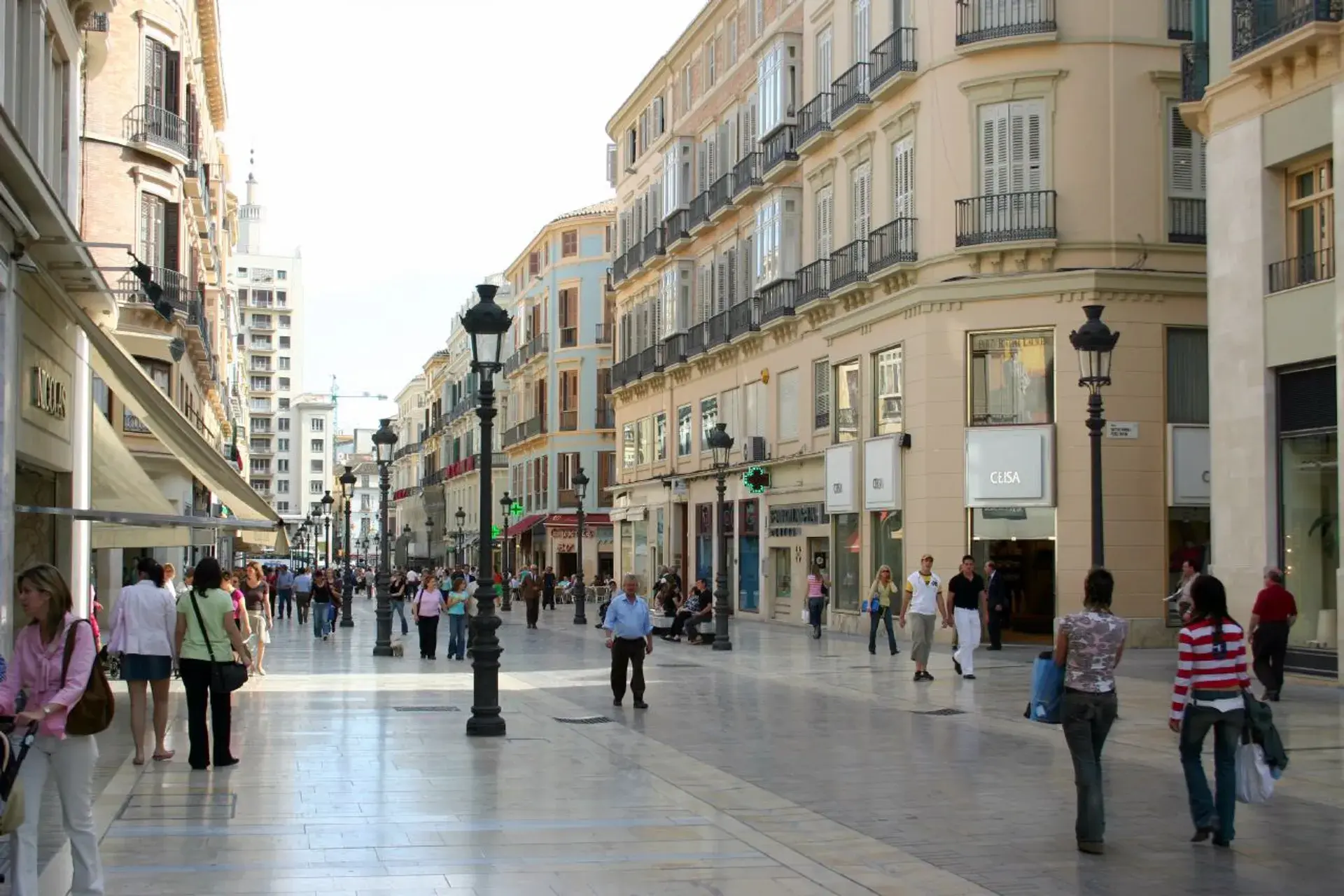
In the late 1990s, the port and municipal authorities initiated an urban integration plan known as the operación puerto-ciudad. The industrial structures were demolished, opening an unbroken pedestrian corridor that connects Plaza de la Marina and Calle Marqués de Larios directly to the harbor basin.
Architectural Design and the Pergola
Following an international competition held by the Port Authority in 2002, Madrid-based Junquera Arquitectos, led by architect Jerónimo Junquera, was selected to design the new public space. The 20,000-square-meter waterfront promenade was officially inaugurated on March 25, 2011.
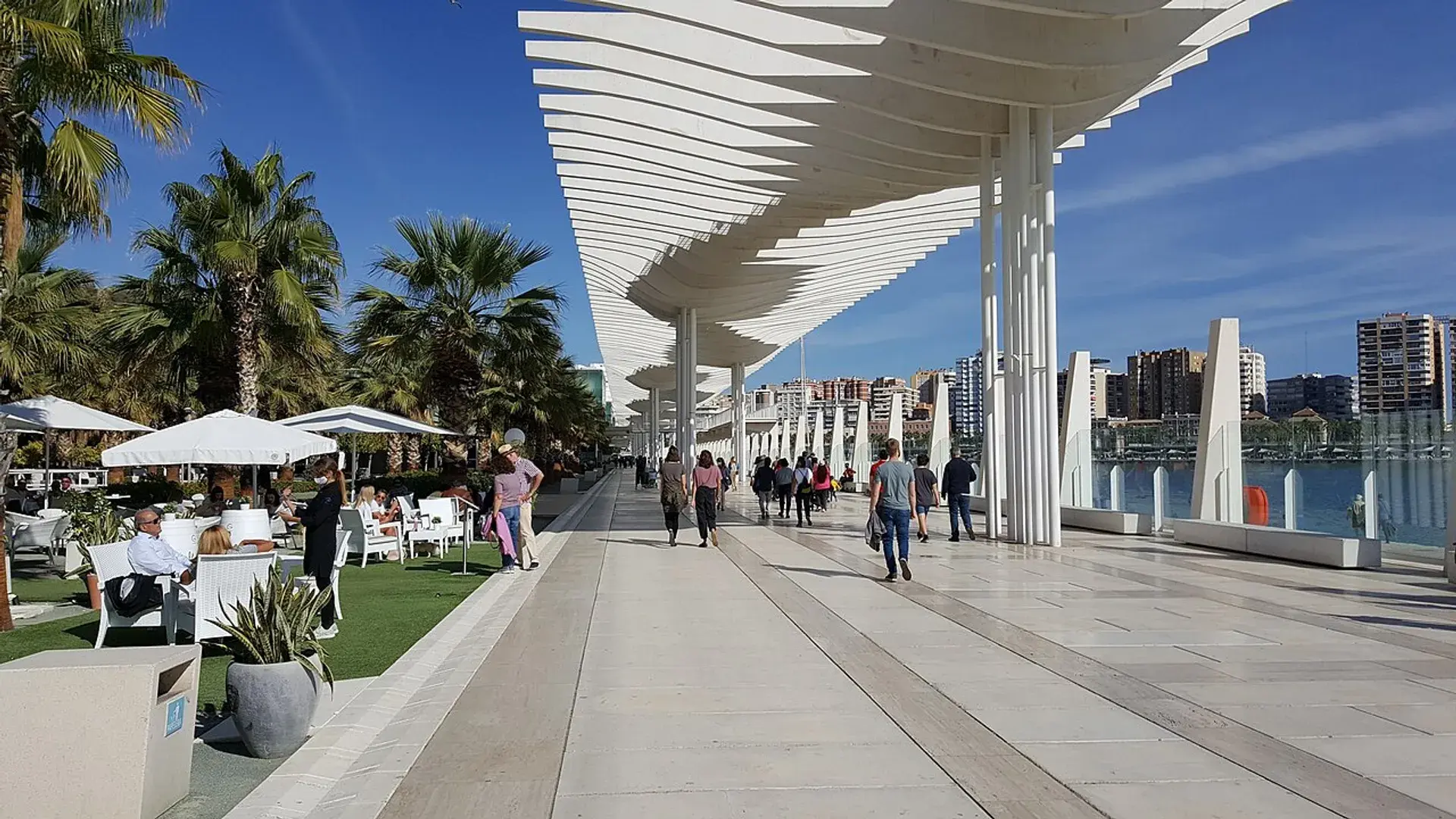
The promenade's signature architectural feature is a 400-meter-long undulating white pergola. Standing 11 meters high on 16 pillars, the structure incorporates 265 precast concrete ribs often likened to the spine of a whale or fish. Angled louvers filter intense Mediterranean sunlight, casting geometric shadows across the light paving below. Along the quay, three low-rise glass pavilions elevated on pilotis accommodate port, cultural, and passenger services.
The Palm Grove and Microclimate
Rather than adopting the layout of traditional European public parks or Moorish pleasure gardens, the promenade's landscape was modeled on the ancient agricultural grids of southeastern Spain and North Africa, referencing the UNESCO-listed Palmeral of Elche. Over 400 palm trees are planted in a grid of 20-by-20-meter plots engineered to form a shaded, wind-protected microclimate.
The name Palmeral de las Sorpresas (Palm Grove of Surprises) refers to these grid squares, which Junquera conceived as open-air rooms staging distinct discoveries. Within these plots, visitors encounter sunken gardens, spray fountains, shaded benches, and children's play areas. In the wider master plan, Quay 2 was designated the palmeral del sosiego (palm grove of quiet contemplation), balancing the commercial activity found at adjacent Muelle Uno.
Public Use and City Views
The promenade functions 24/7 as a free public leisure park featuring walking paths, bicycle lanes, and docks for catamarans and harbor tour boats. Dock-edge areas are protected by glass security balustrades, and port authority regulations strictly prohibit swimming and skateboarding.
Positioned along the harbor, the promenade provides classic views looking inland, framing the Cathedral of Málaga, the Alcazaba fortress, and Gibralfaro Castle above the palm fronds. At the eastern end of the walkway stands the colorful glass cube of the Centre Pompidou Málaga.
FAQ
Why is it called the Palmeral de las Sorpresas?
The name refers to the 20-by-20-meter plots laid out between the palm trees. The architect designed each plot as an outdoor room staging different features, such as spray fountains, sunken gardens, and play spaces.
When did the Palmeral de las Sorpresas open?
The promenade was officially opened to the public on March 25, 2011, following an urban integration project that removed industrial silos to link the city directly to the port.
Who designed the Palmeral de las Sorpresas?
It was designed by architect Jerónimo Junquera of Junquera Arquitectos, who won an international design competition held by the Port Authority in 2002.
Are there specific rules for visitors at the promenade?
Yes. Port authority regulations prohibit swimming and skateboarding along the promenade, and glass balustrades secure the dock edge.