Málaga Cathedral: History of La Manquita
Architectural Profile and the Unfinished Tower
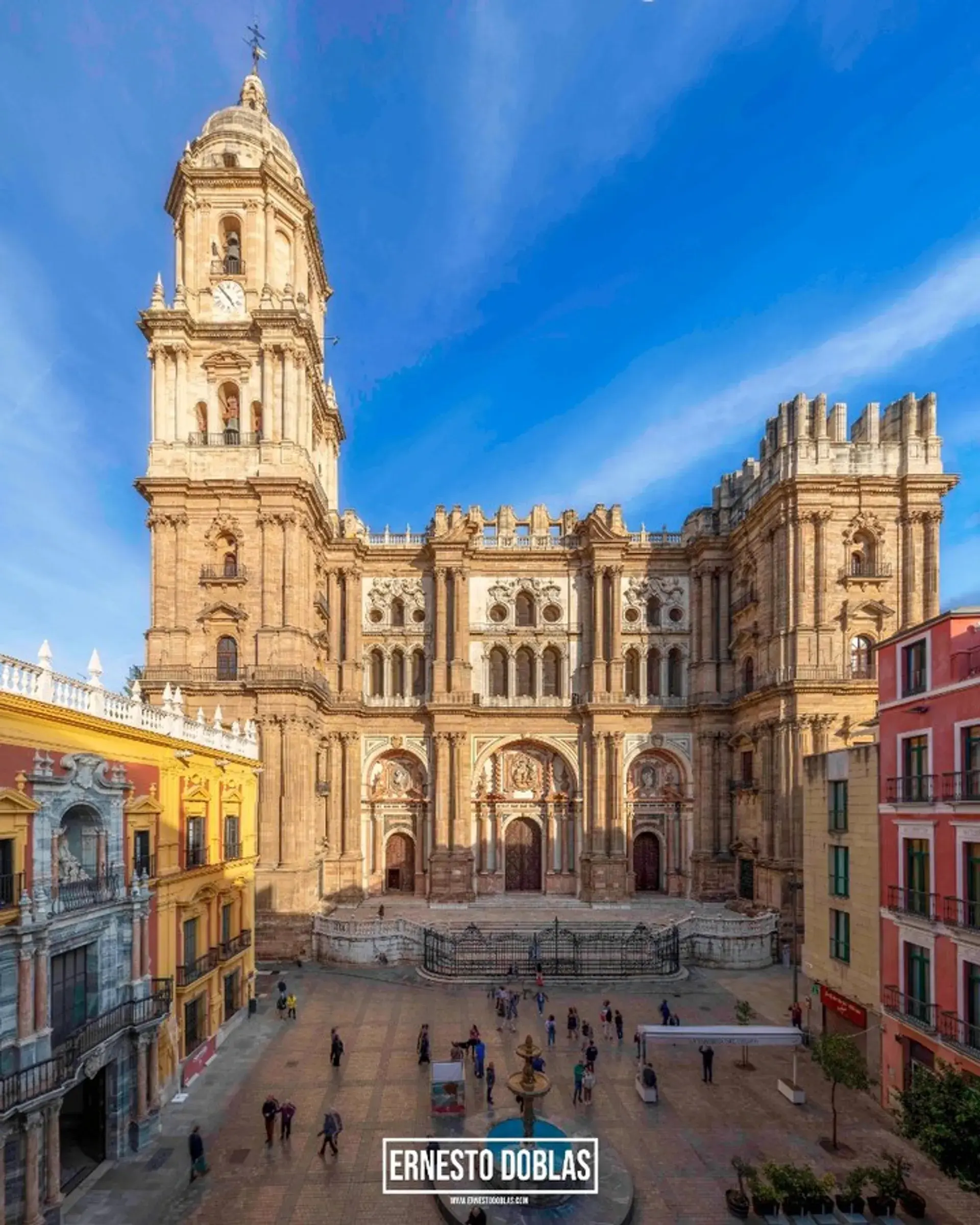
The Santa Iglesia Catedral Basílica de la Encarnación anchors the historic center of Málaga, positioned directly opposite the 18th-century Bishop's Palace across the Plaza del Obispo. Known popularly as La Manquita ("The One-Armed Lady"), the monument is distinguished by its singular, completed northern bell tower. Rising to 84 meters, it represents the second-tallest cathedral tower in Andalusia, surpassed only by Seville's Giralda. In contrast, the southern tower halts abruptly at the roofline, creating an asymmetric silhouette that has become an enduring emblem of local civic identity.
Architecturally, the cathedral blends a Gothic foundation plan with late Renaissance structural execution and an 18th-century Baroque main façade. The exterior stone surfaces retain visible signs of their sudden halt in development, including raw stone brackets, empty niches, and absent balustrades. This unfinished exterior contrasts with an interior vaulted ceiling rising over 40 meters above the central nave, supported by fluted pillars and double-tiered entablatures.
Centuries of Construction and Design
The origins of the cathedral trace back to the Christian conquest of Muslim Málaga in August 1487. Following the conquest, the Catholic Monarchs consecrated the city's Great Mosque (Aljama) as a church dedicated to Santa María de la Encarnación. By 1528, formal work began on an expansive new Renaissance structure following designs linked to architect Diego de Siloé.
Erection of the cathedral proceeded intermittently across roughly 250 years under successive architects, notably Diego de Vergara and Antonio Ramos. To finance the extensive building campaign during the 18th century, authorities levied an excise tax on maritime commercial cargo exiting Málaga's port, including exports of wine, raisins, and olive oil. Work came to an official and permanent stop on July 5, 1782, leaving the decorative statuary on the façade pediment and the second bell tower incomplete.
Interior Masterpieces and Furnishings
Inside the consecrated and fully enclosed cathedral nave sit notable masterworks of Spanish Baroque craftsmanship. Among the primary highlights are the mid-17th-century choir stalls (sillería del coro), constructed from carved cedar and mahogany. Sculptor Pedro de Mena carved the panels, rendering over 40 reliefs of saints with detailed drapery and nuanced facial expressions.
The cathedral also houses historic twin Baroque pipe organs situated above the choir. Built between 1773 and 1781 by organ builder Julián de la Orden, the instruments contain more than 4,000 pipes within decorative cases designed by José Martín de Aldehuela.
Historical Myths and the San Telmo Diversion
A persistent local tradition, commemorated by a plaque at the base of the tower, claims that cathedral construction halted because allocated funds were gifted to the thirteen colonies during the American Revolutionary War.
Archival and administrative records contradict this account. Rather than aiding the American colonies, the administration of King Charles III redirected the port excise revenues into regional infrastructure projects. The diverted money funded the San Telmo aqueduct and financed paved trade roads connecting the coastal city of Málaga with the inland towns of Antequera and Vélez-Málaga.
Current Status and Conservation
Málaga Cathedral functions as the mother church and episcopal seat of the Roman Catholic Diocese of Málaga, maintaining regular sacramental services and daily worship. The monument also welcomes cultural tourism daily, providing ticketed access to the nave, side chapels, choir stalls, Cathedral Museum, and guided rooftop tours (Las Cubiertas).
Between 2023 and late 2027, the cathedral is undergoing a major structural intervention. This conservation effort installs a pitched roof over the vaults to stop longstanding water leaks and finishes the façade's pediment, while deliberately preserving the unfinished state of the southern tower.
FAQ
Why is Málaga Cathedral nicknamed La Manquita?
The cathedral earned the nickname La Manquita ("The One-Armed Lady") because construction ended in 1782 before the southern bell tower could be built, leaving only the 84-meter northern tower complete.
Were cathedral funds diverted to the American Revolutionary War?
Although a popular legend and plaque claim funds were sent to support the American colonies, royal administrative records show the money was redirected to local infrastructure, including the San Telmo aqueduct and roads connecting Málaga to Antequera and Vélez-Málaga.
What are the most notable interior features of Málaga Cathedral?
The interior is renowned for its 40-meter-high vaulted ceilings, mid-17th-century mahogany and cedar choir stalls carved by Pedro de Mena, and twin 18th-century Baroque organs containing over 4,000 pipes.
Discover Malaga like never before
Dive into Malaga hidden stories and secret spots with Ciceru interactive tours.
Explore tour
Audioguide
Quizzes
Maps
Solo
Couples
Groups & families

© Photo by Paula Perez via Google Maps · Google Places