Cuesta de Santo Domingo: Pamplona's Bull Run Origin
The Opening Stretch of the Encierro
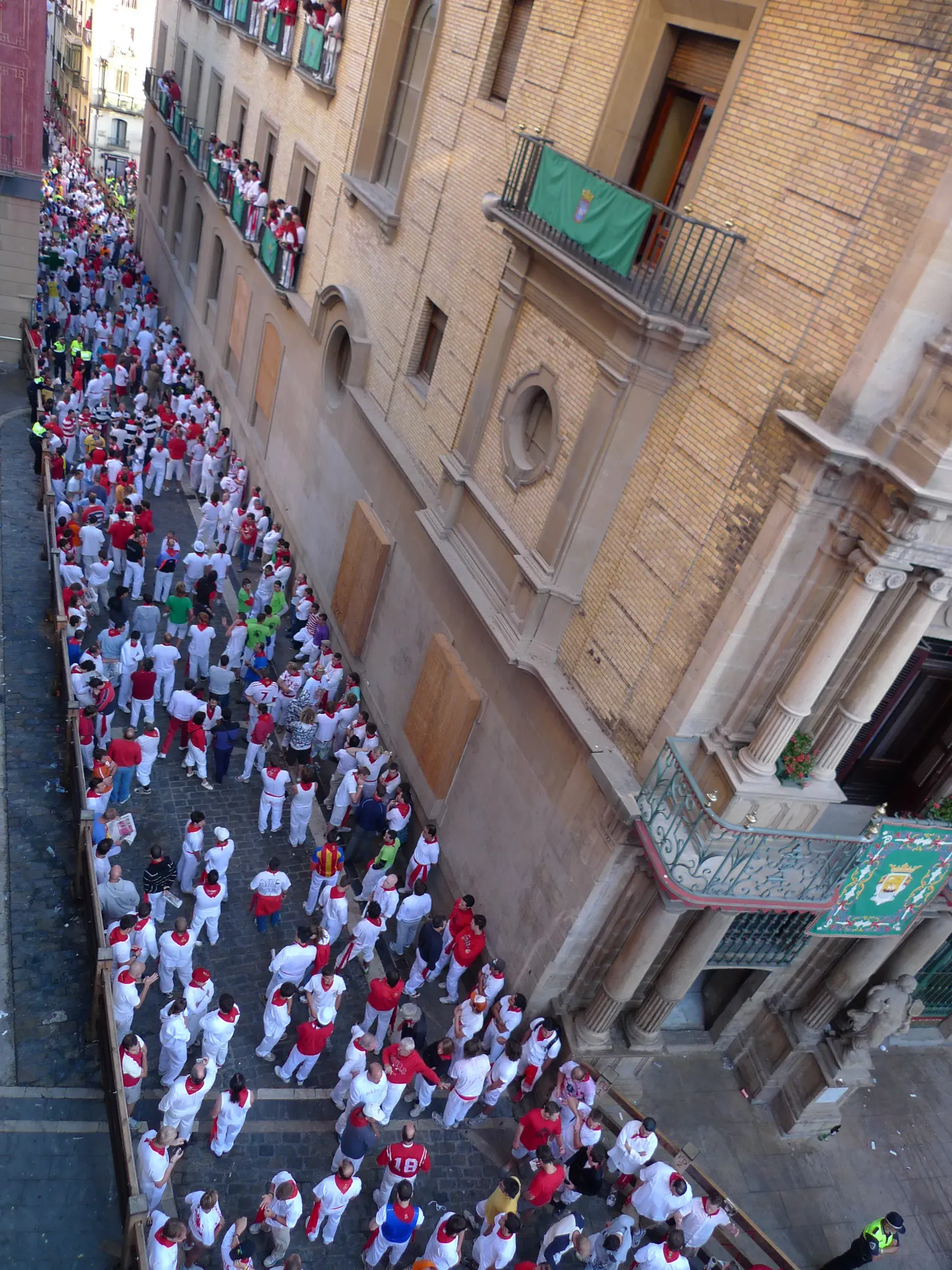
The Cuesta de Santo Domingo is an uphill cobblestone street located in the Old Town (Casco Antiguo) of Pamplona. Spanning approximately 270 to 280 meters, this steep incline forms the opening stretch of the world-famous Running of the Bulls (El Encierro) during the annual San Fermín festival. The street ascends from the Corrales de Santo Domingo at its base to the Plaza Consistorial, the site where King Charles III’s 1423 Privilege of the Union formally united Pamplona’s three medieval boroughs. Geographically, the slope serves as a direct transition corridor from the banks of the Arga River up into the city's historic urban center.
The Morning Launch and the Acoustic Corridor
Every morning between July 7 and July 14 at 8:00 AM, the bull run officially begins on this slope. The start is marked by two consecutive rockets. The first blast signals that the corral gates have opened, while the second confirms that all six fighting bulls and their accompanying steers (cabestros) have cleared the pens and charged onto the street.
Flanked by high masonry retaining walls and historic building facades, the narrow street acts as an acoustic funnel. The double detonation of the rockets echoes sharply between the walls, immediately followed by the roar of the crowd and the sound of hooves striking cobblestone. Unlike later segments of the course that are lined with double wooden barricades, this section offers no lateral escape points once the herd is in motion. Because a bull's muscular anatomy enables rapid acceleration up hills, the animals surge up the incline at high speeds, creating an intense opening dynamic against runners sprinting uphill.
The Wall Niche and the Pre-Run Chants
Set directly into the masonry wall halfway up the slope is a small arched stone niche displaying an image of San Fermín. On race mornings, runners gather beneath this shrine at 7:55, 7:57, and 7:59 AM to sing a traditional plea for protection in both Spanish and Basque: "A San Fermín pedimos, por ser nuestro patrón, nos guíe en el encierro, dándonos su bendición."
During this ritual, participants raise rolled-up newspapers toward the image to mark the rhythm of the chant. These newspapers serve practical purposes during the sprint as well: runners use them to measure distance from the bulls' horns and to divert an animal's gaze if needed. This singing tradition originated spontaneously during the 1970s, when an image of the saint was first placed in a window of the former Military Hospital. To accommodate the custom, the city carved the permanent stone niche into the rampart wall in 1981.
The Two Statues of San Fermín
The wall niche holds two distinct figures throughout the year. For most of the calendar, an official municipal statue rests in the alcove behind a locked glass door. During the festival week, this figure is temporarily replaced each morning by a separate image dating to 1978, which is owned by local social clubs (peñas). The peña statue is brought to the niche before the run, adorned with flowers, candles, and club bandanas, and then returned to a private residence for safekeeping once the morning event ends.
History from Herders to Defiant Butchers
The practice of moving bulls through Pamplona began as a necessity, with herders driving cattle from the pastures of the Ribera de Navarra to the city's main square using sticks or riding on horseback. Through the 18th century, municipal ordinances strictly forbade civilians from running alongside the animals. Local tradition holds that the modern practice of running ahead of the herd began in the late 19th century, when butchers from the adjacent Mercado de Santo Domingo started defying city bans by sprinting directly in front of the bulls. In 1867, Pamplona's City Council formally acknowledged the tradition by establishing the run's first official regulations.
Year-Round Life on Santo Domingo
Ahead of each festival run, the fighting bulls are transferred the night before from the lower Corrales del Gas along the river to the Corrales de Santo Domingo in a quiet nocturnal event known as El Encierrillo. Throughout the rest of the year, Cuesta de Santo Domingo returns to a calm state. It serves as an everyday pedestrian thoroughfare linking the riverfront to the Old Town, where visitors explore the starting corral gates, observe the wall shrine, and visit the adjacent Mercado de Santo Domingo.
FAQ
Why is the Cuesta de Santo Domingo considered especially dangerous for runners?
The 280-meter incline is bordered by solid stone walls and building facades rather than wooden fences, leaving runners with no lateral escape routes once the bulls accelerate uphill.
What is the purpose of the rolled-up newspapers carried by runners?
Runners use rolled-up newspapers to beat rhythm during the pre-run chant to San Fermín, gauge distance from the bulls' horns, and distract the animals' line of sight.
Why are two different statues used in the wall niche?
An official municipal statue is locked in the niche for most of the year, but during the San Fermín festival, a separate 1978 statue owned by local peñas is installed each morning with flowers and bandanas before being stored in a private home.
What signals the start of the bull run at Santo Domingo?
Two consecutive rockets fire at 8:00 AM: the first indicates that the corral gates have opened, and the second confirms that the six bulls and steers have entered the street.