Kiosko Plaza del Castillo: Pamplona's Central Bandstand
The Landmark Bandstand of Plaza del Castillo
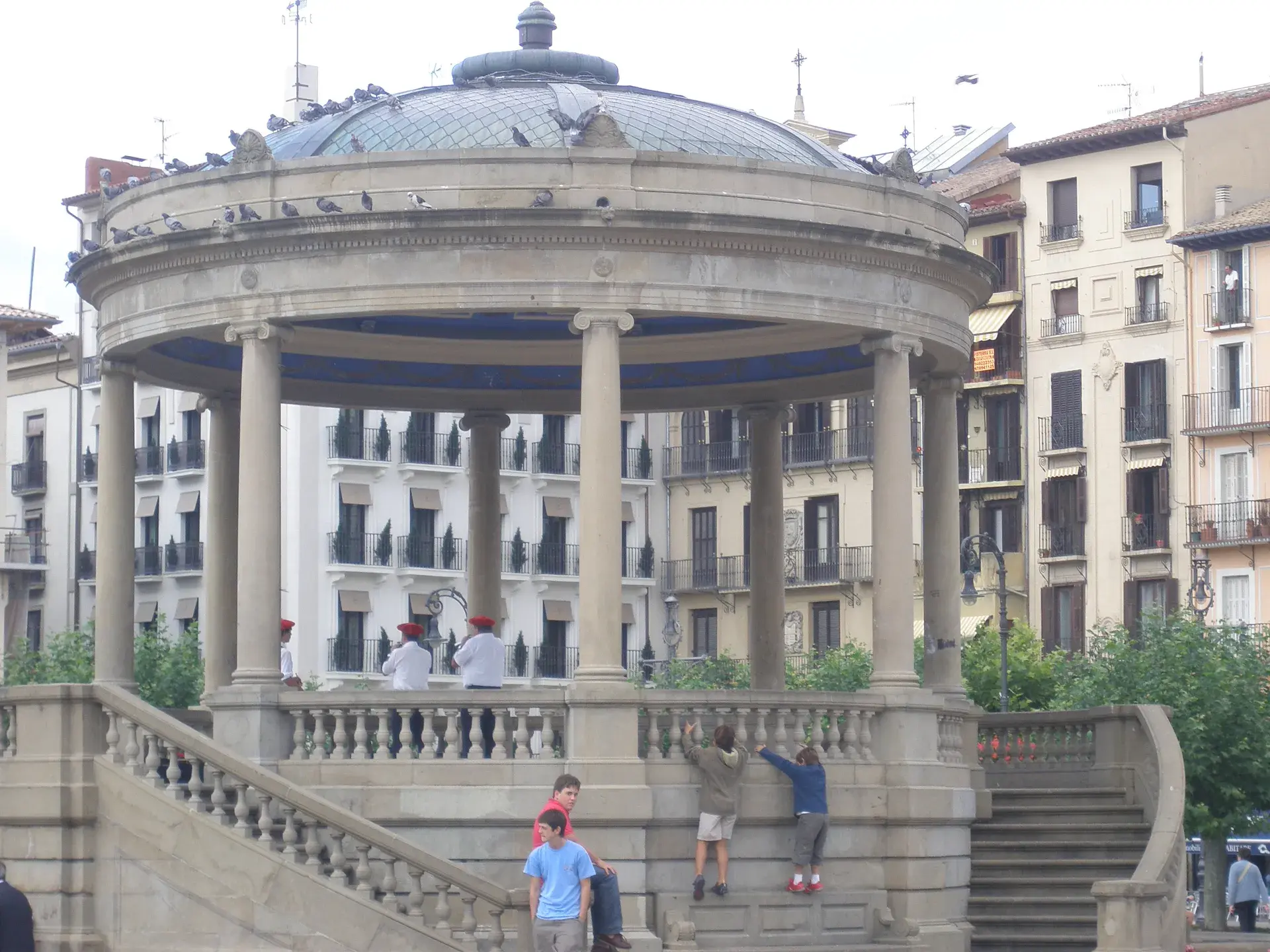
Rising from the center of Plaza del Castillo, the Kiosko is an 18-meter stone bandstand that serves as a visual anchor for Pamplona’s primary civic square. Erected in 1943, the current stone kiosk replaced an earlier wooden bandstand that had occupied the spot since 1910. Today, it stands as a central platform for musical performances, civic gatherings, and public events in the heart of Navarre's capital.
Before any bandstand was constructed, the site hosted an 18th-century fountain designed by the painter Luis Paret. The fountain was crowned by an allegorical statue of Abundance known locally as "La Mariblanca." When the fountain was dismantled in 1910 to make way for the first wooden kiosk, the statue was preserved and transferred to Pamplona's Taconera Gardens.
Evolution of Plaza del Castillo
The Kiosko sits within a 14,000-square-meter pedestrian expanse framed by covered arcades and eclectic facades dating from the 18th to the 20th centuries. Before becoming a unified civic space, the land served as an unincorporated buffer zone meant to prevent conflict between three rival medieval boroughs: Navarrería, San Cernin, and San Nicolás.
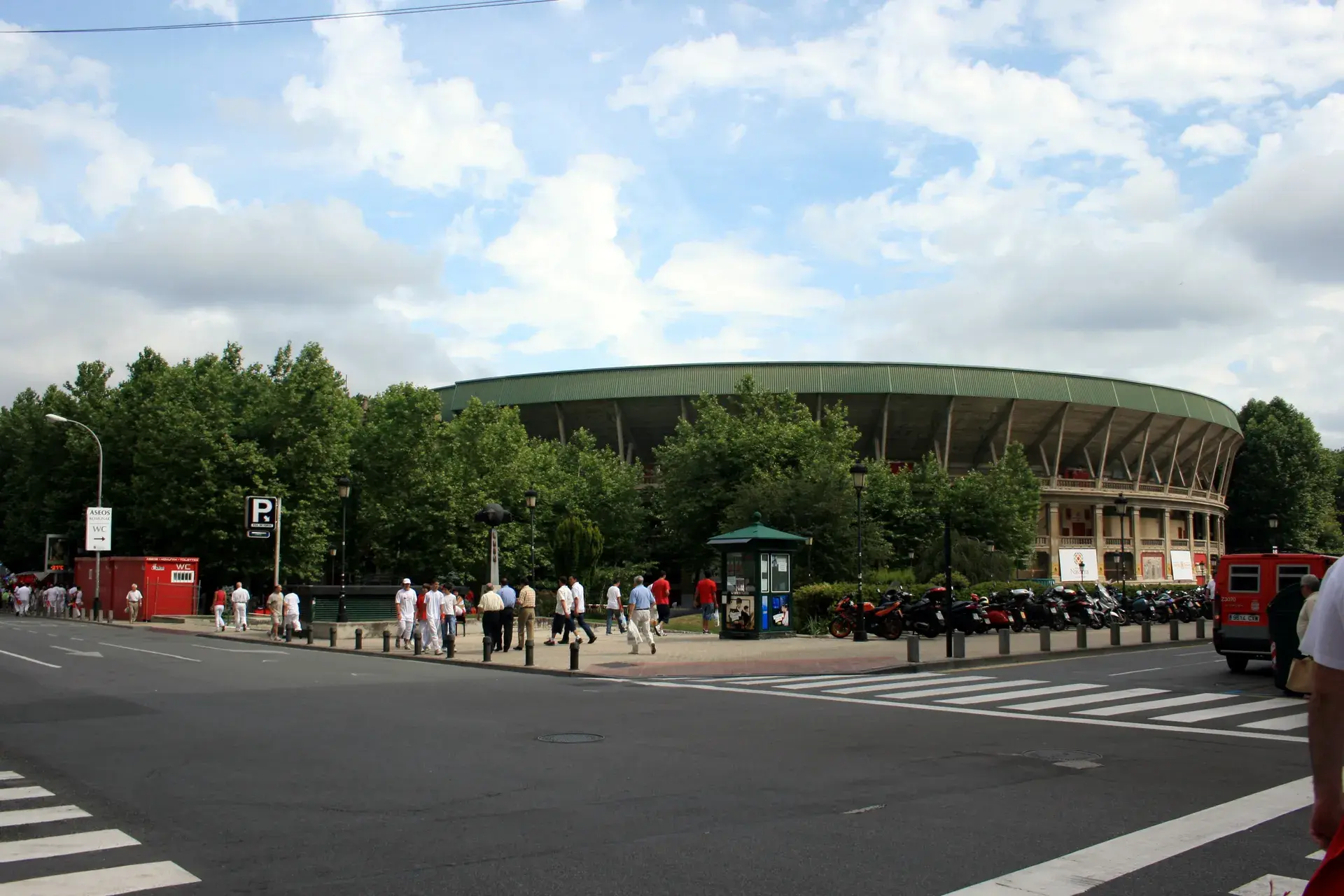
Between 1308 and 1312, King Louis I of Navarre constructed a fortress on the parcel, establishing the origin of the square's name. In 1513, Ferdinand the Catholic reused the fortress stones to build a southern fortification, which was eventually demolished in the late 16th century following the completion of the modern Citadel. Around 1600, a Discalced Carmelite monastery enclosed the southern perimeter. For centuries, the enclosed area served as Pamplona's primary bullfighting venue until a permanent bullring was constructed in 1844. Following the ecclesiastical confiscations of 1836, the monastery was cleared, opening the space for the construction of the Palacio de Navarra.
Surrounding Architecture and Civic Life
Known locally as "el cuarto de estar de los pamploneses" (the living room of Pamplona), Plaza del Castillo serves as an urban hinge connecting the dense medieval grid of the Old Town (Casco Antiguo) with the wider layout of the Segundo Ensanche. Deep vaulted porticoes provide shelter from Pyrenean weather while echoing the sounds of cafe terraces, foot traffic, and musicians.
The square is bordered by notable historic institutions. The eastern edge features the 18th-century Baroque Palacio Goyeneche, while the 19th-century Gran Hotel La Perla lines another perimeter. Café Iruña, which opened in 1888, was the first commercial establishment in Pamplona to install electric lighting. The cafe later gained international fame through Ernest Hemingway's 1926 novel The Sun Also Rises, and now houses a life-sized bronze statue of the author leaning against the bar.
Archaeological Discoveries
Between 2001 and 2003, the ground beneath the Kiosko and the square became the focus of major public attention during excavations for an underground car park. Workers unearthed extensive historical strata, including 2nd-century Roman thermal baths, medieval wall fragments, and an 8th-century Islamic necropolis containing more than 160 burials. The decision by authorities to remove or pave over these ancient remains to finish the parking structure led to widespread civic protests.
FAQ
When was the current Kiosko in Plaza del Castillo built?
The current 18-meter stone bandstand was installed in 1943, replacing a previous wooden bandstand built in 1910.
What stood in the center of the square before the bandstands?
Before the kiosks were built, an 18th-century fountain designed by Luis Paret and crowned by the statue 'La Mariblanca' stood on the site until it was dismantled in 1910.
What was discovered beneath Plaza del Castillo during underground excavations?
Excavations for a car park between 2001 and 2003 revealed 2nd-century Roman thermal baths, medieval wall sections, and an 8th-century Islamic necropolis with over 160 burials.