Plaza Consistorial: Pamplona's Iconic Balcony
A Square Built on Medieval Neutral Ground
Plaza Consistorial, also known as Plaza del Ayuntamiento, is a compact square spanning approximately 2,502 square meters in the heart of Pamplona's Old Town. Despite its modest size, the plaza represents the administrative and geographic core of the city. Its location was determined by royal decree centuries ago to resolve intense urban conflict.
On September 8, 1423, King Charles III of Navarre signed the Privilege of the Union (Privilegio de la Unión). For centuries, three separate medieval boroughs—Navarrería, San Cernin, and San Nicolás—had engaged in fierce jurisdictional and ethnic battles, pitting French Frankish settlers against indigenous Navarrese populations. To enforce peace, the king mandated that a shared town hall be built directly on the ditch and no-man's-land where the borders of the three hostile settlements met. By occupying this neutral buffer zone, the site became the spatial hinge that unified Pamplona into a single municipality.
Baroque Architecture and Modern Reconstruction
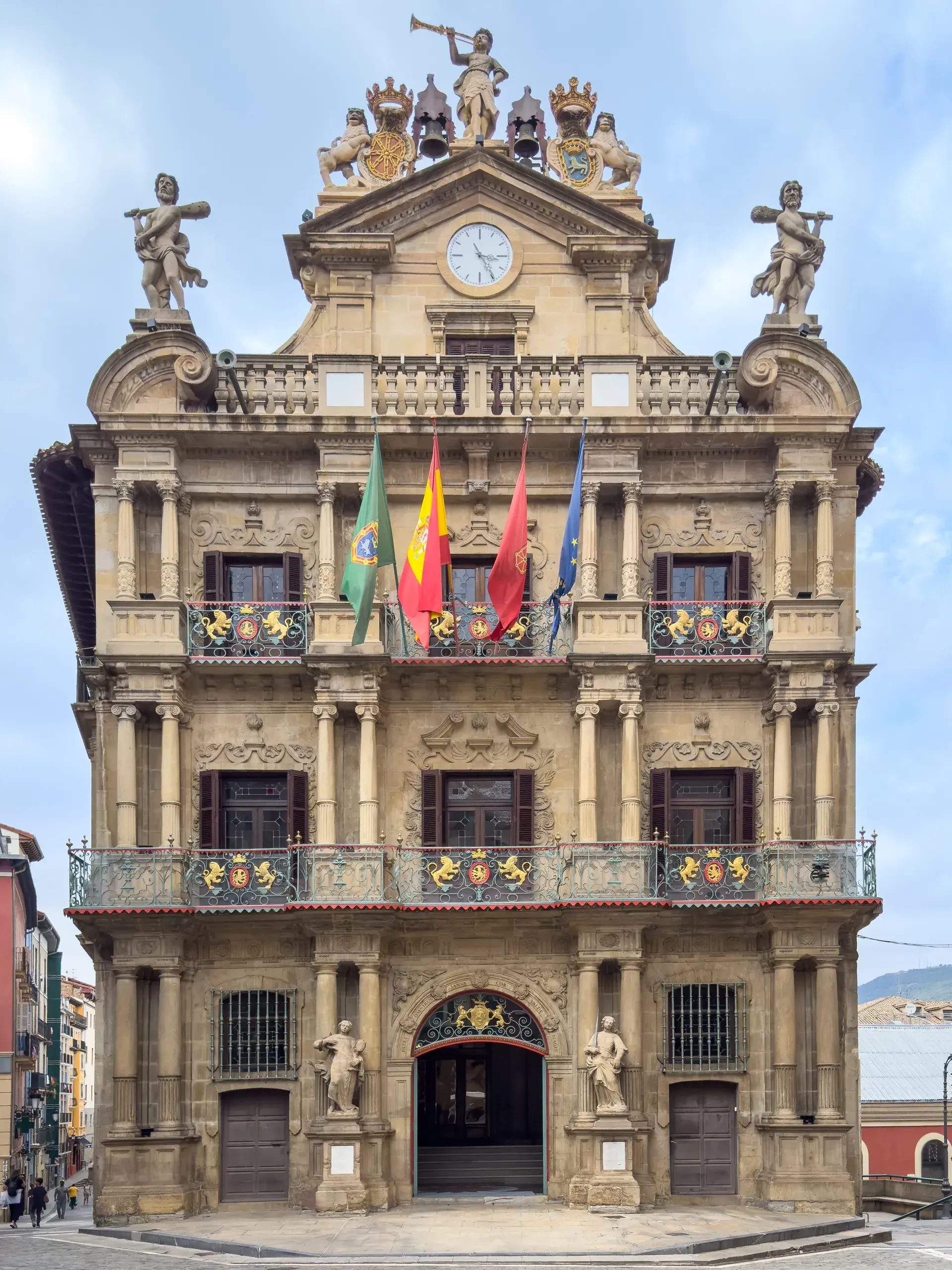
The original medieval town hall eventually deteriorated and was demolished in 1753. Between 1753 and 1760, a new Casa Consistorial was erected, featuring a three-tier stone façade designed by José de Zay y Lorda and constructed by Juan Miguel de Goyeneta. The frontage blends late Baroque and early Neoclassical styles, crowned by an ornate pediment.
Sculptor José Jiménez created the stone figures that animate the building's exterior. Flanking the main entrance portal are statues of Prudence and Justice, specifically commissioned to remind municipal magistrates to govern the formerly rival quarters impartially. Atop the pediment stand allegorical sculptures of Hercules and the winged figure of Fame. Behind this 18th-century façade, the interior tells a different architectural story: in 1952, architects José and Francisco Javier Yárnoz Orcoyen completely demolished and rebuilt the interior to house modern civic offices, leaving only the historic façade intact.
The Balcony and the Chupinazo Tradition
The central first-floor balcony of the Casa Consistorial is celebrated worldwide as the launchpad for the Chupinazo (or Txupinazo), the rocket that officially opens the annual San Fermín festival at noon on July 6. Although the festival has medieval roots, the balcony launch is a 20th-century development. Tobacconist Juan Etxepare initiated the opening rocket tradition informally in 1931 in nearby Plaza del Castillo; the ceremony officially moved to the City Hall balcony a decade later, in 1941.
Since 2016, the individual or organization granted the honor of lighting the fuse has been chosen through a public vote run by the municipal Mesa de los Sanfermines. Before firing the rocket, the launcher delivers a traditional bilingual proclamation in Spanish and Basque: "¡Pamploneses, pamplonesas, Iruñatarrok, Viva San Fermín, Gora San Fermín!"
Because the square is tightly enclosed by four- and five-story residential buildings, the sound of the brass fanfare, crowd roar, and rocket blast produces an intense acoustic resonance. Visually, revelers hold their red neck scarves (pañuelicos) overhead with both hands, creating a continuous red canopy across the square. By local tradition, participants do not tie these scarves around their necks until the rocket visibly detonates in the sky.
Ongoing Civic Life and Urban Crossroads
Beyond the opening blast of San Fermín, Plaza Consistorial hosts Pamplona's most significant public rituals. It is the setting for the midnight candlelight closing ceremony, Pobre de Mí, on July 14. Every September 8, the plaza commemorates the Privilege of the Union with historical markets and processions featuring the municipal council alongside the iconic Giants and Big-heads (Gigantes y Cabezudos).
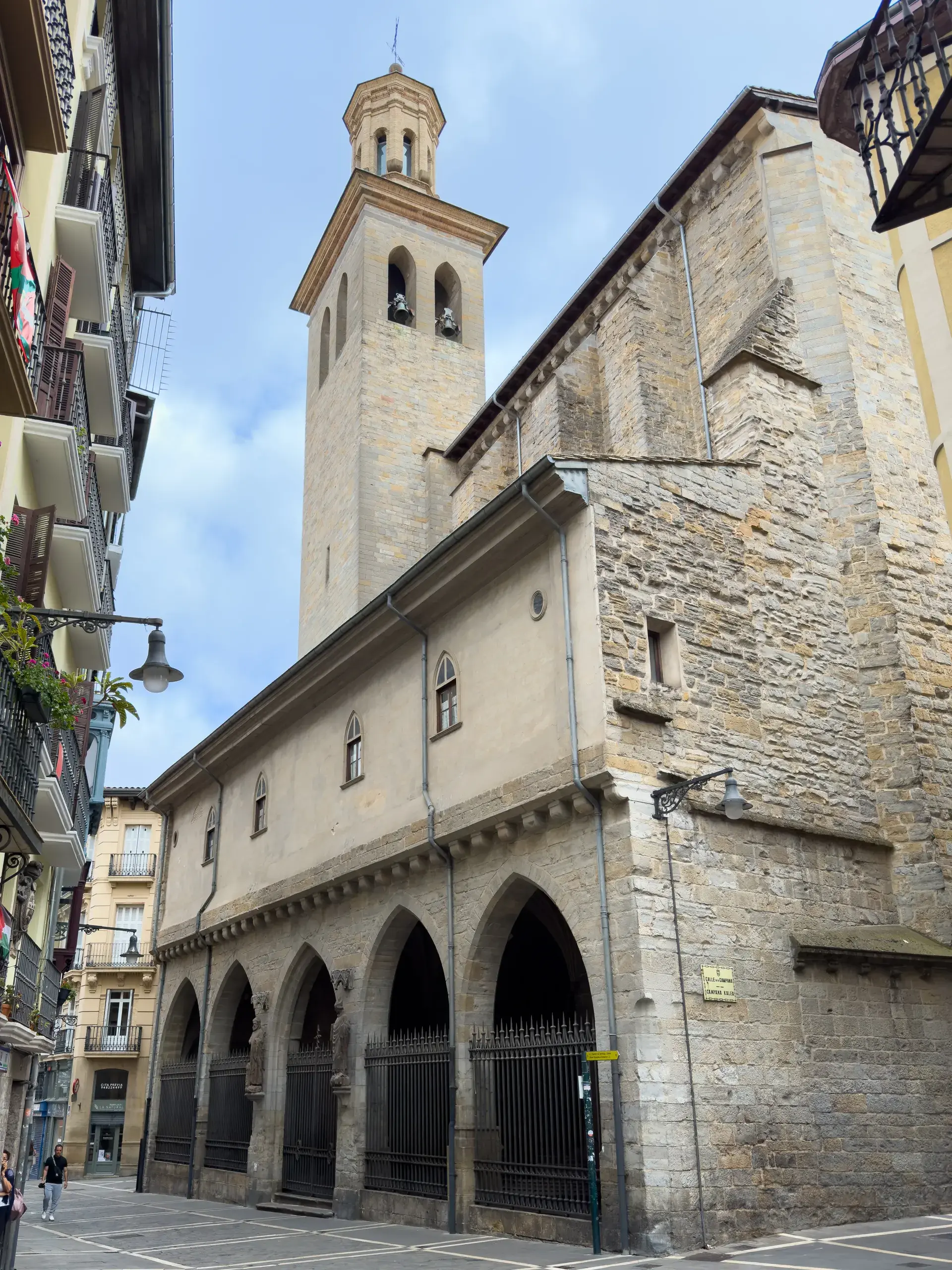
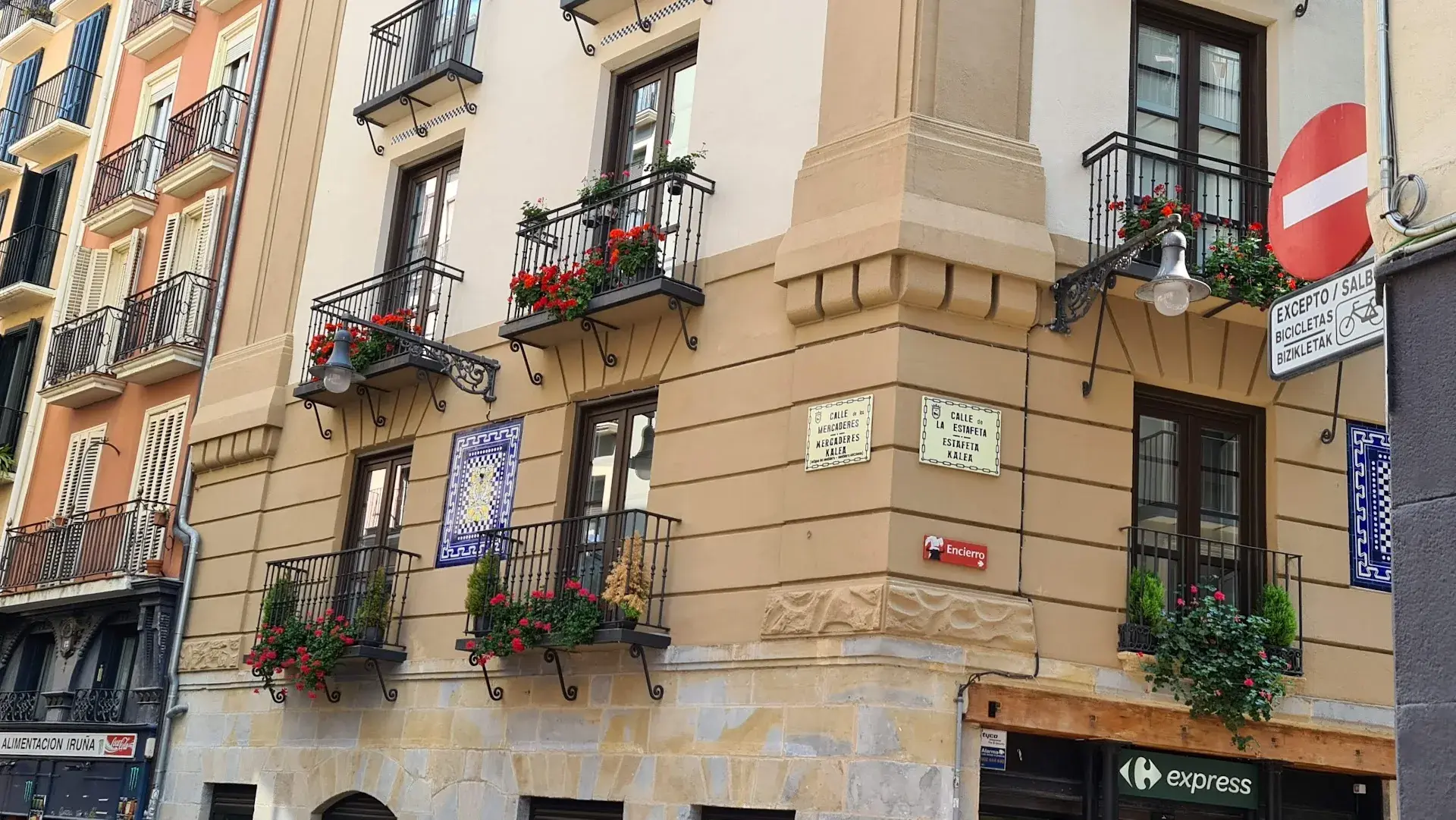
Serving continuously as the seat of the Pamplona City Council and the office of the Mayor, the square remains a daily crossroads. It links the Cathedral quarter in Navarrería to the church of San Saturnino in San Cernin, as well as the bustling routes of Calle Mercaderes and Calle Mayor.
FAQ
Why was Pamplona's City Hall built in this specific location?
In 1423, King Charles III of Navarre decreed that the shared town hall be placed on the neutral ditch and no-man's-land dividing three previously hostile boroughs—Navarrería, San Cernin, and San Nicolás—to ensure no single quarter held administrative dominance.
When did launching the rocket from the City Hall balcony become an official tradition?
The opening rocket tradition began informally in 1931 in Plaza del Castillo and was officially transferred to the Casa Consistorial balcony in 1941.
What do the statues flanking the City Hall entrance represent?
The portal is flanked by stone statues of Prudence and Justice, carved by José Jiménez to remind city leaders to govern the three historically divided boroughs with impartiality.
How is the person who launches the festival rocket selected?
Since 2016, the person or organization chosen to ignite the Chupinazo rocket has been selected through a public voting process organized by the municipal Mesa de los Sanfermines.