Portal de Zumalacárregui: Historic Pamplona Gate
Pamplona's Sole Surviving Fortress Gate
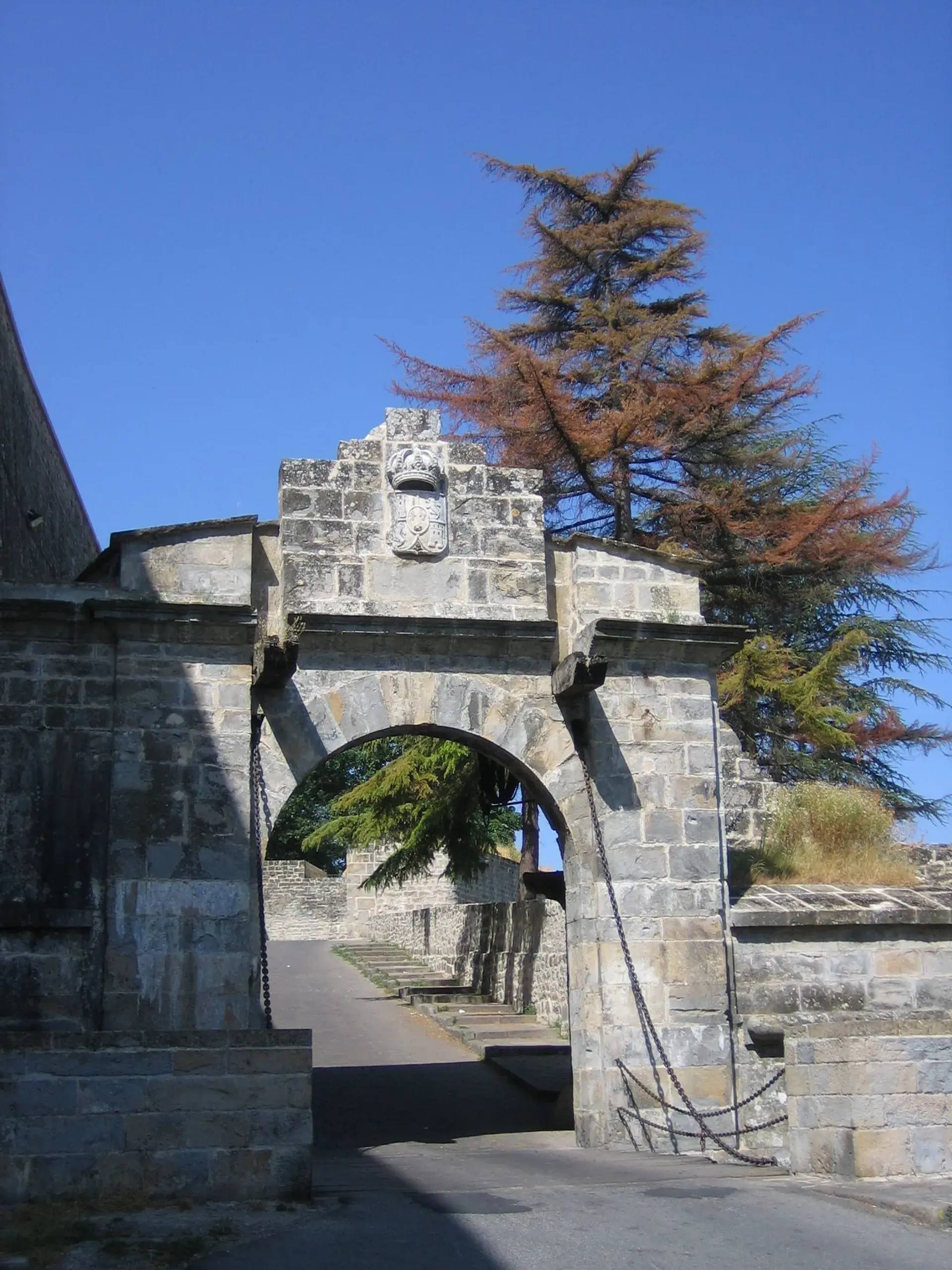
The Portal de Zumalacárregui, traditionally known as the Portal de Francia and historically as the Portal del Abrevador, is the oldest and only intact survivor of Pamplona's six original fortified city entrances. While other perimeter gates—such as the Portal de la Rochapea, Portal de San Nicolás, and Portal de Tejería—were demolished during early 20th-century municipal expansions, this northern passage was preserved in its authentic setting.
Positioned along the northern ramparts known as the Frente de Francia or Frente del Redín, the gate anchors the edge of the medieval Navarrería district below the Caballo Blanco viewpoint. It historically fortified the city against northern incursions following Navarre's incorporation into the Spanish crown, transforming medieval borough borders into a modern bastioned defense.
Dual-Gate Architecture and Defensive Design
The complex consists of a two-gate defensive layout arranged in a double-elbow ramp (known in military architecture as a doble recodo) situated between the Abrevador and Nuestra Señora del Pilar bastions. This angled configuration forced potential attackers to make sharp ninety-degree turns, breaking their line of sight and exposing them to fire from the Baluarte del Redín above.
The upper, inner gate was constructed in 1553 under the direction of Viceroy Duke of Albuquerque during the reign of Emperor Charles V. It features a carved imperial double-headed eagle coat of arms and displays the 1553 construction date. Two centuries later, in 1753, the lower outer gate was added to modernize the bastion system, incorporating an exterior moat and a drawbridge.
The 1875 Derché Drawbridge Mechanism
The outer gate houses a functioning wooden drawbridge powered by an 1875 French engineering system called the "Maniobra de Derché." Manufactured locally at the Salvador Pinaqui foundry at the Molino de Caparroso, the apparatus utilizes mechanical equilibrium rather than electrical power.
The mechanism operates by counterbalancing the 1,824-kilogram wooden bridge deck with two 645-kilogram counterweights. Heavy iron chains and exposed gears mounted beneath a low, barrel-vaulted red-brick ceiling allow municipal operators to raise and lower the heavy bridge manually. Until 1915, guards raised this drawbridge every evening at dusk to secure the city against bandits, military threats, and illegal trade.
Historic Gateway for the Camino de Santiago
Beyond its military functions, the portal serves as a symbolic and functional threshold for the Camino de Santiago. Pilgrims journeying along the Camino Francés from Roncesvalles cross the Magdalena Bridge over the Arga River before entering the old quarter through this gate.
As the entryway into Calle del Carmen (formerly known as Rúa de los Peregrinos), the gate represents the arrival into the first major urban center on the Spanish section of the pilgrimage route. Foot traffic moves from the outer gravel paths over the hollow clatter of the drawbridge's wooden deck, passing under iron mechanical gears and through the stone corridor into the historic city center.
Carlist History and Modern Civic Traditions
The portal earned its co-official name in 1939 in honor of General Tomás de Zumalacárregui. In late October 1833, during the First Carlist War, the general slipped through this gate in disguise to assume command of Carlist forces, an event recorded on a commemorative wall plaque.
Today, the gate continues to function as a pedestrian corridor into the Casco Antiguo. Its drawbridge is mechanically lowered once a year on the evening of January 5 for the Three Wise Men procession (Cabalgata de Reyes). In accordance with municipal tradition, the Three Kings arrive outside the walls on horseback and engage in a formal ceremonial dialogue (parlamento) with local officials before the drawbridge is lowered to grant them entry.
FAQ
Why does the gate have multiple names?
Historically known as the Portal del Abrevador and long called the Portal de Francia due to its northern orientation toward France, it was co-named Portal de Zumalacárregui in 1939 to commemorate General Tomás de Zumalacárregui, who escaped through the gate in disguise in 1833.
How does the drawbridge operate without electric power?
The bridge relies on an 1875 French mechanism known as the 'Maniobra de Derché,' cast locally at the Salvador Pinaqui foundry. It balances an 1,824-kilogram wooden deck with two 645-kilogram counterweights, allowing manual operation purely through mechanical equilibrium.
When is the drawbridge lowered today?
Following routine maintenance and inspection by municipal staff each December, the drawbridge is mechanically lowered on the evening of January 5 for the Three Wise Men procession.