Alameda del Tajo: Ronda's Cliffside Promenade
Origins and Enlightenment Design
Alameda del Tajo originated in the late 18th century as part of an Enlightenment-era urban reform program in Ronda. Initiated around 1787 under Corregidor Joaquín Valcárcel y Rico, the Marqués de Pejas, the initiative reclaimed open ground fronting the Convent of La Merced to establish a structured public green space for the developing Mercadillo district. Construction reached completion in 1806 under Corregidor Vicente Cano, when the park was inaugurated under its original title, Alameda de San Carlos.
Early embellishments included terracotta paste busts honoring the Spanish royal family. However, the delicate material quickly degraded under Ronda's harsh mountain climate, leaving no surviving traces of the original statues. A enduring local legend claims that Corregidor Cano avoided using municipal public funds to finish the park by imposing strict fines on townspeople caught blaspheming, using vulgar language, or acting obscenely in public streets.
Botanical Heritage and Layout
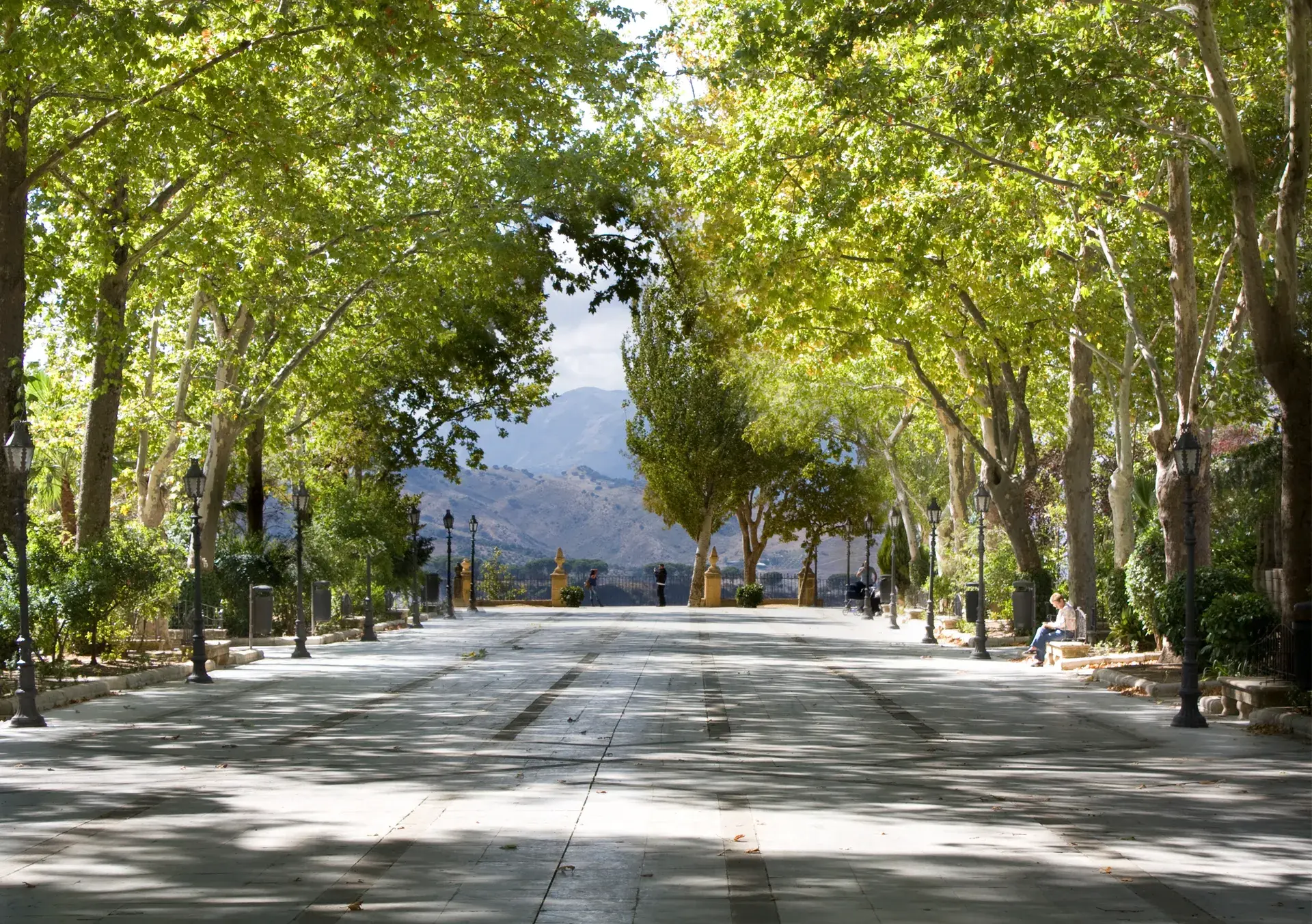
Encompassing roughly 18,000 square meters adjacent to the Plaza de Toros, the park follows an ordered geometric plan. It consists of five parallel, tree-shaded avenues divided by formal garden plots. This dense arbor creates a secluded canopy that dampens town traffic noise and moderates seasonal heat.
Within these promenades stand several bicentennial specimens documented in Málaga’s provincial registry of remarkable trees. Notable examples include a towering Himalayan cedar, an expansive stone pine (Pinus pinea), and a three-thorned acacia located beside the duck pond. Near the entrance, a public monument commemorates the Ronda-born matador Pedro Romero, a pivotal figure recognized as the originator of modern classical bullfighting on foot.
The Cliffside Balconies
The central visual drama of Alameda del Tajo lies in its southern and western edges, where the tranquil garden paths end abruptly at exposed iron railings overlooking the sheer abyss of the El Tajo canyon.
The most famous of these viewpoints is the Mirador de la Peña de Berlanga. In popular parlance, this lookout is widely referred to as the Balcón del Coño. The moniker derives from the involuntary Spanish exclamation blurted out by visitors when they look down the dizzying vertical cliff face beneath the railing.
Modern Cultural Life and Connections
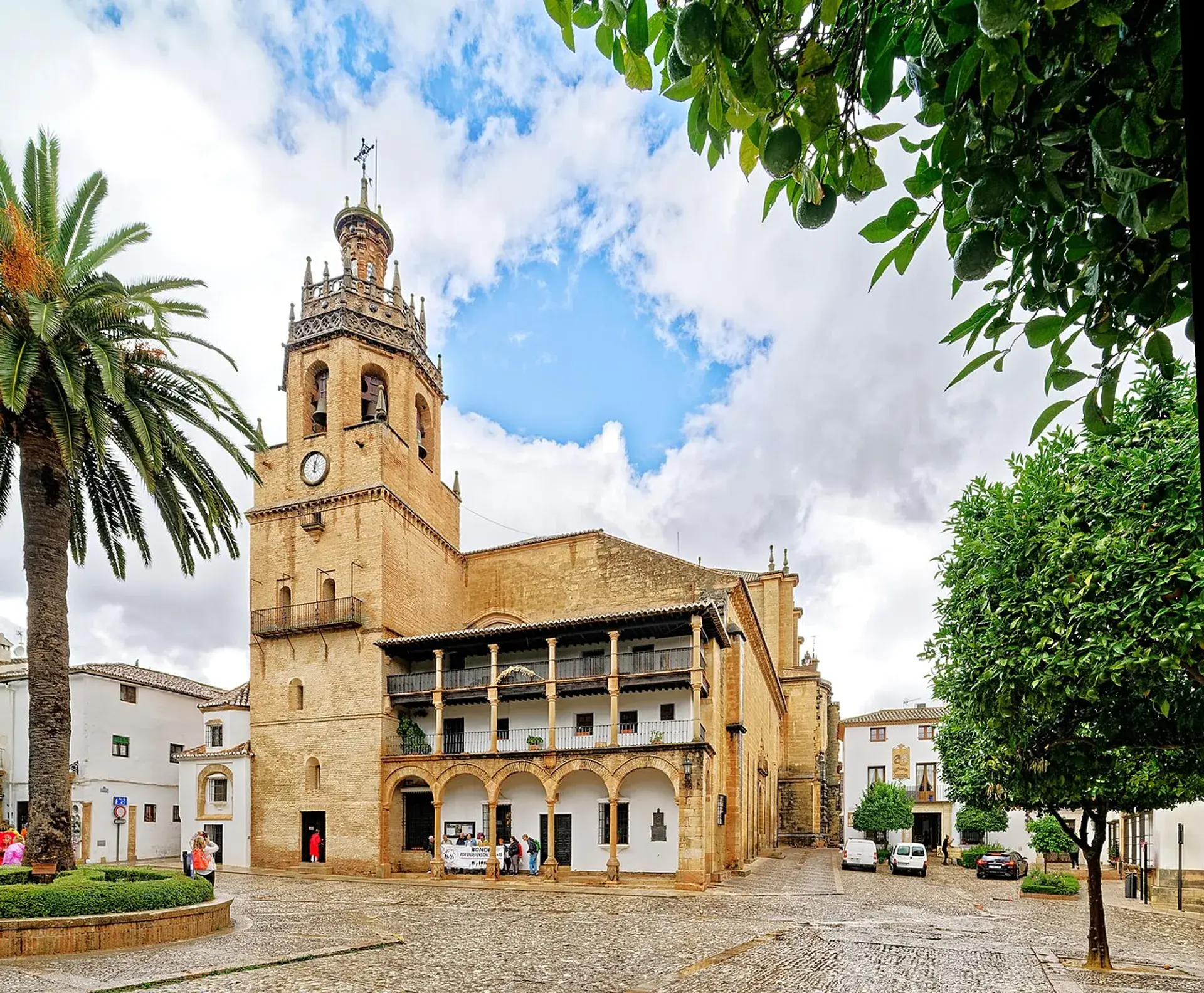
Following seating and layout refurbishments during the mid-19th century, the park underwent further structural adaptations in the late 20th century. A section of the grounds was remodeled to incorporate municipal facilities, including the Casa de la Cultura and the Teatro Vicente Espinel, which opened its doors in 1994. The theater remains a central venue for local concerts, dramatic stagings, and annual carnival festivities.
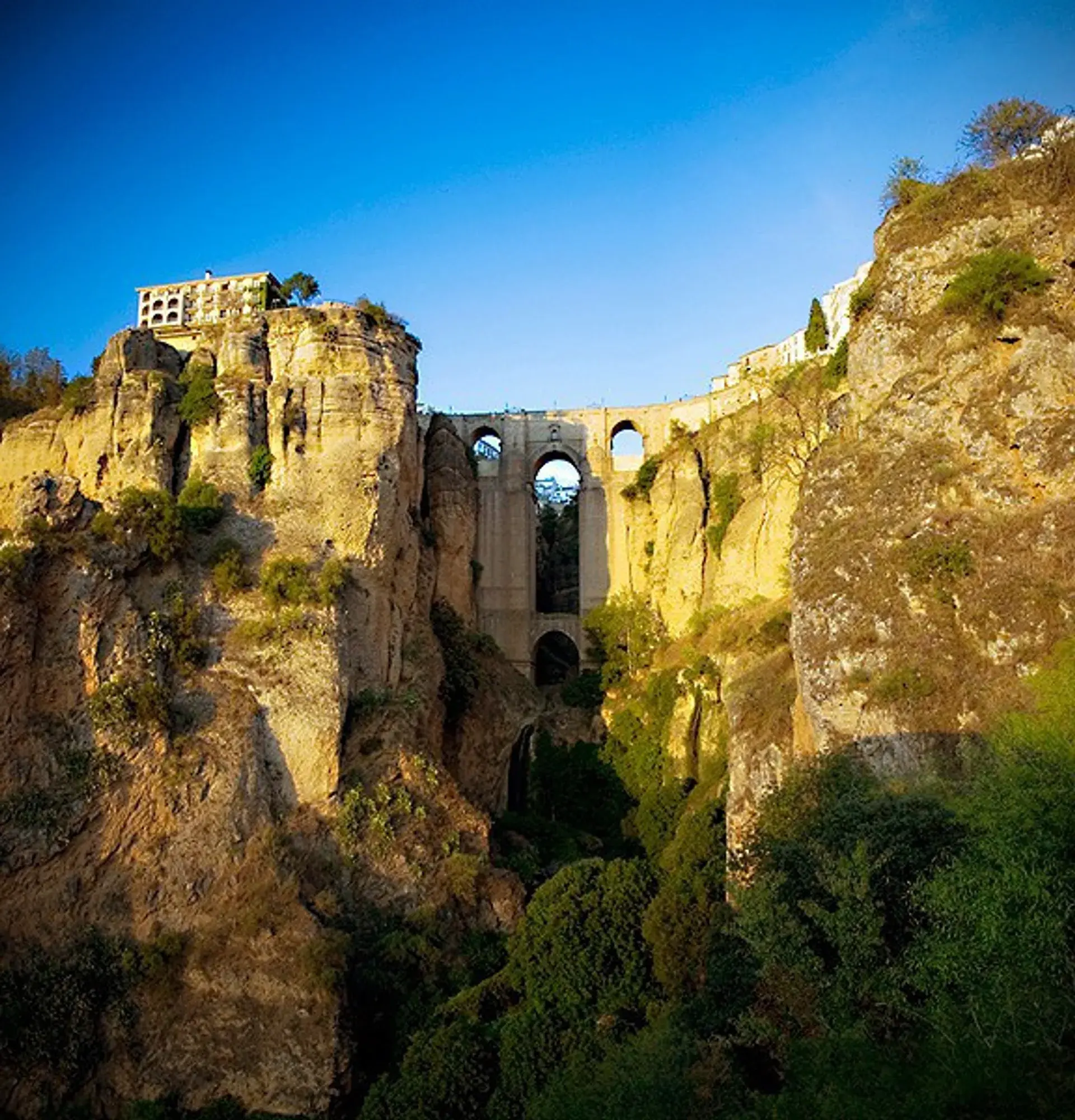
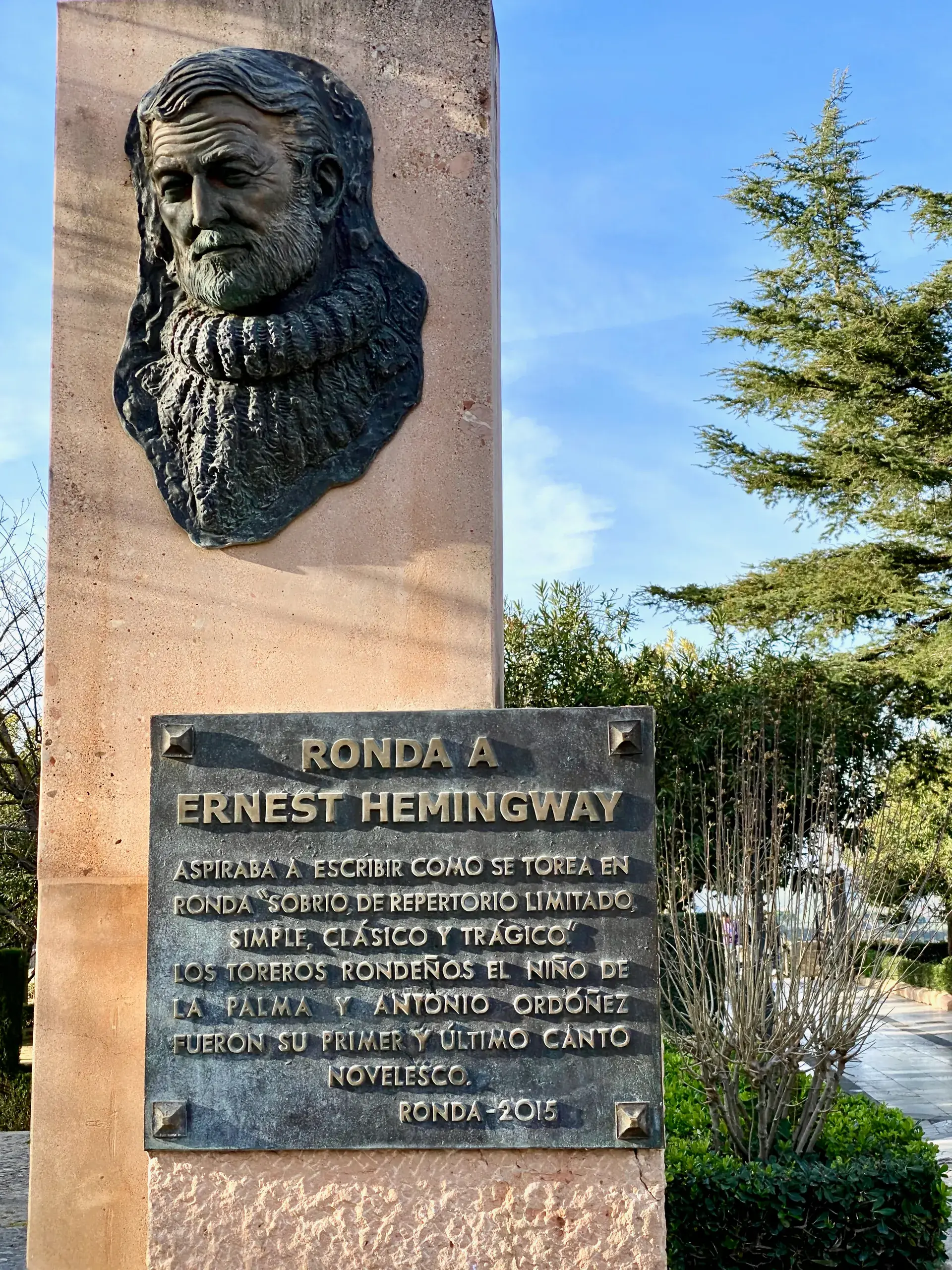
Today, Alameda del Tajo serves as the principal public park and "green lung" of modern Ronda. It operates as the northern trailhead for the city’s cliffside route, connecting with the Paseo de Blas Infante, the Paseo Hemingway, and the Paseo de los Ingleses, while providing a direct thoroughfare toward the Puente Nuevo for the traditional evening paseo.
FAQ
Why is the Mirador de la Peña de Berlanga colloquially called the Balcón del Coño?
The viewpoint earned its colloquial name because the dramatic drop off the cliff edge frequently causes visitors to blurt out the Spanish exclamation of shock, '¡Coño!'
How does local tradition say the park was financed?
Local tradition states that Corregidor Vicente Cano financed the completion of the gardens in 1806 by levying municipal fines on citizens caught swearing, blaspheming, or behaving obscenely in the streets.
What notable trees can be seen in Alameda del Tajo?
The park features several bicentennial specimens listed on Málaga's provincial registry of remarkable trees, including a Himalayan cedar, an enormous stone pine (Pinus pinea), and a three-thorned acacia by the duck pond.