Ernest Hemingway Ronda Sculpture: Clifftop Tribute
The Monument to Ernest Hemingway
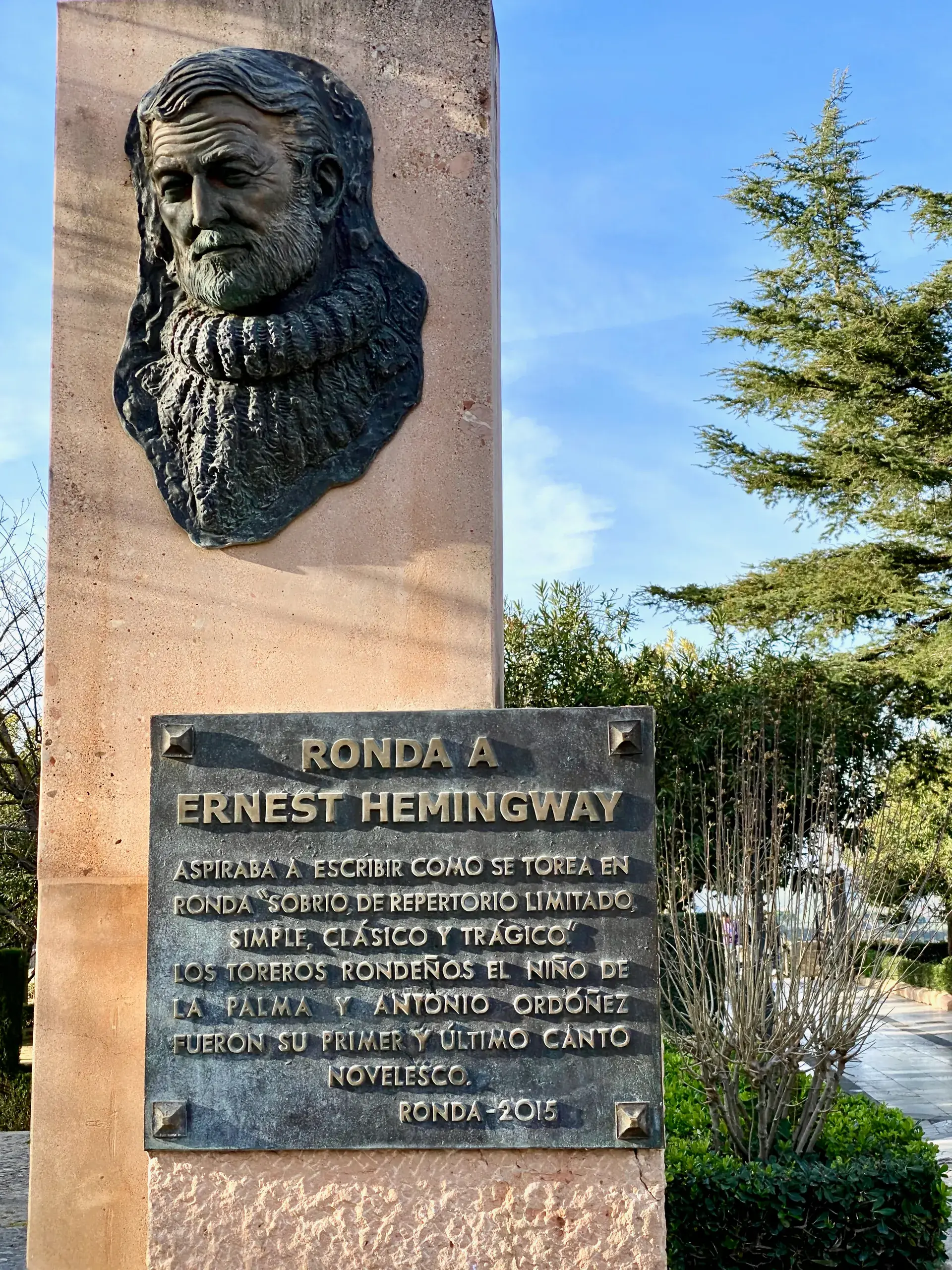
Overlooking the vertical cliffs of the El Tajo gorge, a dedicated monument honors the American author Ernest Hemingway and his long-standing ties to Ronda. Positioned along the Paseo de Blas Infante directly behind the historic Plaza de Toros, the monument is a 2.5-meter bronze bas-relief bust set into local Arroyo del Toro stone. Sculpted by Sevillian artist Paco Parra, the piece was formally unveiled in September 2015.
The artwork stands as a permanent tribute to Hemingway's civic connection to the town. In 1996, the municipal council of Ronda posthumously designated both Hemingway and American filmmaker Orson Welles as Adopted Sons (Hijos Adoptivos) of the city.
Hemingway's Literary Connection to Ronda
Hemingway first traveled to Ronda in 1923, beginning a lifelong interest in the town and its historic bullfighting dynasties. In his 1932 treatise Death in the Afternoon, he praised Ronda as an ideal place to witness a bullfight and highlighted its appeal as a romantic retreat.
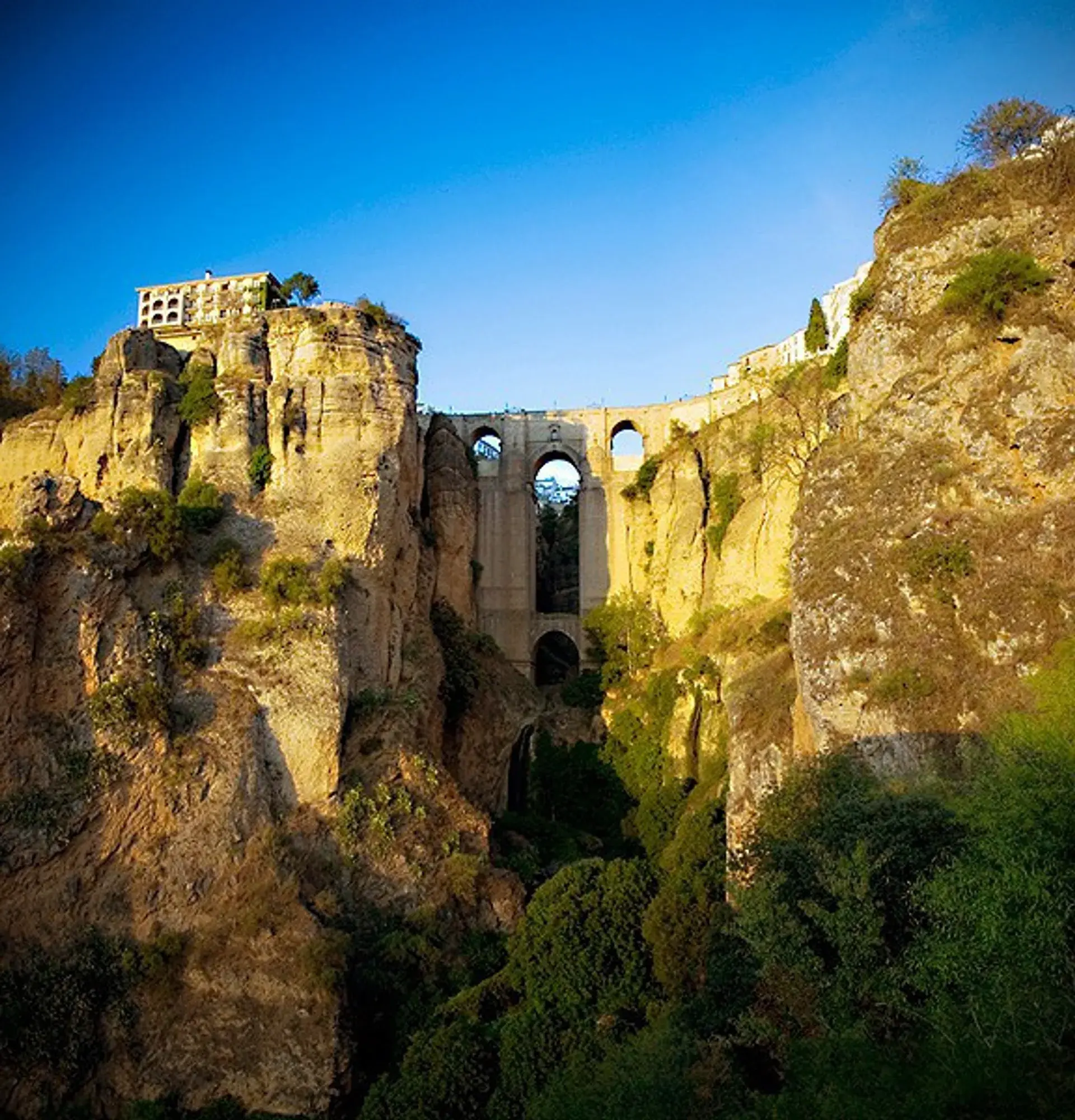
The dramatic landscape of Ronda directly influenced Hemingway's fiction. In Chapter 10 of his 1940 novel For Whom the Bell Tolls, he wrote a harrowing sequence in which townspeople execute fascist sympathizers by flinging them from a sheer cliff into an abyss. This fictional episode drew directly from the topography of the El Tajo gorge and actual 1936 Spanish Civil War killings that took place in Ronda. Decades later, in 1959, Hemingway returned to the town to document the bullfighting contest between Antonio Ordóñez and Luis Miguel Dominguín, chronicled in The Dangerous Summer.
Paseo de Blas Infante and Surrounding Landmarks
The Hemingway sculpture is located within the Paseo de Blas Infante, a pedestrian-only clifftop promenade named after writer and politician Blas Infante (1885–1936). Situated in the central Mercadillo district, this green pathway links the Plaza de Toros with the Puente Nuevo, the Parador, and the Alameda del Tajo gardens.
The promenade features several other historical and artistic tributes, including a monument to Blas Infante and a monument dedicated to Orson Welles. Nearby architectural structures include an ornamental iron bandstand, the Teatro Municipal Vicente Espinel, and the open-air Auditorio Blas Infante, an amphitheater positioned on the precipice that hosts events such as the annual Pueblos Blancos Music Festival.
Tucked within the gardens is the Glorieta de Miki Haruta, a memorial space marked by a plaque installed in 2003 and a Japanese flowering cherry tree planted alongside the cliff, holding the ashes of Japanese watercolor artist Miki Haruta (1924–1995). The promenade's railed viewpoints, which hang over drops of 100 to 200 meters, are locally nicknamed El Balcón del Coño, after the startled expletive spectators frequently utter when looking directly over the canyon edge.
FAQ
Who created the Ernest Hemingway sculpture in Ronda?
The 2.5-meter bronze bas-relief bust was created by Sevillian sculptor Paco Parra using Arroyo del Toro stone and was unveiled in September 2015.
How did Ronda inspire Hemingway's novel For Whom the Bell Tolls?
Chapter 10 of For Whom the Bell Tolls depicts an execution scene where figures are thrown from a cliff, a moment modeled on the vertical drop of Ronda's El Tajo gorge and events from the 1936 Spanish Civil War.
What title was awarded to Hemingway by Ronda in 1996?
The municipal council of Ronda posthumously named Ernest Hemingway an Adopted Son (Hijo Adoptivo) of the city in 1996, an honor also given to Orson Welles.
Why is the nearby viewpoint called 'El Balcón del Coño'?
The cantilevered railed balconies earned the nickname from the involuntary Spanish expletive visitors often exclaim when stepping forward and looking straight down into the gorge.