Puente Nuevo de Ronda: History and Gorge Views
The Monumental Span of El Tajo Gorge
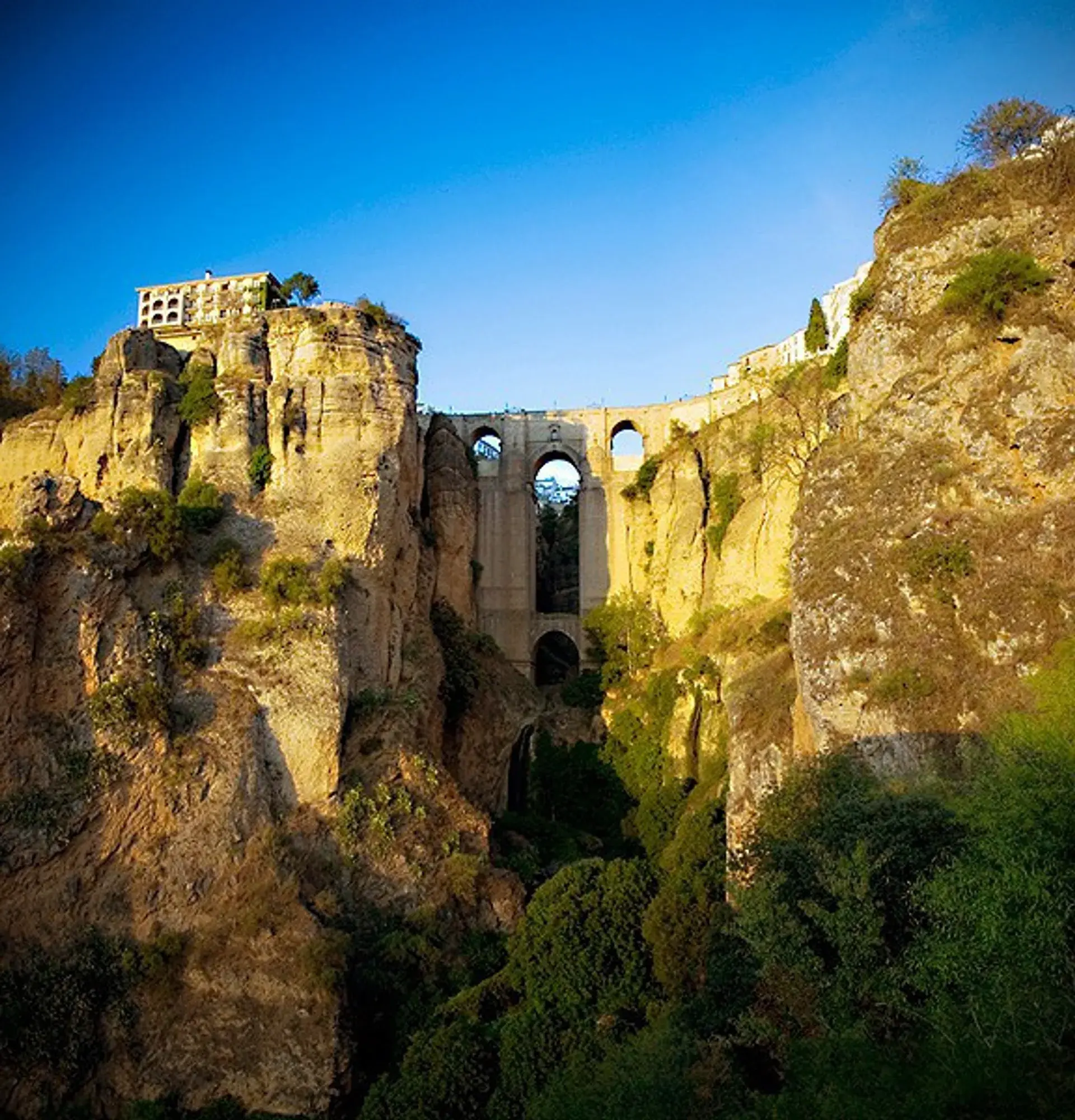
Rising 98 meters above the bed of the Guadalevín River, the Puente Nuevo stands as the architectural centerpiece of Ronda. The 66-meter-long bridge spans the sheer El Tajo gorge, connecting the historic Islamic quarter of La Ciudad with the 18th-century northern expansion known as El Mercadillo. Resting on three tiers of masonry arches anchored into bedrock cliffs, the golden-ochre ashlar masonry blends seamlessly into the surrounding natural limestone walls.
Below the parapets, the Guadalevín River cascades over waterfalls at the base of the chasm, creating an echoing roar that carries up the vertical stone canyon. Cool mountain updrafts channel through the chasm walls, sweeping past nesting swifts and choughs that inhabit the rock crevices above the riverbed orchards.
Engineering Born from Disaster
The current bridge is the second crossing built at this site. In 1735, a single-arch bridge was constructed across the gorge in only eight months by architects José García and Juan Camacho. Due to structural deficiencies, it collapsed completely in 1741, plunging into the canyon and killing approximately 50 people.
To ensure permanent stability, a replacement was commissioned by royal decree. Begun in 1759 under the designs of architect Domingo Lois de Monteagudo, the massive project spanned 34 years. Instead of transporting material from afar, masons quarried ashlar stone directly from the riverbed at the bottom of the gorge. Local engineer Juan Antonio Díaz Machuca designed specialized wooden winches and tackle to hoist the heavy stone blocks vertically up the 100-meter cliffs. Chief architect José Martín de Aldehuela later took over to complete the upper arches and roadway before the bridge officially opened during Ronda's May Fair in 1793.
The Hidden Chamber and Historic Significance
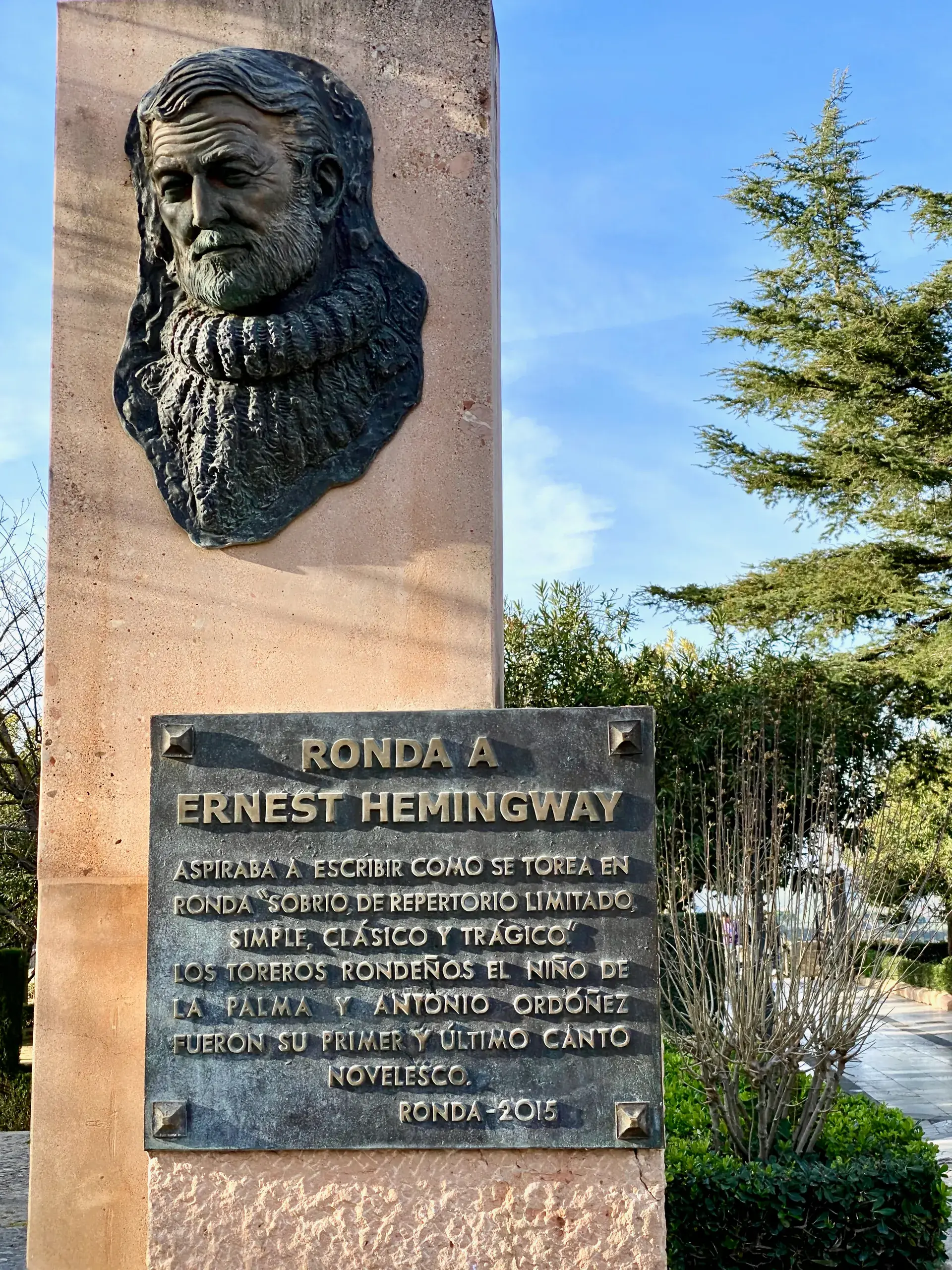
Engineered directly above the central arch beneath the roadway is a hollow stone chamber. Over the centuries, this space served various municipal purposes, functioning successively as a guardhouse, a municipal prison, a storeroom, and later a tavern. During the outbreak of the Spanish Civil War, the bridge chamber and the surrounding cliff tops became sites of political detention and violent executions into the chasm below. Author Ernest Hemingway drew upon accounts of these cliffside executions when describing the brutal town massacre in Chapter 10 of For Whom the Bell Tolls.
A persistent local legend claims that architect José Martín de Aldehuela leaped to his death from the bridge upon its completion, despairing that he could never construct anything more magnificent. Historical records refute this tale, confirming that Aldehuela died of natural causes in Málaga in 1802 at the age of 72.
Modern Preservation and Viewpoints
Today, Puente Nuevo serves as Ronda's primary pedestrian corridor, linking the Plaza de España area directly with the historic monuments of La Ciudad. To prevent structural damage from vehicular wear, local authorities enforce strict traffic rules monitored by automatic license-plate recognition cameras. Driving across the bridge is restricted to residents, registered hotel guests, taxis, and emergency services.
The chamber inside the central arch operates as the Puente Nuevo Interpretation Centre, accessible by stairs from the former guardhouse and housing exhibits dedicated to the bridge's construction and history. Broad views of the structure and the chasm can be seen from several key viewpoints, including the Mirador de Aldehuela near the Parador and the walking paths descending from Calle Tenorio toward the gorge floor.
FAQ
Why is it called Puente Nuevo if it was built in the 18th century?
Although completed in 1793, it was named Puente Nuevo (New Bridge) to distinguish it from Ronda's earlier river crossings: the 16th-century Puente Viejo and the older Moorish bridge.
Did the architect of Puente Nuevo fall or jump from the bridge?
No. Despite a widespread urban legend claiming José Martín de Aldehuela jumped to his death after completing the bridge, historical records show he died of natural causes in Málaga in 1802.
Can visitors drive across Puente Nuevo?
Vehicular access across Puente Nuevo is strictly restricted by automatic license-plate cameras to protect the structure. Only authorized residents, emergency services, public transit, and registered hotel guests may drive across, while pedestrians can cross freely.